
 英语
英语 俄语
俄语Content
- 1 What Is an Ethanol Distillation Tower?
- 2 Tray Columns vs. Packed Columns: Core Design Choice
- 3 The Ethanol–Water Azeotrope and How Distillation Towers Handle It
- 4 Key Performance Metrics and How They Are Specified
- 5 Material Selection and Corrosion Considerations
- 6 Industrial Applications Across Sectors
What Is an Ethanol Distillation Tower?
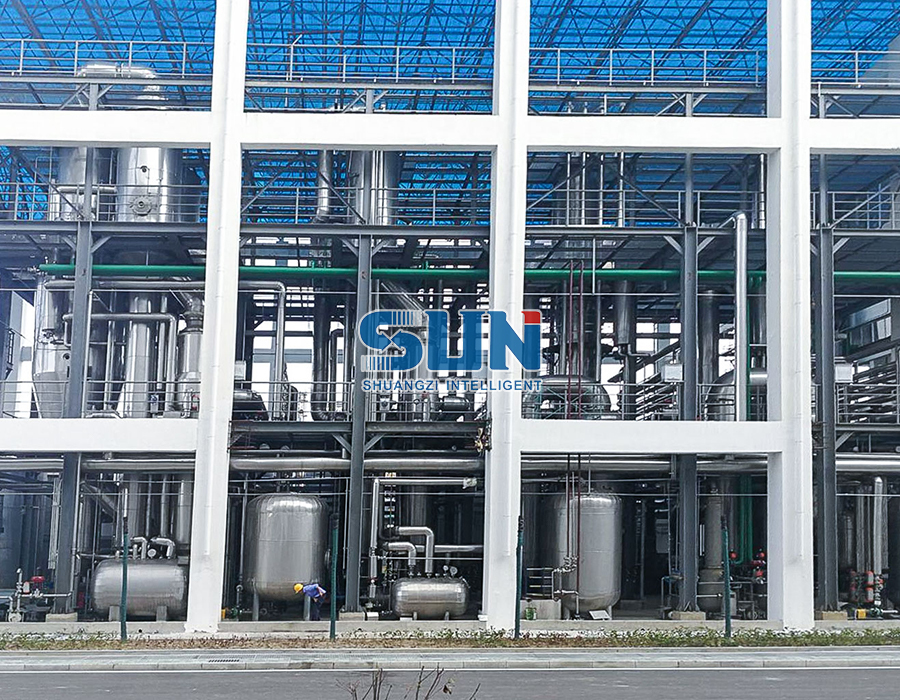
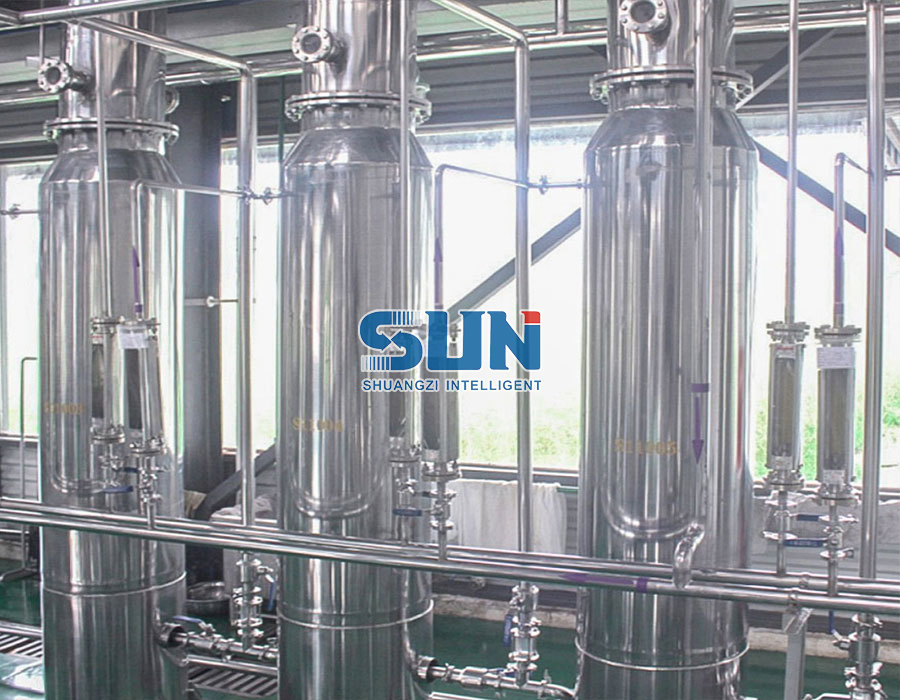
An ethanol distillation tower is a vertical separation vessel that exploits the boiling-point difference between ethanol (78.37 °C) and water (100 °C) to concentrate and purify ethanol from a fermented feedstock. Feed liquid enters at a mid-column point; vapor rises and is progressively enriched in ethanol as it contacts descending liquid across each stage, while the bottoms stream grows increasingly water-rich. A properly designed column can bring a 10–15% v/v beer feed up to 95% v/v in a single continuous pass.
Distillation towers differ from simple pot stills in that they operate continuously and achieve far more theoretical stages in a compact footprint — a key reason they dominate industrial fuel-ethanol, beverage-alcohol, and pharmaceutical-grade production at scales from a few hundred liters per hour to hundreds of thousands.
Tray Columns vs. Packed Columns: Core Design Choice
The two dominant internal configurations each have distinct advantages depending on throughput, product specification, and fouling tendency of the feed.
| Parameter | Tray Column | Packed Column |
|---|---|---|
| Typical diameter | 0.6 m – 10 m+ | 0.05 m – 4 m |
| Pressure drop per stage | 4 – 10 mbar | 0.3 – 2 mbar |
| Fouling resistance | High (cleanable) | Moderate (structured) / Low (random) |
| Turndown ratio | 3:1 – 5:1 | 5:1 – 10:1 |
| Capital cost (large scale) | Lower | Higher |
For grain- or molasses-based fermentation broths — which carry suspended solids, yeast cells, and proteins — sieve-tray or valve-tray columns are the standard choice because trays can be inspected and water-washed during scheduled turnarounds. Structured packing (e.g., Sulzer MellapakPlus, Koch-Glitsch FlexiPac) is preferred for pharmaceutical ethanol and essential-oil-bearing spirits where ultra-low pressure drop and HETP below 300 mm are required.
The Ethanol–Water Azeotrope and How Distillation Towers Handle It
A critical constraint for every ethanol distillation tower engineer is the ethanol–water azeotrope at 95.63% v/v and 78.15 °C (at 1 atm). Ordinary atmospheric distillation cannot cross this composition boundary, which means a stripping column alone can never produce anhydrous (99.5%+) ethanol for fuel-grade blending or solvent use.
Industrial plants address the azeotrope through one of three downstream strategies integrated with the main distillation tower:
- Molecular sieve dehydration — the near-azeotropic overhead (~94–95% v/v) passes through a bed of 3Å zeolite that selectively adsorbs water; regenerated continuously in a two-bed swing cycle. This is the dominant technology for fuel-ethanol plants above 100,000 L/day.
- Extractive distillation — a heavy entrainer such as ethylene glycol is introduced above the feed to alter relative volatility and allow a second column to separate water from the ethanol-entrainer mixture; the entrainer is then recovered and recycled.
- Pressure-swing distillation — two columns operate at different pressures (e.g., 1 bar and 8 bar), exploiting the shift in azeotropic composition with pressure to achieve a crossed separation without any added solvent.
Key Performance Metrics and How They Are Specified
When specifying or evaluating an ethanol distillation tower, engineers focus on four interdependent performance indicators:
- Number of theoretical stages (NTS) — determines separation sharpness; a beer column typically requires 20–40 stages while a rectifying section may need 35–60 to reach 95% v/v.
- Reflux ratio (R/Rmin) — operating at 1.1–1.5 × minimum reflux is standard; higher ratios sharpen separation but raise reboiler steam consumption proportionally.
- Murphree tray efficiency (EMV) — real trays achieve 60–85% of theoretical equilibrium; structured packing is characterized by HETP instead, typically 200–500 mm for ethanol service.
- Steam consumption — modern heat-integrated multi-effect systems target 1.5–2.0 kg steam per liter of anhydrous ethanol, versus 3.5–5 kg/L for single-effect designs. Vapor recompression can cut this further by 30–40%.
Simulation tools such as Aspen Plus, ProMax, and HYSYS are routinely used to model these parameters before any mechanical design is finalized, allowing engineers to optimize column height, diameter, and heat-exchanger duties simultaneously.
Material Selection and Corrosion Considerations
Ethanol is mildly corrosive to carbon steel in the presence of organic acids (primarily acetic acid) generated during fermentation. The material choice for an ethanol distillation tower therefore depends on product application and the acid load of the feed:
- 304 / 316L stainless steel — standard for food-grade, beverage, and pharmaceutical ethanol; resistant to organic acids up to ~120 °C; 316L preferred where chloride contamination is possible.
- Carbon steel with epoxy or glass lining — used in large fuel-ethanol beer columns where cost pressure is high and product purity tolerance is wider.
- Duplex stainless (2205) — specified for high-acid stillage environments or where stress-corrosion cracking risk is elevated.
- Copper alloys — historically used in pot-still rectifiers for spirits; copper catalyzes removal of sulfur compounds and confers flavor benefits, though it requires careful pH management to limit dissolution.
Industrial Applications Across Sectors
Ethanol distillation towers serve a remarkably diverse set of industries, each imposing its own purity, throughput, and regulatory requirements:
- Fuel ethanol — the largest global application; plants in Brazil, the US, and the EU operate columns capable of 1,000–5,000 m³/day of anhydrous ethanol, integrated with multi-effect evaporation systems for stillage concentration.
- Beverage alcohol — craft distilleries use compact copper or stainless packed columns (50–500 L/h) while large neutral-spirit plants favor continuous multi-column systems (beer column + extractive column + rectifier + heads column).
- Pharmaceutical and cosmetic-grade ethanol — requires ≥99.7% v/v with strict limits on methanol, aldehydes, and heavy metals; batch vacuum rectification or continuous molecular-sieve integrated columns are standard.
- Industrial solvent recovery — ethanol-rich waste streams from chemical synthesis are redistilled in purpose-built recovery columns, often operating under vacuum to minimize thermal degradation of heat-sensitive co-products.
As global demand for low-carbon fuels and bio-based solvents accelerates, the role of the ethanol distillation tower in both established and emerging value chains continues to grow — making column design, energy integration, and material selection increasingly strategic decisions for plant operators and process engineers alike.