
 英语
英语 俄语
俄语Content
- 1 How an Evaporation Concentration Machine Works
- 2 Main Types of Evaporation Concentration Machines
- 3 Industries and Applications
- 4 Energy Consumption and Efficiency
- 5 How to Choose the Right Evaporation Concentration Machine
- 6 Common Operational Challenges and Solutions
- 7 Emerging Trends in Evaporation Concentration Technology
An evaporation concentration machine removes water or solvent from a liquid solution by applying heat, reducing volume and increasing the concentration of dissolved solids. It is widely used across food processing, pharmaceuticals, chemical manufacturing, and wastewater treatment — anywhere a liquid needs to be thickened, purified, or reduced efficiently at scale.
The core principle is straightforward: heat the liquid until the solvent vaporizes, then separate and remove that vapor, leaving behind a more concentrated product. What makes modern systems sophisticated is how they manage energy consumption, temperature sensitivity, and throughput simultaneously.
How an Evaporation Concentration Machine Works
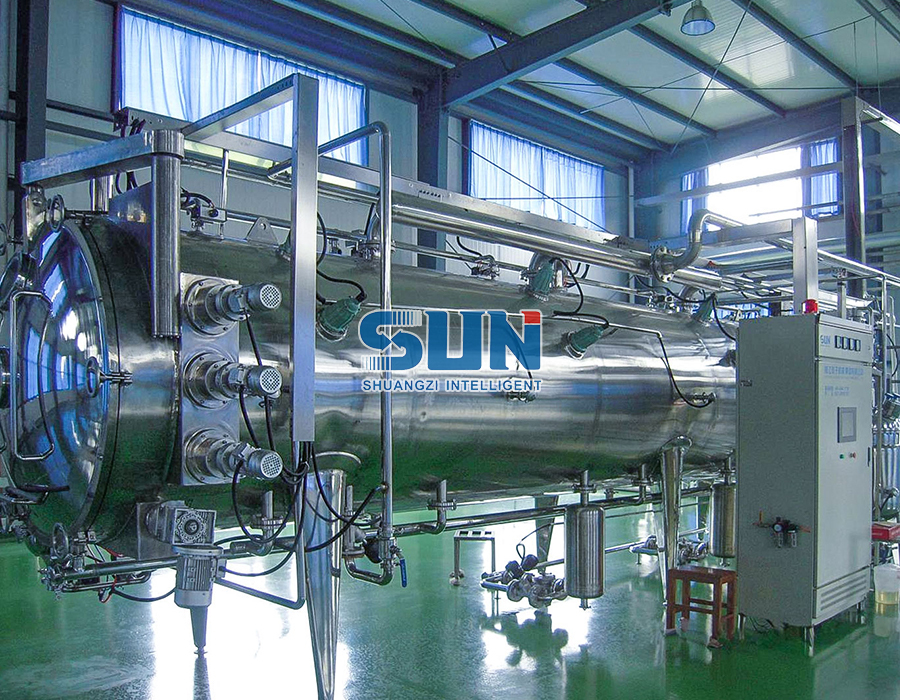
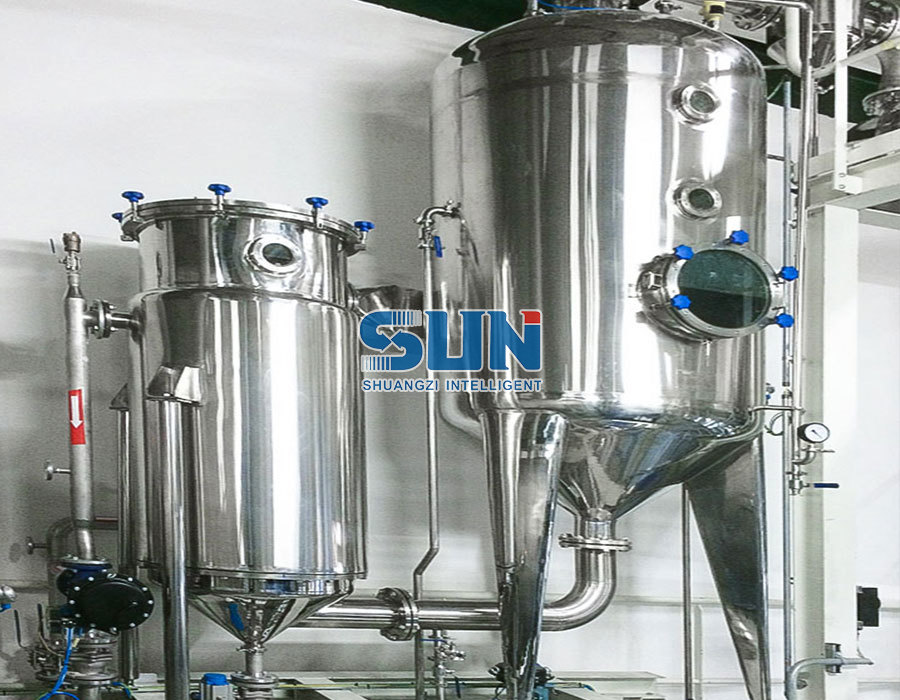
At the most fundamental level, the machine consists of a heat exchanger, an evaporation chamber, a condenser, and a vacuum system. The liquid feed enters the heat exchanger, where steam or hot water raises its temperature. Once inside the evaporation chamber, the liquid flashes into a vapor-liquid mixture. The vapor rises and exits to the condenser, while the concentrated liquid is collected at the bottom.
Vacuum operation is critical for heat-sensitive materials. By lowering pressure, the boiling point of water drops significantly — for example, at 0.1 bar absolute pressure, water boils at approximately 46°C instead of 100°C. This protects nutrients, active pharmaceutical ingredients, and flavors that would degrade at higher temperatures.
Key Components
- Heating element: Typically a shell-and-tube or plate heat exchanger supplying steam energy to the feed liquid.
- Evaporation chamber: The vessel where phase separation occurs; its design varies by machine type.
- Condenser: Recovers the evaporated solvent, often as recyclable water or purified liquid.
- Vacuum pump: Maintains sub-atmospheric pressure to lower boiling points and reduce energy use.
- CIP (Clean-in-Place) system: Essential in food and pharma applications to meet hygiene standards without full disassembly.
Main Types of Evaporation Concentration Machines
The market offers several evaporator designs, each optimized for different liquid properties and production volumes. Selecting the wrong type can lead to product degradation, scaling, or excessive energy costs.
| Type | Working Principle | Best For | Typical Concentration Ratio |
|---|---|---|---|
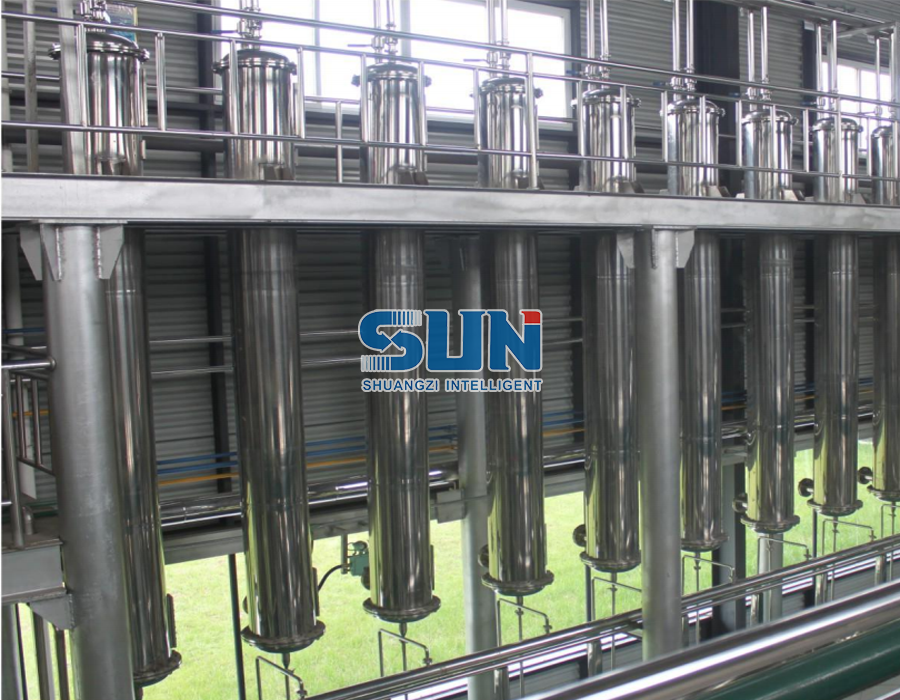
| Falling Film Evaporator | Liquid flows as a thin film inside vertical tubes | Heat-sensitive, low-viscosity liquids | Up to 60–70% solids |
| Forced Circulation Evaporator | Pump circulates liquid at high velocity past heating surface | Scaling or crystallizing solutions | Up to 50% solids |
| MVR Evaporator | Mechanical vapor recompression recycles steam energy | High-volume, energy-cost-sensitive operations | Varies; energy saving up to 90% |
| Multiple-Effect Evaporator | Vapor from one stage heats the next stage | Large-scale dairy, sugar, and chemical plants | Steam economy 2–6× single-effect |
| Rotary Evaporator | Rotating flask increases surface area under vacuum | Lab-scale, solvent recovery, small batches | Batch volumes typically under 50 L |
Falling Film vs. Forced Circulation: A Practical Distinction
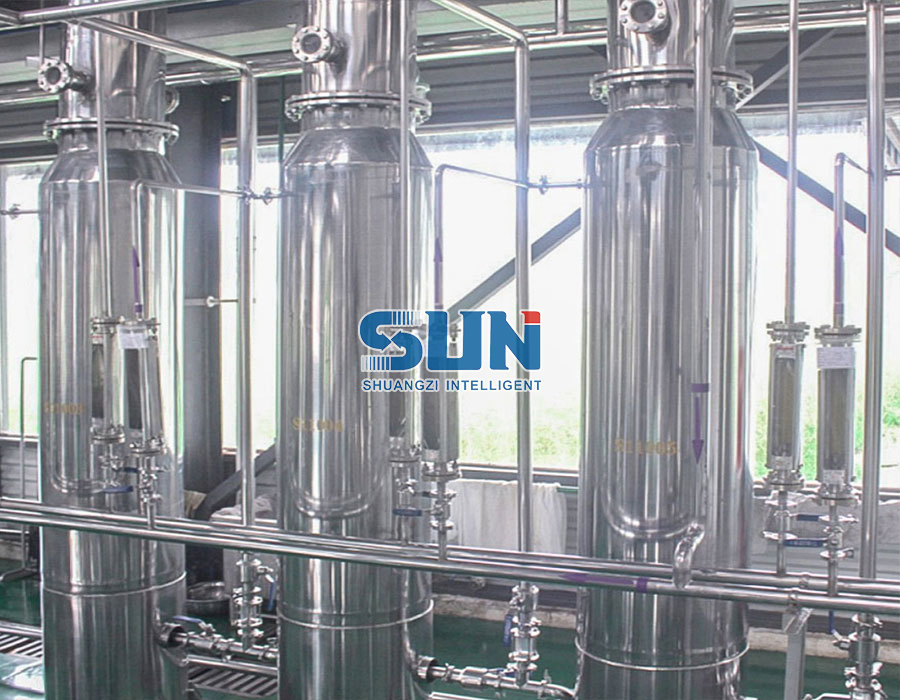
The falling film evaporator dominates juice and dairy concentrate production because its short residence time — often less than 30 seconds of product contact with the heated surface — minimizes thermal damage. Forced circulation systems, on the other hand, are preferred for brines, fertilizer solutions, or any feed that deposits scale, because the high flow velocity continuously scrubs tube walls and prevents fouling.
Industries and Applications
Evaporation concentration machines are not niche equipment. They appear in nearly every major processing industry, often as a bottleneck or cost-driver that justifies significant capital investment.
Food and Beverage
Tomato paste is concentrated from roughly 5% to 28–36% soluble solids. Dairy processors reduce milk to evaporated milk or condensed milk. Apple and orange juice are typically concentrated to 65–70° Brix before freezing and shipping, cutting logistics costs dramatically. Concentration reduces transport weight by 4–6× compared to the original liquid volume, which is a key economic driver in commodity juice markets.
Pharmaceuticals and Biotechnology
Active pharmaceutical ingredients (APIs) and fermentation broths require gentle concentration under strict GMP conditions. Falling film and thin-film evaporators operating at temperatures below 50°C are standard here. Solvent recovery — capturing and reusing ethanol, acetone, or methanol from extraction processes — is another major use case, often required for both cost savings and environmental compliance.
Wastewater Treatment and Zero Liquid Discharge (ZLD)
Industrial facilities under strict discharge regulations use evaporation concentration machines as the final step in ZLD systems. The evaporator reduces wastewater to a slurry or solid cake, which is then disposed of as solid waste. ZLD evaporators can achieve over 95% water recovery, allowing facilities to reuse the condensate as process water.
Chemical Manufacturing
Caustic soda (NaOH), sulfuric acid, and various salt solutions require concentration before sale or downstream processing. Here, material compatibility is critical — titanium, duplex stainless steel, or special alloy construction is often specified to resist corrosion from aggressive process fluids.
Energy Consumption and Efficiency
Evaporation is inherently energy-intensive because the latent heat of water vaporization is approximately 2,260 kJ/kg. For large operations, energy cost frequently represents 40–60% of the total operating cost of an evaporation system, making efficiency the single most important design parameter after product quality.
Ways to Improve Energy Efficiency
- Multiple-effect evaporation: A triple-effect system consumes roughly one-third the steam of a single-effect unit for the same evaporation load.
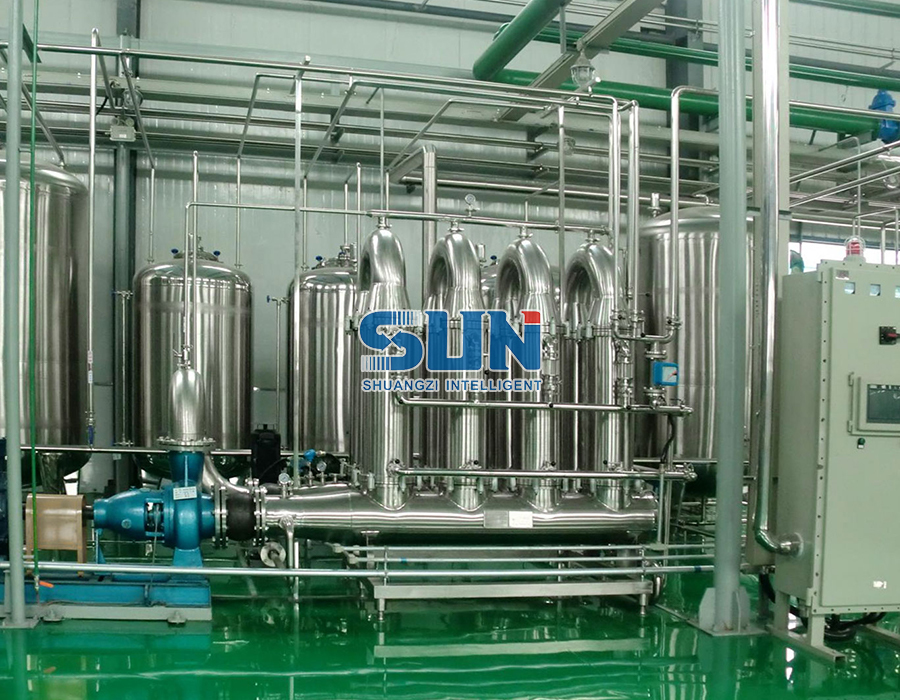
- Mechanical Vapor Recompression (MVR): A compressor raises the pressure and temperature of the generated vapor, which is then recycled as the heating medium. MVR systems can reduce steam consumption by 85–90% compared to single-effect evaporation.
- Thermal Vapor Recompression (TVR): A steam ejector boosts a portion of the secondary vapor using live steam, offering a lower-capital alternative to MVR with moderate energy savings of 40–60%.
- Condensate recovery: Returning hot condensate (typically 80–90°C) to the boiler feed reduces makeup water heating requirements.
- Pre-heating with vapor condensate: Using flash steam from condensate to pre-heat the feed reduces primary steam demand by 5–15%.
How to Choose the Right Evaporation Concentration Machine
Selecting a machine requires balancing product requirements, throughput, energy budget, and total cost of ownership. Below are the most important criteria to evaluate.
- Feed properties: Viscosity, foaming tendency, heat sensitivity, corrosiveness, and scaling behavior all directly determine which evaporator type is suitable.
- Target concentration: Specify the required final solid content or Brix level. Some products require 70%+ solids, which may demand a crystallizer downstream rather than a standard evaporator alone.
- Capacity: Express evaporation duty in kg/hour of water removed. Undersizing leads to bottlenecks; oversizing means unnecessary capital expenditure and high fixed costs per unit of output.
- Energy availability and cost: If steam is cheap and abundant, multiple-effect systems are attractive. If electricity is cheap relative to steam, MVR becomes more favorable. Calculate payback period on energy-saving options before specifying.
- Regulatory and hygiene requirements: Food and pharma systems require sanitary design — electropolished stainless steel, full drainability, and validated CIP cycles. Chemical plants may prioritize corrosion resistance over sanitary finish.
- Footprint and installation constraints: Falling film evaporators require significant vertical height (10–20 m for industrial units), while forced circulation systems are more compact and may better suit retrofit applications.
- Continuous vs. batch operation: Continuous evaporators suit steady high-volume production; batch systems offer flexibility for multiple product types with frequent changeovers.
Total Cost of Ownership Perspective
A common mistake is selecting based on purchase price alone. For a plant evaporating 10,000 kg/hour of water, the difference between a single-effect and a triple-effect system can represent a saving of over $500,000 per year in steam costs at typical industrial energy prices — often paying back the higher capital cost in under two years.
Common Operational Challenges and Solutions
Even well-designed evaporation concentration machines require careful operation to maintain performance over time.
Fouling and Scaling
Mineral deposits, protein films, or crystallized salts on heat transfer surfaces increase thermal resistance and reduce throughput. A 1 mm calcium carbonate scale layer can reduce heat transfer efficiency by 10–20%. Forced circulation evaporators mitigate this mechanically; chemical cleaning or periodic acid/alkali CIP cycles address it in falling film systems.
Foaming
Protein-rich feeds such as whey or fermentation broths tend to foam inside the evaporation chamber, causing product entrainment in the vapor stream and product loss. Solutions include anti-foam additives, foam breakers mounted in the vapor space, or operating at lower temperatures to reduce vapor velocity.
Product Quality Degradation
Excessive residence time or temperature causes color changes, Maillard reactions, or loss of volatile aroma compounds. Choosing low-temperature vacuum evaporation and minimizing the number of passes through the heating zone are the primary design solutions for quality-sensitive products.
Emerging Trends in Evaporation Concentration Technology
The technology continues to evolve, driven by energy costs, sustainability targets, and increasingly stringent product quality requirements.
- Heat pump integration: Low-temperature heat pump evaporators operating below 40°C are entering commercial use for ultra-heat-sensitive biotechnology products, using coefficient-of-performance values above 3.0 to minimize electrical energy input.
- Membrane pre-concentration: Reverse osmosis can concentrate a liquid to 15–20% solids with far less energy than evaporation, reducing the evaporator duty and overall system energy consumption significantly when used upstream.
- Digital monitoring and predictive maintenance: Inline sensors for Brix, conductivity, and flow rate now enable real-time process optimization, reducing cleaning frequency and unplanned downtime.
- Compact modular systems: Standardized skid-mounted evaporators with capacities of 500–5,000 kg/hour are shortening delivery lead times and reducing engineering costs for mid-scale operations.