
 英语
英语 俄语
俄语Content
- 1 The Main Types of Sterilization Methods in Food Processing
- 2 Why Tubular UHT Sterilizers Outperform Plate Systems for Viscous Products
- 3 Matching Equipment Capacity to Your Production Line
- 4 Application-Specific Considerations
- 5 What to Verify Before Purchasing
- 6 Integrating Sterilization into a Wider Processing Line
A single batch of under-sterilized juice can trigger a recall that costs more than a year of equipment upgrades. For food and beverage manufacturers, sterilization is not an afterthought — it's the line between safe product and liability. Yet many buyers still choose equipment based on upfront price alone, overlooking throughput, heat recovery, and long-term maintenance. This guide cuts through the noise.
The Main Types of Sterilization Methods in Food Processing
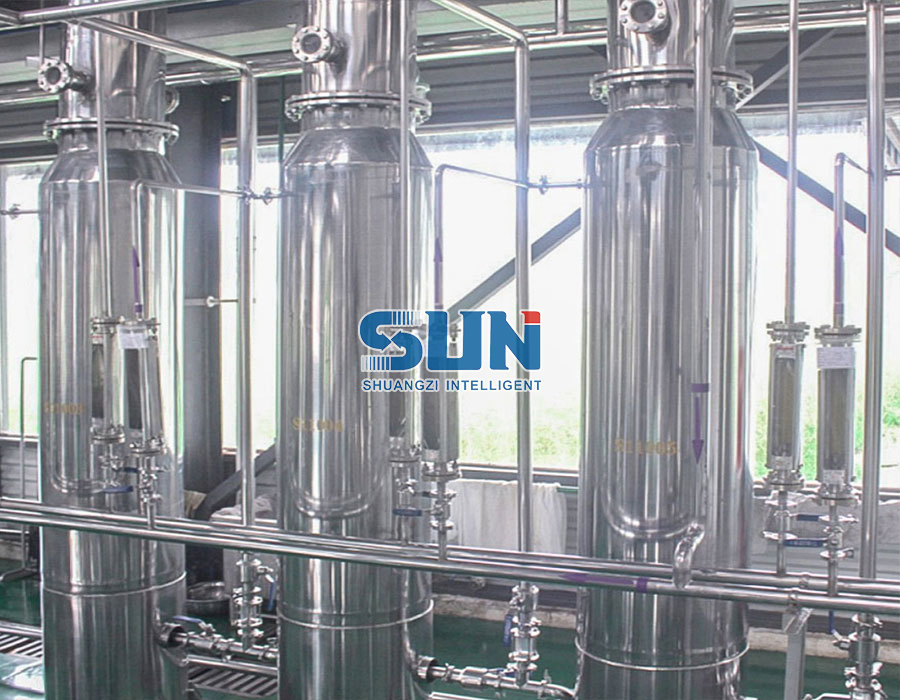
Industrial Sterilization Equipment falls into three broad categories, each suited to different products and production volumes:
- Tubular UHT sterilizers — heat liquid products to 135–150°C for a few seconds, then rapidly cool them. Ideal for pumpable, slightly viscous liquids such as juice, milk, herbal extracts, and tea beverages.
- Plate pasteurizers — lower-temperature continuous systems, typically 72–85°C. Effective for clear, low-viscosity fluids, but they foul faster with fibrous or particulate products.
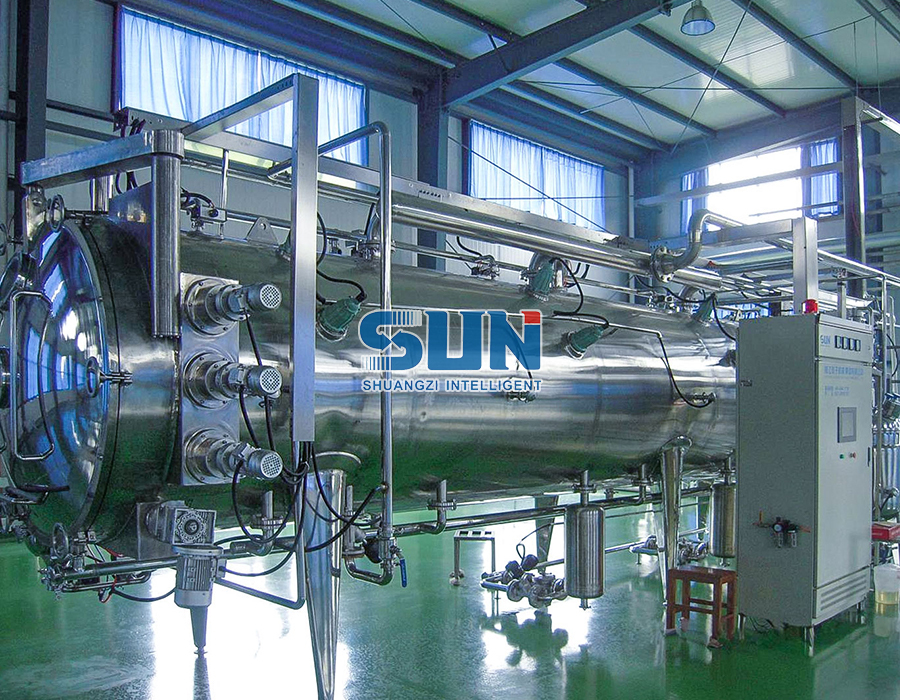
- Retort / autoclave sterilizers — batch steam sterilization for packaged goods such as canned foods, pouches, and glass-filled products. Higher kill-rate, but throughput is slower than continuous-flow systems.
Choosing between them comes down to three factors: the physical state of your product, your target shelf life, and your line capacity. A dairy plant running 2 t/h of UHT milk has completely different requirements from a sauce manufacturer doing 100-kg batch retort cycles.
Why Tubular UHT Sterilizers Outperform Plate Systems for Viscous Products
Plate heat exchangers dominate in clear-liquid applications because of their compact footprint and low cost. But push a product with fiber content, particles, or higher viscosity through a plate system, and you'll see rapid fouling, frequent CIP cycles, and shortened run times — all of which eat into operational efficiency.
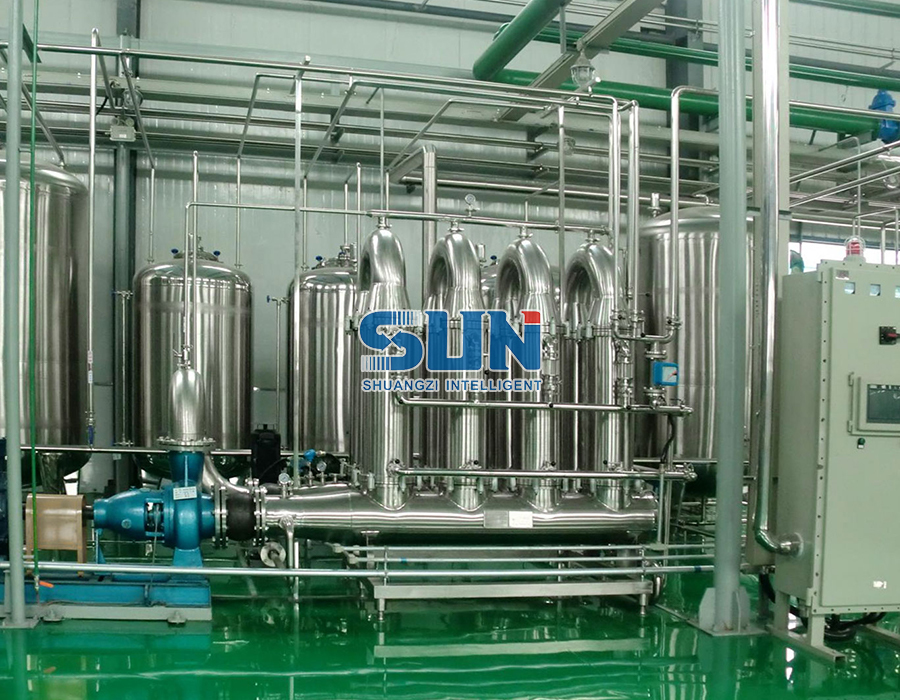
Tubular UHT sterilizers solve this by keeping both the product and the heat exchange medium in turbulent flow inside corrugated tubes. That turbulence does two things: it raises the heat transfer coefficient significantly, and it creates a continuous self-cleaning effect that prevents scale from building up inside the tube. The result is longer uninterrupted production runs and a system that stays comparable with imported equipment in terms of performance.
Heat recovery is the metric most buyers underestimate. A well-designed tubular sterilizer recovers more than 90% of the heat energy after the product has been heated — meaning the steam you consume to bring 1,000 liters to sterilization temperature is not simply vented; most of it preheats the incoming cold product. Over a three-shift operation, that recovery rate translates directly into lower utility costs per ton of output.
Matching Equipment Capacity to Your Production Line
Oversizing sterilization equipment wastes capital and often leads to poor flow velocity at lower throughputs — which can actually reduce sterilization efficacy. Undersizing creates bottlenecks. The table below shows the published specifications for the SUN-UHT series, which covers a range from small-batch operations up to mid-scale continuous production:
| Model | Capacity (t/h) | Heat Exchange Area (m²) | Power (kW) | Steam Use (kg/h) |
|---|---|---|---|---|
| SUN-UHT-0.3 | 0.3 | 4 | 2.0 | 25 |
| SUN-UHT-0.5 | 0.5 | 5 | 2.5 | 40 |
| SUN-UHT-1.0 | 1.0 | 10 | 4.0 | 80 |
| SUN-UHT-2.0 | 2.0 | 20 | 5.5 | 160 |
| SUN-UHT-3.0 | 3.0 | 30 | 6.0 | 240 |
| SUN-UHT-5.0 | 5.0 | 50 | 8.0 | 400 |
A few things stand out in these numbers. The power consumption scales very modestly — doubling capacity from 1.0 t/h to 2.0 t/h adds only 1.5 kW of electrical load, while steam consumption scales roughly linearly. For a manufacturer planning to expand, stepping up one model size is significantly cheaper than purchasing a second unit.
Application-Specific Considerations
Different products demand different sterilization priorities:
- Juice and tea beverages — short high-temperature exposure (UHT) preserves color and vitamin content better than prolonged low-temperature treatment. A tubular system's turbulent flow handles pulp and fiber without clogging.
- Dairy (milk, yogurt base) — protein denaturation is temperature-sensitive. Precise hold-time control at the sterilization temperature is critical; a PLC-controlled system with automated steam intake and valve management reduces operator error.
- Herbal and botanical concentrates — these products often carry higher dissolved solids and natural particulates. The no-dead-angle, no-contact-point tube design prevents adhesion and microbial hiding spots, a requirement that flat-plate systems cannot reliably meet.
- Chemical intermediates — for catalyst sterilization in organic synthesis, material compatibility (SUS316L wetted surfaces) and contamination control take priority over shelf-life extension. The same tubular platform serves these applications without modification.
If your production line spans multiple product types, look for a system built on a modular PLC architecture. The ability to store and recall sterilization programs for different SKUs without reconfiguring hardware is a significant time saver in multi-product facilities. The FDA's guidance on aseptic processing and packaging validation requirements is also worth reviewing before finalizing your equipment specification — particularly the sections on process filing and microbial validation.
What to Verify Before Purchasing
Beyond capacity and application fit, ask any supplier these four questions before committing:
- What is the validated hold time and temperature range? UHT systems should demonstrate sterility at 135°C minimum; confirm this is backed by thermal process documentation, not just a spec sheet claim.
- What is the CIP cycle frequency and duration? A system that requires a 3-hour CIP every 6 hours of production effectively runs at 67% availability. Tubular designs with self-cleaning bellows sections extend run intervals considerably.
- What certifications does the equipment carry? For export-oriented manufacturers or those supplying multinational buyers, CE marking, ASME pressure vessel certification, and ISO 9001 are the baseline.
- Is customization available for viscosity range and particle size? Standard models cover most pumpable liquids, but if your product carries particles above a certain diameter, tube diameter and pump selection need to be reviewed.
Integrating Sterilization into a Wider Processing Line
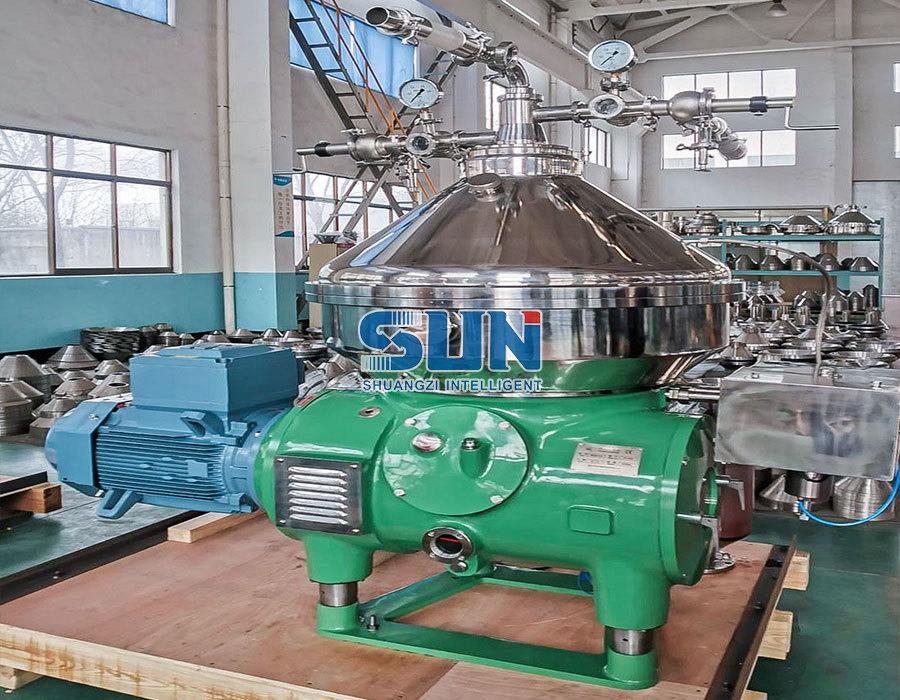
Sterilization rarely operates in isolation. In most food and beverage plants, it sits downstream of extraction or concentration and upstream of aseptic filling. If you're building or upgrading a complete production line, the efficiency gains compound when sterilization, concentration, and separation equipment are specified together — flow rates, pressure ratings, and CIP compatibility all need to align.
For manufacturers running fermentation-based products, the sterilization step is equally critical at the input side — sterilizing the growth medium before inoculation. In those cases, the same tubular sterilizer platform can handle both upstream medium preparation and downstream product sterilization, reducing the total number of equipment types you need to maintain.
The right Sterilization Equipment does not just kill microorganisms — it protects your product quality, extends shelf life predictably, and keeps your production line running without unplanned downtime. Match the technology to your product characteristics first, then optimize for throughput and energy efficiency. That sequence makes the decision considerably more straightforward.