
 英语
英语 俄语
俄语Content
- 1 Why Conventional Distillation Falls Short for High-Value Compounds
- 2 How Molecular Distillation Actually Works
- 3 Industries That Depend on It — and What They're Processing
- 4 Equipment Specifications: What the Numbers Mean
- 5 How to Choose the Right System
- 6 Short Path vs. Wiped Film: A Quick Clarification
- 7 The Bottom Line for Procurement Teams
Why Conventional Distillation Falls Short for High-Value Compounds
Standard distillation works by pushing liquids past their boiling points. That's fine for water or ethanol — but for fish oil, vitamin E, or CBD extract, high temperatures destroy the very compounds you're trying to keep. Molecular distillation takes a fundamentally different approach: instead of boiling, it exploits the difference in the mean free path of vapor molecules under deep vacuum, allowing separation at temperatures that leave heat-sensitive materials completely intact.
The result is a purity and gentleness that no conventional column can match. That's why molecular distillation equipment has become essential across pharmaceuticals, food processing, fine chemicals, and petrochemicals.
How Molecular Distillation Actually Works
The core principle: operate under vacuum high enough that the distance between the evaporation surface and the condensation surface is shorter than the mean free path of the target molecules. At pressures typically below 0.1 Pa, molecules travel from the heated evaporator to the condenser without colliding with each other — no turbulence, no thermal degradation, no re-mixing.
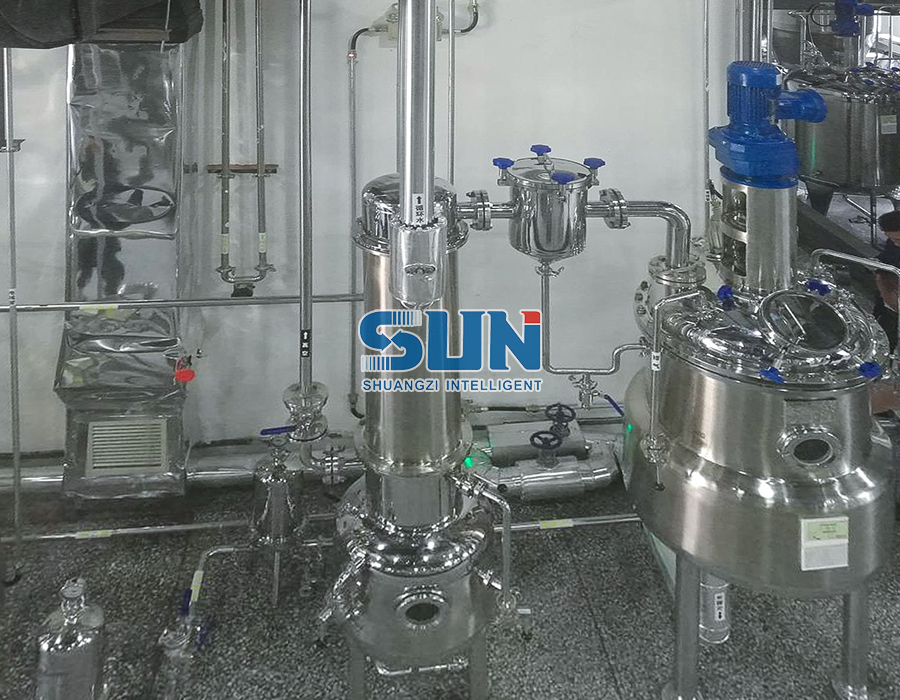
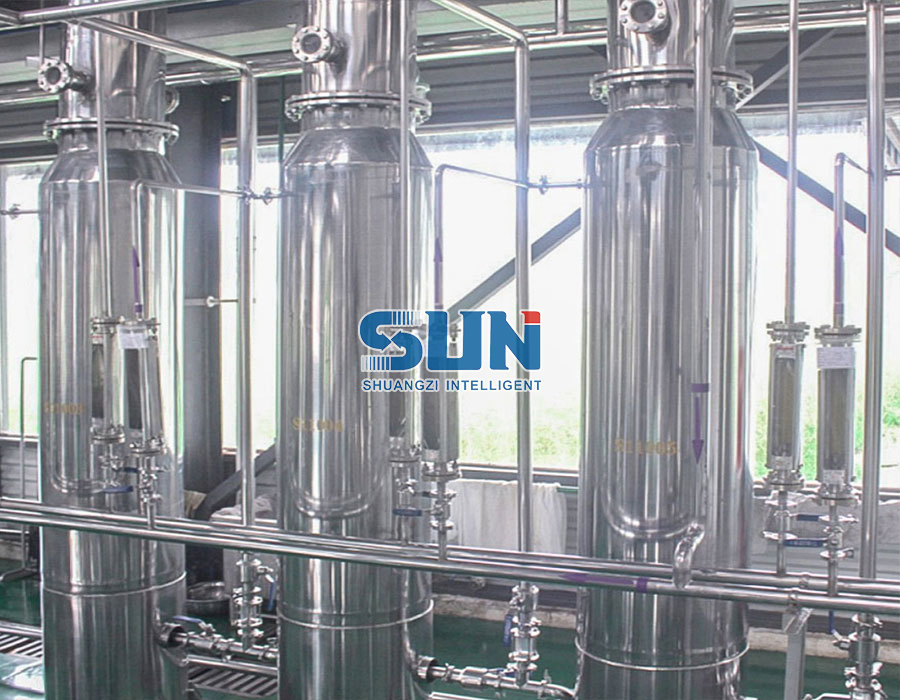
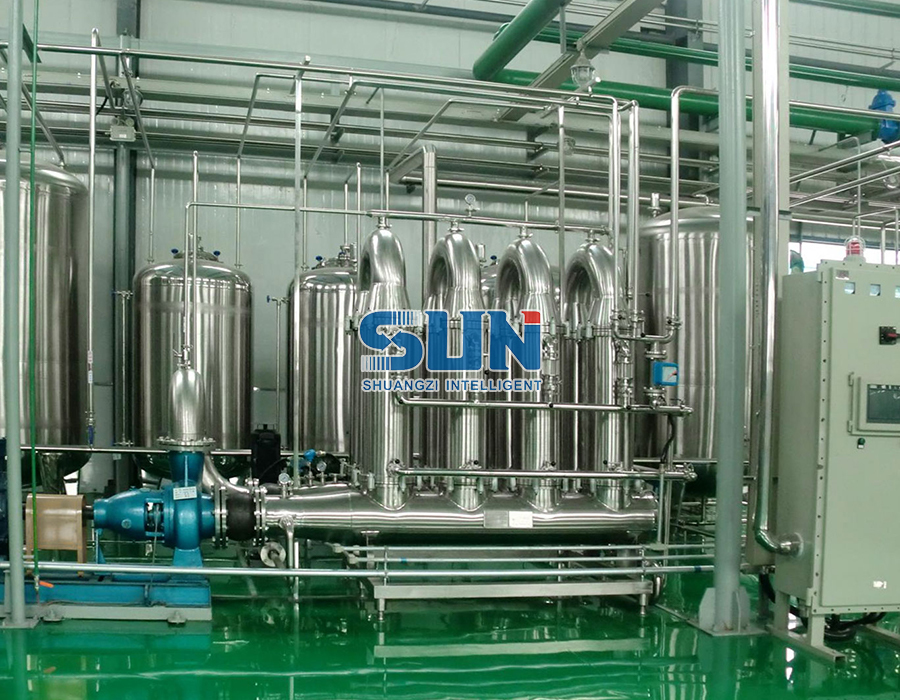
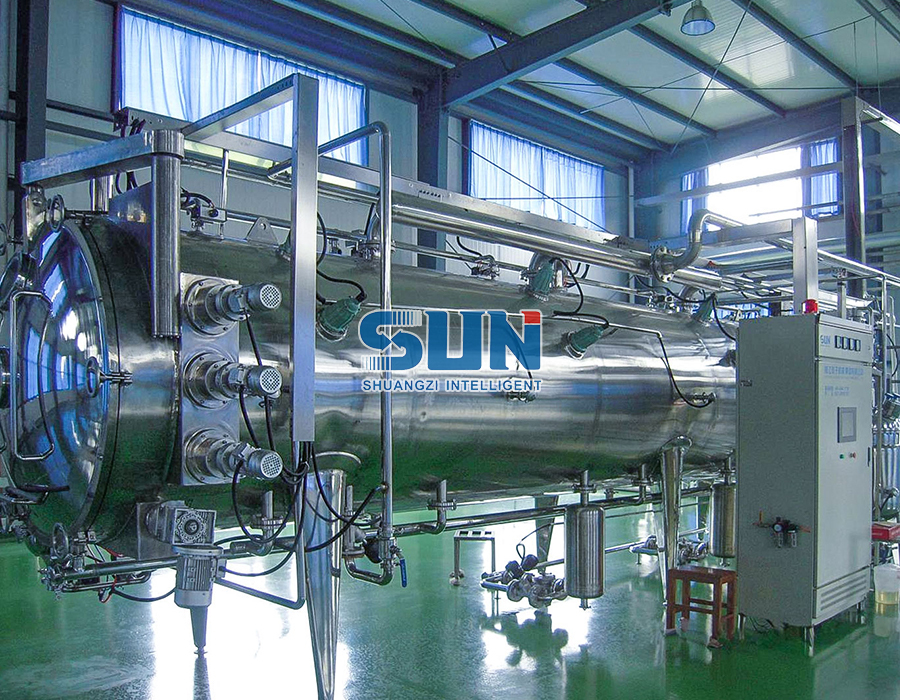
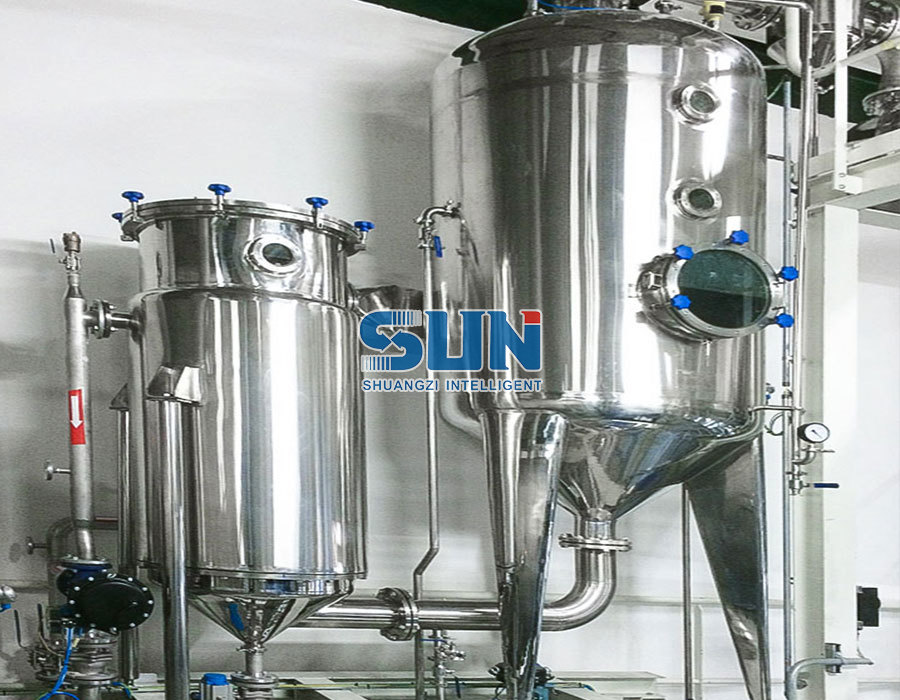
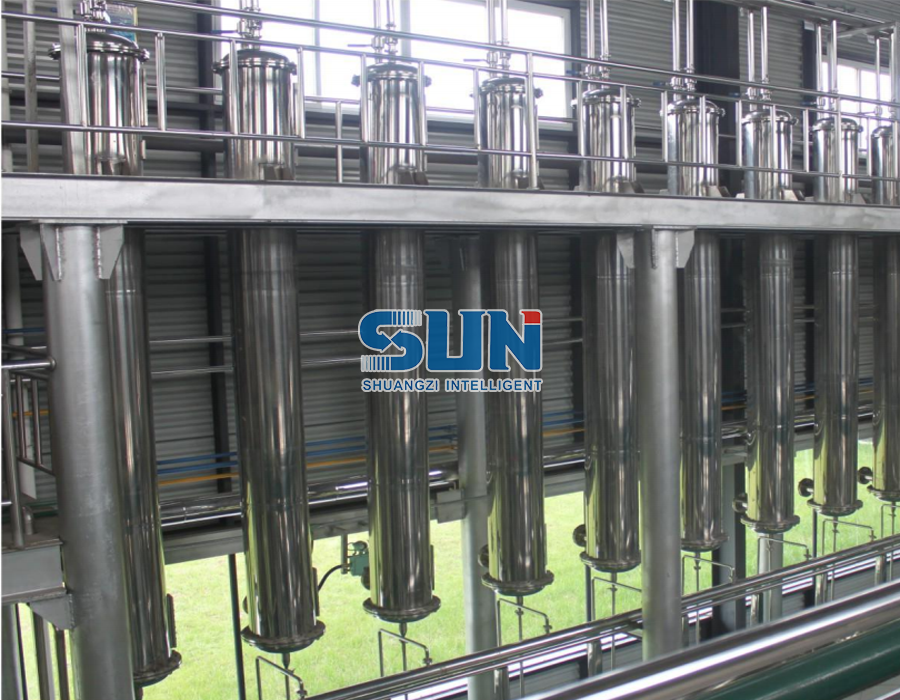
A complete system is not a single vessel. It integrates seven subsystems working in concert: the molecular distillation unit itself, a degassing system, feed system, heating system, cooling system, vacuum system, and a control system. The distillation unit is the heart, and for multi-fraction separation, units are connected in series — each stage pulling a different cut.
This multi-stage series design is what separates industrial-grade systems from lab curiosities. A peer-reviewed review published in Separation & Purification Reviews confirms that molecular distillation has expanded well beyond petrochemicals into nutraceuticals and pharmaceutical-grade purification precisely because of this staged separation capability.
Industries That Depend on It — and What They're Processing
The technology spans four major sectors, each with distinct feedstocks and purity targets:
- Food & Pharmaceutical: Vitamin E concentration, fish oil enrichment (EPA/DHA fractionation), lactic acid purification, high-carbon alcohols, aromatic oils, and fatty acid separation. Fish oil processing alone can use four-stage systems to bring combined omega-3 content above 80%.
- Vegetable Oils & Botanicals: Pepper oil, ginger oil, wheat germ oil, agarwood oil, algal oil, and essential oils for fragrance. The technology removes free fatty acids without solvent addition or chemical reagents — a significant advantage over alkaline refining.
- Fine Chemicals: Fluoropolyethers, silicone oil, polymers, dimeric acid, stearic acid, and lanolin. These are materials with high boiling points and low volatility — exactly the combination where molecular distillation outperforms every alternative.
- Petrochemicals & Specialty Materials: Mineral oil refining, coal-to-oil conversion, biodiesel production, polyurethane intermediates, synthetic lubricants, and organic acids.
For cannabis processors, molecular distillation is the standard finishing step after extraction. The CBD production line integrates distillation as the stage that converts winterized crude into broad-spectrum or isolate-ready distillate.
Equipment Specifications: What the Numbers Mean
Heating area is the primary sizing parameter — it determines throughput, not vessel diameter alone. The SDP series covers the full range from pilot to full industrial scale:
| Model | Heating Area (m²) | Height (mm) | Inner Diameter (mm) | Weight (kg) |
|---|---|---|---|---|
| SDP-6 | 0.06 | 1,000 | φ100 | 80 |
| SDP-50 | 0.5 | 2,100 | φ300 | 480 |
| SDP-100 | 1 | 3,250 | φ350 | 760 |
| SDP-300 | 3 | 4,800 | φ600 | 1,500 |
| SDP-600 | 6 | 5,800 | φ900 | 3,350 |
| SDP-1000 | 10 | 7,100 | φ1,100 | 4,750 |
| SDP-2000 | 20 | 8,300 | φ1,500 | 7,200 |
The jump from SDP-6 (0.06 m²) to SDP-2000 (20 m²) represents a 333× increase in evaporation area. Most pilot programs start with SDP-30 or SDP-50 to validate process parameters before committing to industrial-scale capital.
How to Choose the Right System
Three decisions drive equipment selection, in order of priority:
- Heating area vs. target throughput. Map your annual production volume to required daily throughput, then work backward to heating area using your feedstock's evaporation rate. Undersizing forces multi-shift operation; oversizing means idle capital.
- Number of stages. Single-stage systems handle simple deacidification or deodorization. Two- or three-stage series setups are standard for pharmaceutical purity targets or when separating multiple fractions (e.g., terpenes, cannabinoids, waxes) in a single pass.
- Material and vacuum spec. 316L stainless steel is the baseline for food and pharma contact surfaces. Vacuum capability should reach at least 0.1 Pa for true molecular flow conditions; systems that only reach 1–10 Pa operate closer to conventional vacuum distillation and will not achieve the same selectivity.
If your process involves prior concentration steps — evaporation, extraction, or filtration — integrated separation equipment for plant extraction lines can consolidate those upstream operations with distillation into a single engineered system, which reduces footprint and hand-off losses between steps.
Short Path vs. Wiped Film: A Quick Clarification
The terms are often used interchangeably, but they describe slightly different geometries. Short path distillation (SPD) places the condenser inside the evaporation vessel — minimizing the vapor travel distance to centimeters. Wiped film distillation uses an external condenser and a mechanical wiper to distribute feed across the heated wall in a thin, uniform film. Both operate on molecular distillation principles; wiped film handles higher-viscosity feeds and continuous operation better, while short path systems offer simpler construction for batch or pilot work. See the stainless steel short path distillation system if your application calls for compact, batch-friendly configuration.
The Bottom Line for Procurement Teams
Molecular distillation is not a universal upgrade — it's the right tool for a specific problem: purifying thermally sensitive, high-boiling, or high-value compounds where yield and purity both matter. If your current process involves high rejection rates, thermal degradation losses, or repeated solvent-based purification steps that add cost and waste, this is where to look.
Match the heating area to your throughput, specify the vacuum depth your target compound actually requires, and decide early whether you need a single-pass or multi-stage configuration. Those three decisions account for most of the cost variance between systems — and most of the performance difference in production.