
 英语
英语 俄语
俄语Content
What Is a Separation Machine
A separation machine is industrial equipment designed to divide mixtures into distinct components based on physical or chemical properties such as size, density, magnetism, or solubility. These machines are essential across manufacturing, mining, food processing, wastewater treatment, and pharmaceutical industries where material purity and efficiency directly impact product quality and operational costs.
Modern separation machines range from simple screens and filters to sophisticated centrifuges and magnetic separators, each engineered for specific separation challenges. Understanding their mechanisms and applications helps facilities optimize production processes, reduce waste, and meet regulatory standards.
Primary Types of Separation Machines
Different separation principles require specialized equipment. The following categories represent the most widely deployed separation technologies across industries.
Centrifugal Separators
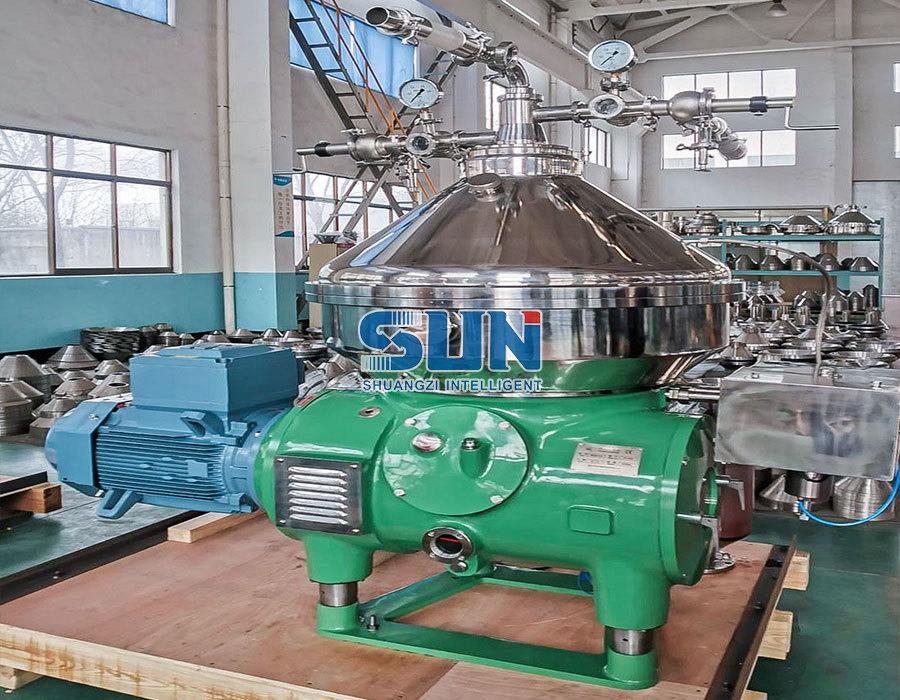
Centrifugal separators utilize rotational force to separate materials by density. When a mixture spins at high speeds—typically 3,000 to 15,000 RPM—denser components migrate outward while lighter materials remain closer to the center. Industrial centrifuges can achieve separation forces exceeding 10,000 times gravity, making them ideal for separating fine particles that gravity settling cannot handle.
Disc stack separators, commonly used in dairy processing, can clarify up to 30,000 liters of milk per hour while removing bacteria and somatic cells. Decanter centrifuges handle solid-liquid separation in wastewater treatment plants, processing sludge volumes ranging from 5 to 100 cubic meters hourly depending on bowl diameter and length.
Magnetic Separators
Magnetic separation machines extract ferromagnetic materials from non-magnetic substances using permanent magnets or electromagnets. These systems are critical in recycling facilities, mining operations, and food safety applications. High-intensity magnetic separators generate field strengths reaching 20,000 Gauss, capable of recovering weakly magnetic minerals like hematite and ilmenite.
In the recycling industry, eddy current separators use alternating magnetic fields to repel non-ferrous metals like aluminum and copper, achieving recovery rates above 95% when processing electronic waste and automobile shredder residue.
Screening and Sieving Equipment
Vibrating screens and rotary sifters separate materials based on particle size using mesh or perforated surfaces. These machines operate on straightforward mechanical principles but deliver precise size classification essential for quality control. Industrial vibrating screens can process 200 to 400 tons of material per hour with separation accuracies down to 20 microns.
Pharmaceutical manufacturers rely on air jet sieving to separate powders without contamination, while aggregate producers use multi-deck screens to simultaneously create four or more size fractions from crushed stone.
Filtration Systems
Filtration machines force mixtures through porous media to separate solids from liquids or gases. Pressure filters, vacuum filters, and membrane systems each address different viscosity, particle size, and throughput requirements. Membrane filtration systems can remove particles as small as 0.001 microns, making them indispensable for pharmaceutical sterile processing and semiconductor manufacturing.
Plate and frame filter presses operate at pressures up to 16 bar, producing filter cakes with moisture contents below 25% in applications ranging from mining tailings dewatering to juice clarification.
Industrial Applications by Sector
Separation machines serve distinct functions across industries, with equipment specifications tailored to material properties and production requirements.
| Industry | Common Separation Machines | Primary Function | Typical Capacity |
|---|---|---|---|
| Food Processing | Disc centrifuges, vibrating screens | Clarification, grading | 10,000-50,000 L/hr |
| Mining | Magnetic separators, jigs | Ore concentration | 50-500 tons/hr |
| Wastewater Treatment | Decanter centrifuges, belt filters | Sludge dewatering | 20-150 m³/hr |
| Pharmaceuticals | Filter presses, membrane filters | Sterile filtration | 100-2,000 L/hr |
| Recycling | Eddy current separators, air classifiers | Material recovery | 5-30 tons/hr |
The petroleum industry relies heavily on three-phase separators that simultaneously separate oil, water, and gas from wellhead production. These systems handle flow rates from 5,000 to 100,000 barrels per day while operating at pressures up to 1,500 PSI in offshore platforms.
Selection Criteria for Separation Equipment
Choosing the appropriate separation machine requires systematic evaluation of material characteristics, production demands, and economic factors. The following parameters determine equipment suitability.
Material Properties
- Particle size distribution: Screens handle particles above 20 microns, while centrifuges separate submicron materials
- Density differential: Minimum 0.1 g/cm³ difference required for gravity separation, 0.05 g/cm³ for centrifugal separation
- Magnetic susceptibility: Ferromagnetic materials separate above 300 Gauss field strength, paramagnetic minerals require 15,000+ Gauss
- Viscosity: High-viscosity fluids (above 1,000 cP) limit centrifuge effectiveness and require specialized designs
- Chemical compatibility: Corrosive materials necessitate stainless steel, titanium, or polymer-lined equipment
Process Requirements
Production volume directly influences equipment sizing. A brewery producing 50,000 hectoliters annually requires different centrifuge capacity than a craft operation making 2,000 hectoliters. Batch operations tolerate longer cycle times, while continuous processes demand uninterrupted separation.
Desired product purity establishes separation efficiency targets. Pharmaceutical applications may require 99.99% purity, while aggregate screening accepts 95% accuracy. Higher purity demands typically increase equipment complexity and capital costs by 40-60%.
Economic Considerations
Total cost of ownership extends beyond purchase price to include energy consumption, maintenance requirements, and consumable replacement. A decanter centrifuge may cost $150,000 to $500,000 but consume 75-150 kW continuously, generating annual electricity costs exceeding $50,000 at industrial rates.
Maintenance intervals vary significantly: magnetic separators require minimal servicing beyond periodic cleaning, while vibrating screens need bearing replacement every 8,000-12,000 operating hours. Filter media replacement in pressure filters can represent 15-25% of annual operating costs depending on material abrasiveness.
Performance Optimization Strategies
Maximizing separation efficiency requires attention to operational parameters and equipment configuration. Small adjustments to these variables can improve throughput by 10-30% without capital investment.
Operational Parameter Control
Feed rate significantly affects separation quality. Overloading a vibrating screen by just 15% beyond rated capacity can reduce separation efficiency from 95% to 78% as particles don't have adequate residence time on the screen surface. Centrifuge bowl speed adjustments change G-force exponentially, allowing fine-tuning for different feed materials.
Temperature control proves critical in liquid-solid separations. Reducing feed temperature by 10°C can increase viscosity sufficiently to decrease centrifuge capacity by 20%. Conversely, pre-heating certain slurries improves separation by lowering viscosity and enhancing density differences.
Maintenance Best Practices
- Monitor vibration levels weekly on rotating equipment; increases above baseline indicate bearing wear or imbalance
- Track differential pressure across filters; replace media when pressure differential exceeds manufacturer specifications
- Inspect screen surfaces monthly for blinding or tears that reduce effective screening area
- Clean magnetic separator surfaces daily in high-throughput applications to maintain field strength effectiveness
- Implement predictive maintenance using oil analysis on gearboxes to identify wear before failure
Integration with Process Systems
Automated control systems enhance separation consistency by adjusting parameters in real-time. Sensors monitoring feed density, flow rate, and product quality trigger immediate corrections, maintaining optimal separation even as feed composition varies. Facilities implementing automated control report 12-18% efficiency improvements compared to manual operation.
Pre-treatment stages often determine separator performance more than the separator itself. Installing classifying hydrocyclones before centrifuges removes coarse particles that could damage internal components, extending equipment life by 30-40% while improving final product quality.
Emerging Technologies in Separation
Recent technological advances expand separation capabilities while reducing energy consumption and environmental impact. These innovations address limitations of conventional equipment.
High-Gradient Magnetic Separation
Superconducting magnetic separators generate field strengths exceeding 50,000 Gauss, enabling recovery of previously uneconomical paramagnetic minerals. Pilot plants processing kaolin clay demonstrate 99% iron removal using this technology, compared to 85-90% with conventional high-intensity separators. Although capital costs remain 3-4 times higher than traditional systems, operational costs decrease by 60% due to reduced energy consumption.
Advanced Membrane Systems
Ceramic membranes with pore sizes down to 0.0001 microns achieve virus-level filtration while withstanding extreme pH, temperature, and pressure conditions. These systems operate at 90% lower transmembrane pressure than polymer membranes, reducing pumping energy by 70%. Food and beverage producers adopt ceramic membranes for cold sterilization, eliminating thermal degradation of heat-sensitive products.
Sensor-Based Sorting
X-ray transmission, near-infrared spectroscopy, and laser-induced breakdown spectroscopy enable particle-by-particle sorting at rates exceeding 10 tons per hour. These systems identify material composition and selectively eject particles using precision air jets, achieving purities above 99% in mining applications. Recycling facilities use sensor-based sorters to separate mixed plastics by polymer type, creating material streams suitable for high-value applications.
Safety and Regulatory Compliance
Separation equipment presents specific hazards requiring comprehensive safety protocols and regulatory compliance. Understanding these requirements prevents accidents and ensures legal operation.
Operational Hazards
Centrifuges spinning at high speeds store tremendous kinetic energy—a 1-meter diameter bowl rotating at 10,000 RPM contains energy equivalent to 2 kg of TNT. Catastrophic failure releases this energy explosively, mandating containment shields and regular non-destructive testing. OSHA requires protective enclosures capable of containing fragments if bowl failure occurs.
Magnetic separators create powerful fields that can accelerate ferrous objects to dangerous velocities. Exclusion zones prevent personnel from approaching powerful electromagnets while energized, and warning systems alert operators before magnet activation.
Environmental Regulations
Discharge from separation equipment must meet water quality standards. Centrifuge overflow water containing suspended solids above 30 mg/L requires additional treatment before release to municipal systems or natural waterways. Filter press wash water, potentially contaminated with heavy metals in mining applications, necessitates treatment to below 0.1 mg/L for specific metals.
Dust generation from dry separation systems triggers air quality regulations. Facilities processing materials creating airborne particulates above 15 mg/m³ require dust collection systems and periodic stack testing to demonstrate compliance with Clean Air Act provisions.