
 英语
英语 俄语
俄语Content
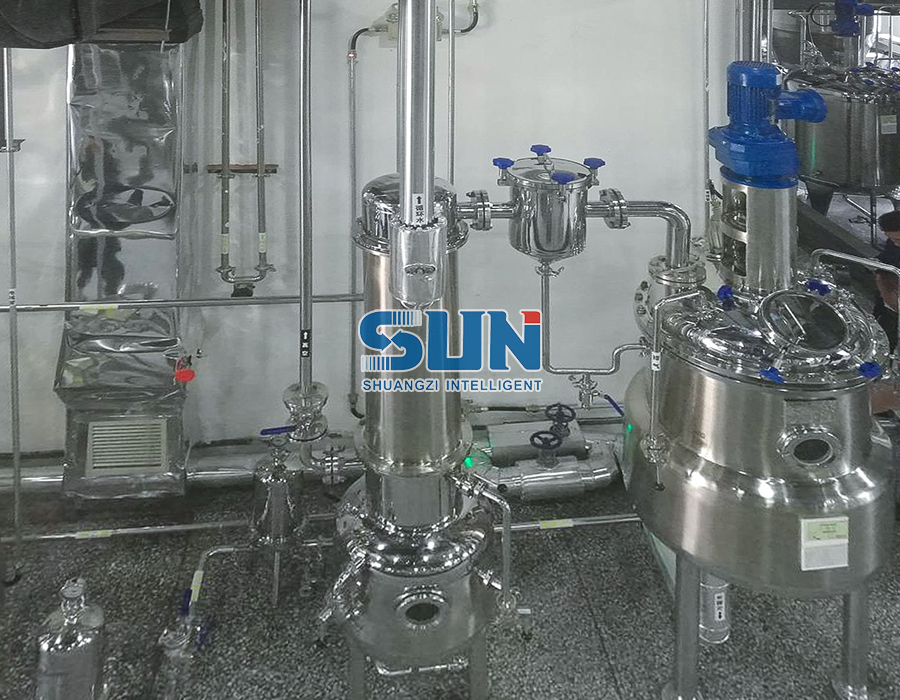
A chemical stainless steel stirred tank reactor delivers the essential balance of corrosion resistance, precise thermal regulation, and adaptable mixing for aggressive processes. With 316L or 304 stainless steel construction, jacket and internal coil temperature control, and a range of impeller options, it safely handles hydrogenation, nitration, polymerization, and condensation across industries from pharmaceuticals to petrochemicals.
Material Integrity and Corrosion Resistance
The choice of stainless steel grade directly governs reactor lifespan and process purity. Austenitic grades such as 304 and 316L dominate chemical reactor construction because they maintain structural stability across a wide temperature window while resisting attack from organic acids, alkalis, and oxidizing media.
- 316L stainless steel contains 2–3% molybdenum, which dramatically improves resistance to pitting and crevice corrosion in chloride-containing environments. It can sustain continuous service temperatures up to 300°C and is preferred for reactor bodies handling halogenated compounds or acidic catalysts.
- 304 stainless steel offers excellent resistance to nitric acid and organic acids at moderate temperatures, making it a cost-effective option for general chemical processing, dyes, and food-grade applications where chloride stress is minimal.
- The electropolished surface finish (typically Ra ≤ 0.4 μm) guarantees hygienic cleaning and prevents product adhesion, critical for pharmaceutical and fine chemical reactions where cross-contamination must be eliminated.
These materials also offer a low thermal expansion coefficient and reliable weldability, ensuring that jacketed vessels maintain integrity through repeated thermal cycling between -20°C and 300°C without stress cracking.
Thermal Management via Jacket and Internal Coils
Achieving tight temperature control during exothermic or endothermic reactions depends on the heat transfer configuration. Chemical stainless steel stirred tank reactors typically combine an external jacket with internal helical coils, and the heating and cooling circuits are sized based on the reaction enthalpy and desired ramp rate.
| Medium | Temperature Range | Advantage |
|---|---|---|
| Hot water | Up to 95°C | Mild, uniform heating |
| Thermal oil | 150°C – 300°C | High temperature without pressurization |
| Steam | 100°C – 200°C | High heat transfer coefficient (500–1500 W/m²K) |
| Chilled brine / glycol | -20°C to 5°C | Low-temperature cooling for sensitive intermediates |
Jacket types include a conventional full jacket, a half-pipe coil jacket welded to the shell for high-pressure thermal fluids, and dimple jackets for lighter duty. When the jacket surface area is insufficient, an internal coil heat exchanger can be submerged directly into the reaction mass, increasing the effective heat transfer area by 30–50% and improving temperature uniformity even in high-viscosity mixtures.
Agitation Systems and Mixing Performance
Mixing in a chemical stirred tank reactor must accomplish blending, solids suspension, gas dispersion, and heat transfer simultaneously. The impeller selection determines power input, flow pattern, and shear rate, all of which affect yield and selectivity. Typical tip speeds range between 3 and 8 m/s for effective macromixing without excessive mechanical degradation.
- Propeller and pitched-blade turbines create an axial flow pattern that rapidly circulates low-viscosity fluids, delivering mixing times under 30 seconds in a well-baffled vessel.
- Rushton and concave disc turbines generate radial flow with high shear, essential for gas-liquid reactions such as hydrogenation, where bubble breakup directly increases mass transfer coefficient (kLa).
- Anchor and helical ribbon impellers scrape the vessel wall and promote bulk turnover in laminar regimes, making them suitable for polymerization and rubber vulcanization where viscosities exceed 50,000 cP.
A combination of a bottom disperser and an upper axial impeller often provides the most robust multiphase mixing profile, preventing solid settling while maintaining efficient gas holdup across scales from 100-liter pilot reactors to 20,000-liter production units.
Sealing Solutions for Pressure and Vacuum Integrity
The shaft sealing device is a primary safety barrier, especially for reactions involving flammable solvents or toxic intermediates. Modern chemical stainless steel stirred tank reactors employ either single or double mechanical seals with integrated cooling and lubrication systems. A double cartridge mechanical seal can reliably contain pressures up to 6.4 MPa and maintain vacuum integrity down to 1 mbar absolute.
For ultra-hazardous chemistries, magnetically driven agitators eliminate the dynamic seal entirely. Though they add capital cost, magnetic drives remove the risk of fugitive emissions and reduce maintenance cycles by up to 60% over a five-year operating period. The seal selection must align with the process safety review and the expected number of pressure-temperature cycles.
Process Optimization and Scale-Up Factors
Moving from laboratory synthesis to a commercial chemical stainless steel stirred tank reactor requires preserving geometric similarity and constant power per unit volume. Equal tip speed is often kept constant during scale-up to maintain similar shear rates, while the Reynolds number in the vessel indicates the mixing regime.
- Validate heat removal capacity: the surface area-to-volume ratio decreases with size, so internal coils become critical above 5,000 liters to remove the same heat generation rate.
- Confirm gas-liquid mass transfer: hydrogenation and oxidation reactions demand a consistent kLa value, often achieved by increasing the impeller power input in larger vessels.
- Adapt baffle design: standard four-baffle configurations with a width of 1/10th the tank diameter prevent vortex formation without causing solid accumulation behind the baffle.
Reactions such as alkylation and nitration, which are highly exothermic, benefit from a coil-plus-jacket rapid cooling circuit capable of absorbing a heat release spike of 200–400 W/kg without overshooting the set point. By coupling computational fluid dynamics with empirical mixing and heat transfer correlations, a chemical stainless steel stirred tank reactor can be configured to meet targeted conversion rates above 98% in batch or semi-batch operations.