
 英语
英语 俄语
俄语Content
- 1 What the Biologics Development Process Actually Covers
- 2 Upstream Decisions That Lock In the Cost of Goods
- 3 Downstream Purification: Where Yield and Timelines Disappear
- 4 Analytical Methods and Formulation: the Quiet Bottleneck
- 5 Process Validation and Technology Transfer
- 6 Equipment and Facility Choices That Decide the Timeline
- 7 Frequently Asked Questions About the Biologics Development Process
A program that needs three to six months just to isolate a stable, high-expressing clone is not behind schedule. One that finds out at the 2,000 L scale that a buffer step cannot be reproduced is. The biologics development process exists to move those discoveries down to the smallest and cheapest scale available, where a failed experiment costs a week instead of a GMP lot.
What the Biologics Development Process Actually Covers
The biologics development process is the staged sequence of cell line engineering, upstream culture, downstream purification, analytical characterization, formulation and process validation that turns a candidate molecule into a drug substance which can be manufactured reproducibly at commercial scale. It is a risk-reduction sequence rather than a checklist, and each stage exists so that failures happen cheaply.
Every stage gate asks the same question: is the data good enough to justify the next tenfold increase in cost? If the answer is no, the program stays where it is until it is.
Development runs on two tracks at once. The product track owns the molecule, the formulation and the clinical plan. The process track owns the cell line, the culture and the purification train. They meet at technology transfer, and that handover is where assumptions carried over from a laboratory bench become expensive in a plant.
Target product profile. One to three months. Route, dose, presentation and the critical quality attributes the process has to deliver.
Cell line development. Three to six months. Transfection, selection, single-cell cloning and a clonal stability study of roughly sixty days.
Upstream process development. Two to four months. Media, feed strategy, parameter ranges, then scale-up from 2 L to 50 L.
Downstream process development. Three to six months. Capture, viral inactivation, polishing and ultrafiltration into the formulation buffer.
Analytical and formulation work. Four to eight months, usually in parallel. Method qualification, forced degradation and stability.
Process characterization and validation. Six to twelve months. Qualified scale-down models, then engineering runs and PPQ lots.
Upstream Decisions That Lock In the Cost of Goods
Upstream development decides the cost of goods, because titer and culture duration set the bioreactor volume a product occupies for its entire commercial life. A process delivering 2 g/L instead of 5 g/L does not simply cost more per gram; it needs a larger facility to make the same mass.
For monoclonal antibodies the platform is mature: CHO cells, chemically defined media, a fed-batch of ten to fourteen days and titers in the range of three to eight grams per litre. Control parameters are well known, with temperature near 37 degrees Celsius, dissolved oxygen between 30 and 50 percent and pH between 6.8 and 7.2, but they do not scale linearly. Mixing time, oxygen transfer and tip speed all change with vessel geometry, which is why scale-up is a modelling exercise rather than a multiplication.
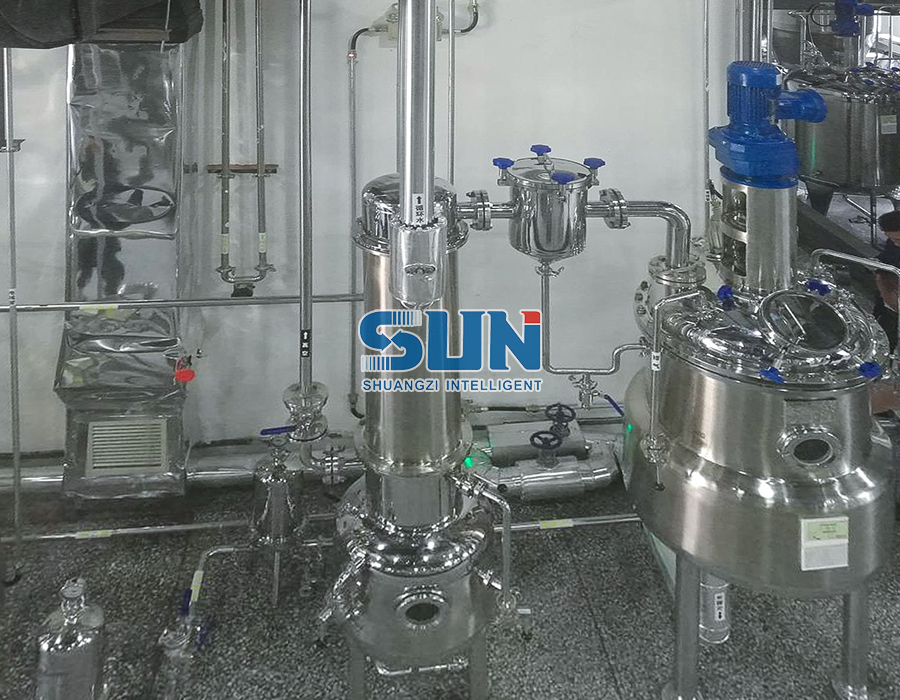
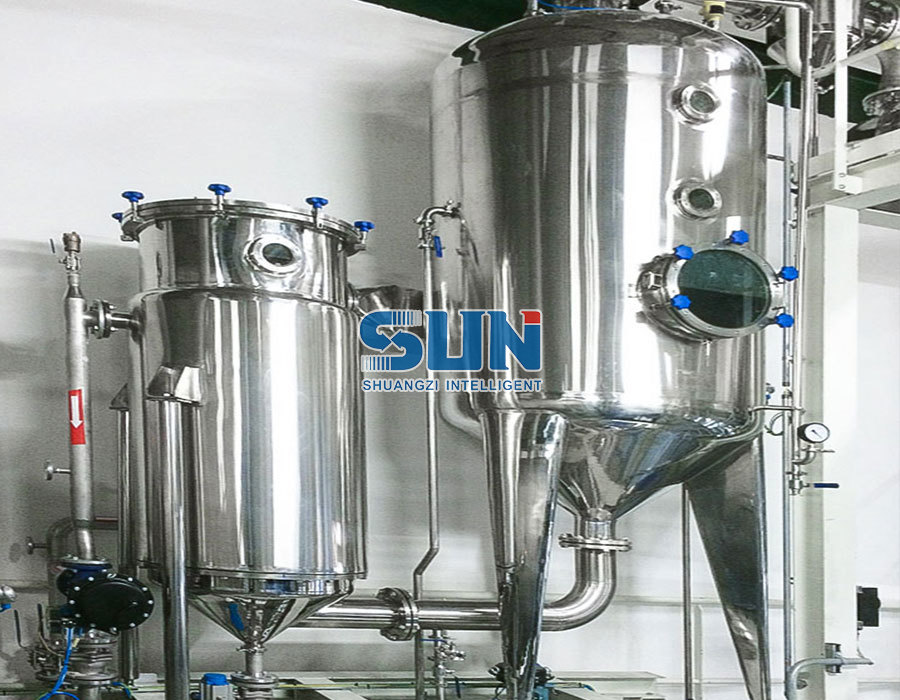
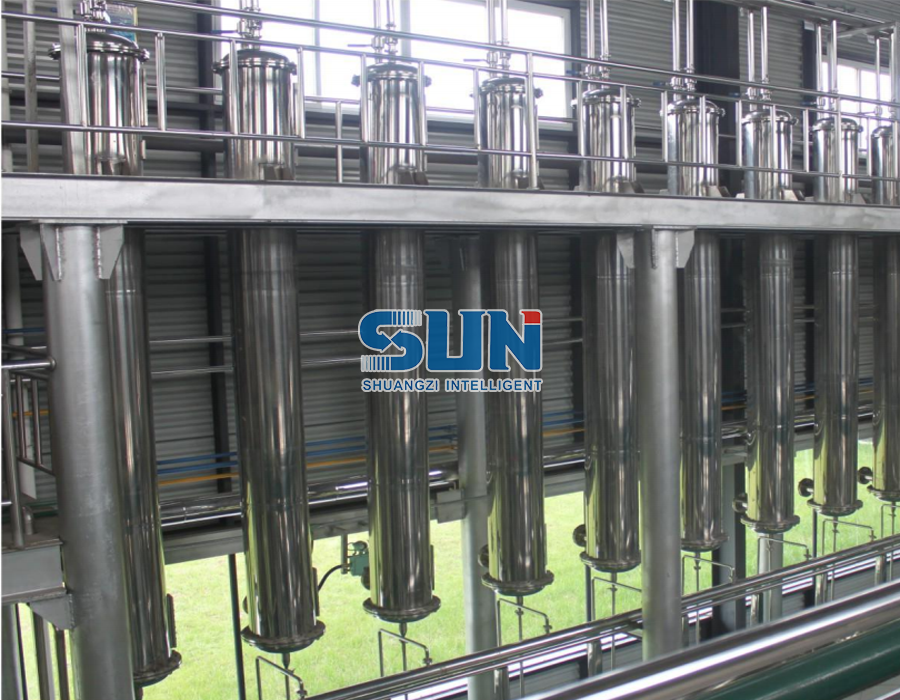
Pilot and production-scale fermentation systems are usually the longest-lead item in the process area, so the vessel decision is taken early and defended later. A useful reference point is a completed biofermentation project in which the same vessel platform had to serve both process development and pilot supply.
Stainless steel
- Higher capital cost and longer delivery
- Steam-in-place cleaning with validated cycles
- Proven above 2,000 L working volume
- Repairable, with a long service life
Single-use
- Lower capital cost and faster changeover
- Extractables and leachables data required
- Practical ceiling near 2,000 L
- Higher consumable cost per batch
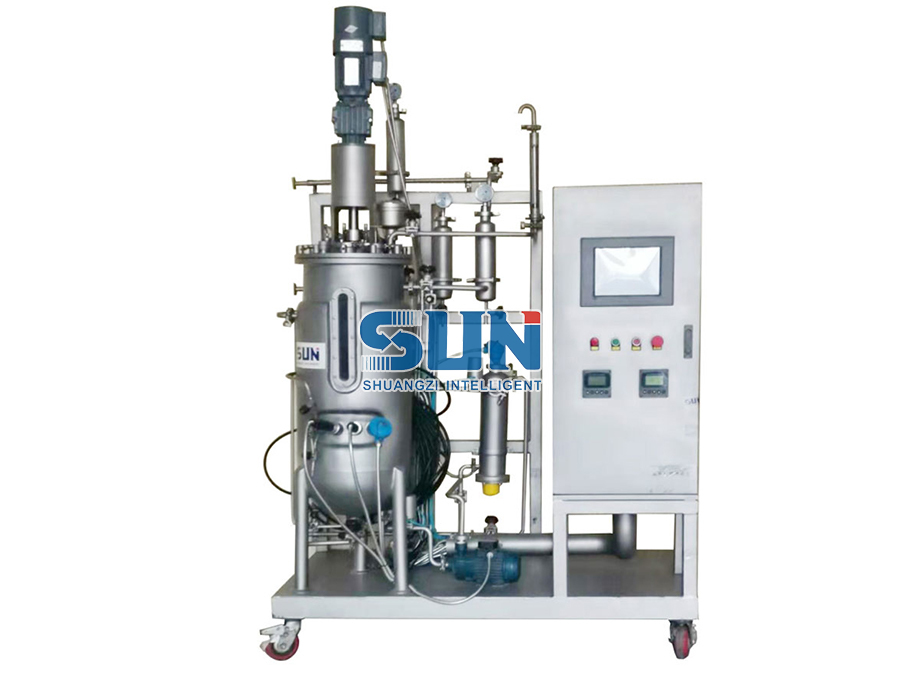 Pilot-Scale Stainless Steel Mechanical Agitated Fermenter for Microbial CultureA pilot fermenter for strain cultivation and parameter optimization, placed where early vessel choices support later process development and pilot supply.View Product →
Downstream Purification: Where Yield and Timelines Disappear
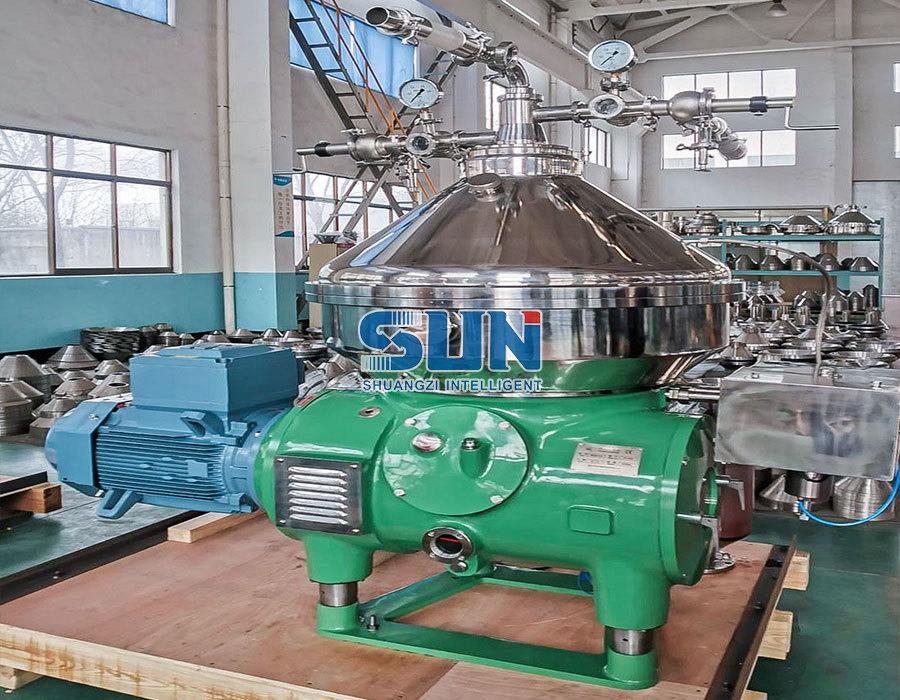
Downstream processing is where most process failures surface, because a purification train of five steps can lose more than half of the product, and every step retained for purity must also be validated for clearance. A conventional monoclonal antibody train starts with affinity capture, then a low-pH viral inactivation hold, then one or two polishing steps, then ultrafiltration and diafiltration. Yield and purity are traded against each other at every stage, and that trade is fixed by the clearance data filed with the regulator.
| Unit operation | Typical step yield | Critical parameter | Frequent failure |
| Affinity capture chromatography | 85 to 95 percent | Load challenge, elution pH, resin age | Resin fouling, wrong pooling, ligand leaching |
| Low-pH viral inactivation | 90 to 98 percent | pH 3.5 to 3.7, 30 to 60 minutes, 20 to 25 degrees Celsius | Incomplete mixing, aggregation |
| Polishing chromatography | 80 to 95 percent | Conductivity and pH window, load factor | Weak host cell protein and DNA clearance |
| Ultrafiltration and diafiltration | 90 to 99 percent | Transmembrane pressure, crossflow rate | Membrane fouling, concentration polarization |
| Viral filtration | 85 to 98 percent | Filter sizing, pressure limits | Premature plugging, oversized filter area |
Rule of thumb: budget a 20 to 30 percent yield loss for every chromatography step in early development, then defend each step you decide to keep. Every retained step adds buffer volume, analytical work and validation cost.
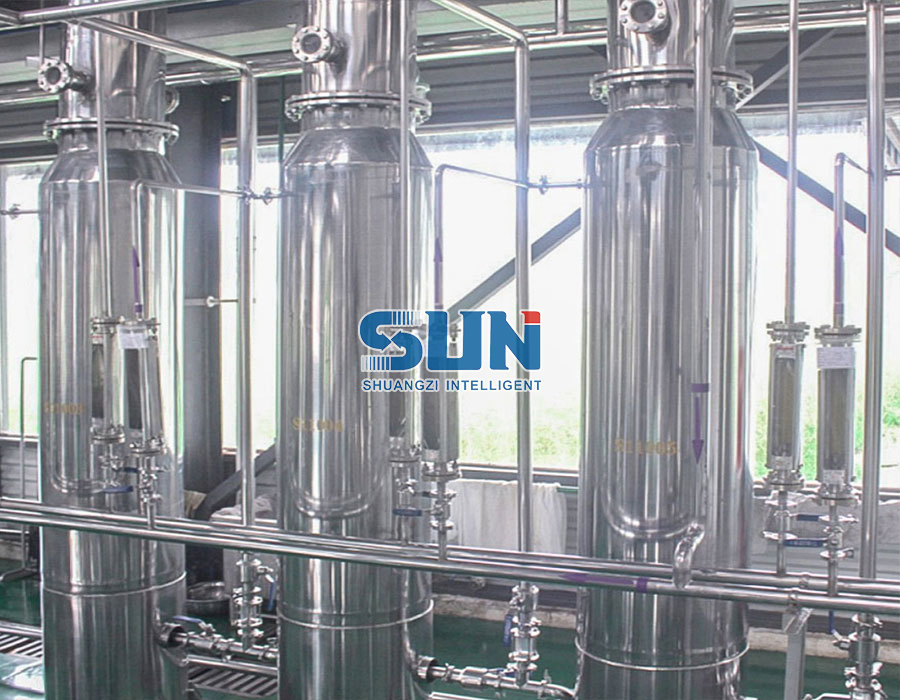
Membrane filtration and tangential flow systems sit at the end of the train, where concentration factor, diafiltration volume and membrane area determine whether the batch fits the tank you already own.
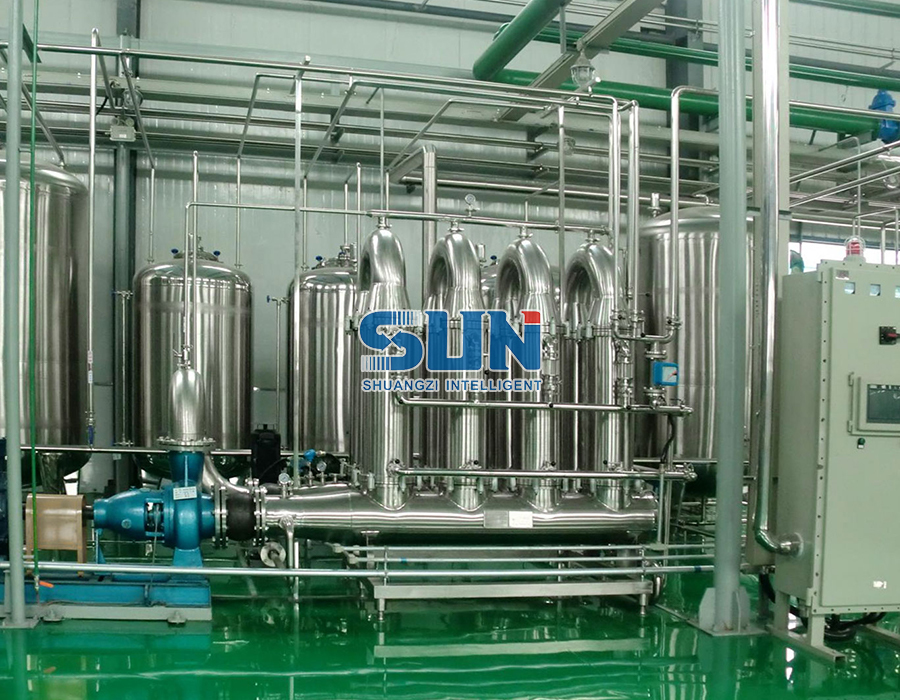 Plant Extraction Membrane Separation Equipment for Clarification and ConcentrationMembrane filtration system for plant extracts and fermentation products, suited to purification and concentration steps at the end of a downstream train.View Product →
Analytical Methods and Formulation: the Quiet Bottleneck
Analytical and formulation work rarely delays the first clinical batch, but it almost always delays the license application, because neither method qualification nor stability data can be compressed. An unqualified method cannot release a lot, and a stability study runs in real time.
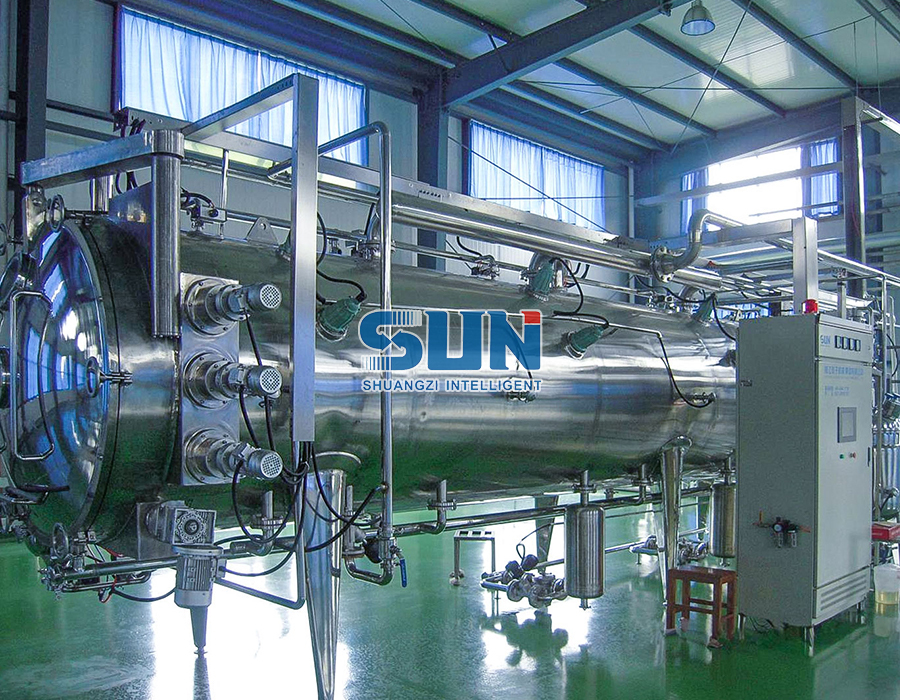
Formulation for a biologic normally means a buffer, a tonicity agent, a surfactant and sometimes a sugar or an amino acid. Subcutaneous products push concentration into the 100 to 150 mg/mL range, where viscosity, aggregation and injection-site tolerance stop being formulation details and become development problems. Liquid presentations are simpler to make; lyophilised or vacuum low-temperature dried presentations are chosen when the molecule cannot survive the cold chain.
Analytical development is not support work. It defines what the process has to deliver, and it is the only part of the program that more money cannot accelerate.
Process Validation and Technology Transfer
Process validation for a biologic is a lifetime commitment rather than a single campaign, and the PPQ run of three consecutive commercial-scale lots is only its most visible checkpoint. Process characterization comes first: a qualified scale-down model, proven acceptable ranges, and a defensible split between critical process parameters and critical quality attributes.
Technology transfer carries most of the schedule risk, because the receiving site inherits the parameters but not the tacit knowledge behind them. A transfer package that leaves out hold times, buffer preparation order or mixing behaviour will reveal those gaps during engineering runs, when the plant is already staffed.
Process description with normal operating ranges and proven acceptable ranges for every unit operation
Scale-down model justification, including mixing and mass transfer comparability data
Analytical method transfer plan with pre-defined acceptance criteria
Equipment and utility gap assessment covering vessel geometry, oxygen transfer and cleanability
Hold-time and cleaning validation studies with worst-case conditions documented
Automation recipes, alarm limits and data integrity controls for electronic records
Equipment and Facility Choices That Decide the Timeline
Once the process is fixed, the long-lead equipment list usually sets the schedule rather than the science. The bars below show typical industry lead times quoted for a new biologics train; changing a vessel size after purchase restarts the clock.
Material and finish choices are settled at the same time. Product-contact surfaces for a biologic are normally SUS316L stainless steel with an internal finish of roughly 0.4 to 0.8 micrometres Ra, welded and passivated, and clean-in-place cycles have to be validated alongside the process. Single-use assemblies move the cleaning burden to the supplier, but they also move the extractables and leachables documentation burden into your filing.
Equipment checklists are worth reading before the specification is frozen, and a practical starting point is this guide on what to look for when selecting equipment for a biofermentation project.
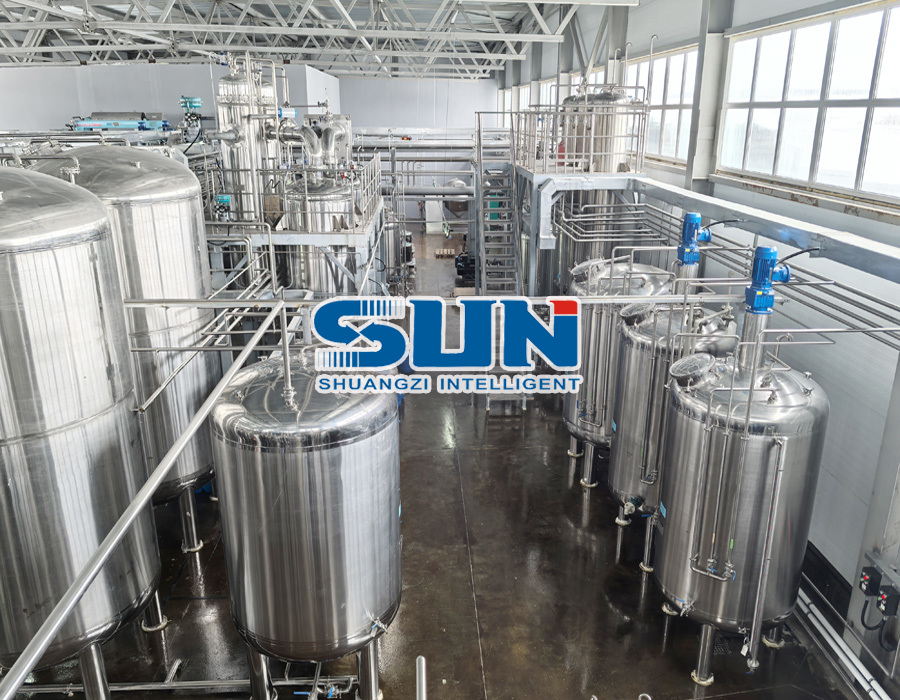 Turnkey Extraction Production Lines for Plant, Herbal, and CBD ProcessingCategory of turnkey extraction lines for pectin, herbs, tea polyphenols, astaxanthin, rosemary, curcumin, hemp oil, and CBD, useful before freezing project specifications.View Product →
Frequently Asked Questions About the Biologics Development Process
How long does the biologics development process take?
From molecule selection to a first commercial approval, biologics typically take four to seven years. The development phase itself, from cell line to a Phase I enabling process, usually runs 18 to 30 months, with clinical supply, process validation and regulatory review accounting for the remainder.
What is the difference between upstream and downstream processing?
Upstream processing covers everything from the vial of cells to the harvest: cell line, media, bioreactor control and recovery of the culture fluid. Downstream processing takes that harvest through capture chromatography, viral inactivation, polishing, ultrafiltration and formulation. Upstream sets how much product is made; downstream decides how much survives.
Why is process validation mandatory for biologics?
Biologics cannot be fully characterized by end-product testing alone, so regulators require evidence that the process itself consistently delivers the required quality. In practice that means a qualified scale-down model, characterization aligned with ICH Q8 to Q11, and three consecutive PPQ lots before commercial release.
Which step is hardest to accelerate with more budget?
Analytical method qualification and real-time stability, because both depend on calendar time and on data collected at defined intervals. Cell line and process development can be parallelized or outsourced, but a twelve-month stability study cannot be shortened without weakening the filing.