
 英语
英语 俄语
俄语Content
- 1 What Is an Evaporation Concentration Machine — and Why Does It Matter?
- 2 How It Works: The Core Principle
- 3 Main Types of Evaporation Concentration Equipment
- 4 Multi-Effect Systems: Where Energy Savings Get Real
- 5 How to Choose the Right Concentration Machine
- 6 Applications Across Industries
- 7 Key Takeaway
What Is an Evaporation Concentration Machine — and Why Does It Matter?
Every liter of water you remove from a solution costs energy, time, and space. That's the core problem evaporation concentration equipment solves: it strips solvent from a liquid mixture under controlled heat and vacuum conditions, leaving behind a denser, more concentrated product — efficiently and without damaging what's inside.
The technology is foundational across pharmaceutical manufacturing, plant extraction, food processing, and industrial wastewater treatment. If you're running a production line that handles liquid solutions — herbal extracts, fruit juice, dairy concentrates, chemical intermediates — the right concentration machine is one of the most consequential equipment decisions you'll make.
How It Works: The Core Principle
At its simplest, a concentration machine heats the feed liquid to its boiling point, causing the solvent (usually water) to vaporize. That vapor is then condensed and either recovered or discharged. What remains is a concentrated solution with higher solids content.
Most industrial systems operate under vacuum (reduced pressure), which lowers the boiling point of the liquid — often to 45–70°C instead of 100°C. This matters enormously when you're working with heat-sensitive materials like plant extracts, enzymes, or pharmaceutical intermediates. Lower temperature means fewer degraded active compounds and better final product quality.
The evaporated secondary steam from one stage can be reused as the heating source for the next, which is the principle behind multi-effect systems and the reason they consume dramatically less energy than single-effect alternatives.
Main Types of Evaporation Concentration Equipment
Choosing the wrong evaporator type is expensive. Here's a practical breakdown of what's available and where each type fits.
| Type | Best For | Key Advantage |
|---|---|---|
| Falling Film Evaporator (Single/Double/Triple Effect) | Thin, low-viscosity liquids; food, pharma, plant extracts | Short residence time, low fouling, high efficiency |
| Forced Circulation Evaporator | Viscous or scaling-prone solutions; crystallization | Handles high solids; resistant to scaling |
| Scraper (Thin Film) Evaporator | High-viscosity or heat-sensitive materials; plant extracts, DEA | Prevents fouling on tube walls; excellent for sticky materials |
| MVR Evaporator | Large-scale, high-volume operations requiring low operating costs | Recompresses vapor mechanically; 70–80% energy savings |
| Flash Evaporator | Pre-concentration or flash evaporation of low-concentration feeds | Fast, continuous operation; simple structure |
| Spherical Evaporator | Small-batch and laboratory operations | Compact, easy to clean, flexible for R&D |
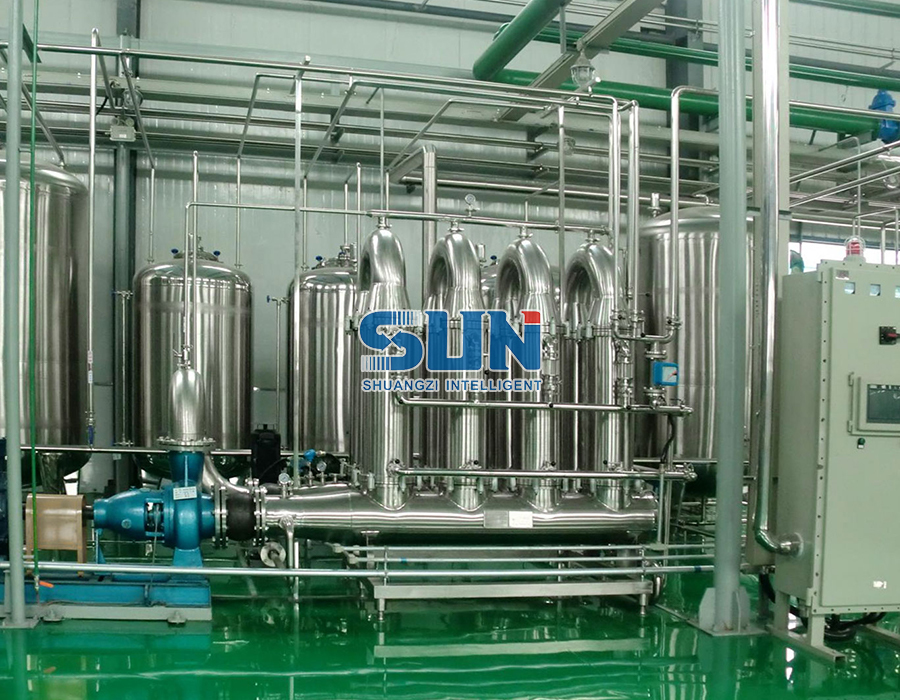
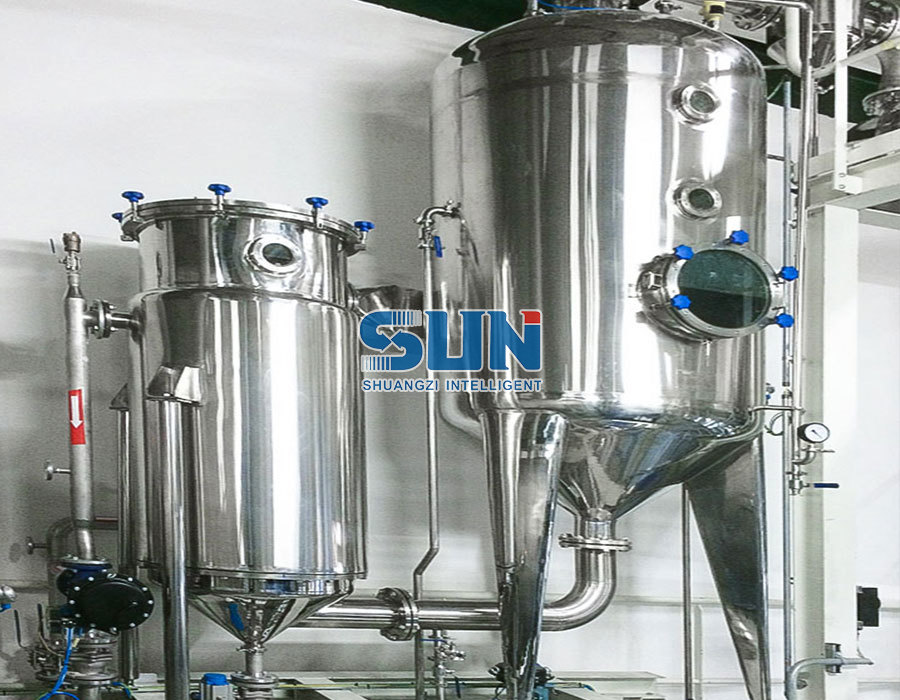
For plant extraction applications — CBD, herbal medicine, stevia, pectin, rosemary — falling film evaporators and scraper evaporators dominate, because they protect bioactive compounds while handling continuous large volumes. browse the full range of industrial concentration machines for plant extraction projects to see the complete product lineup.
Multi-Effect Systems: Where Energy Savings Get Real
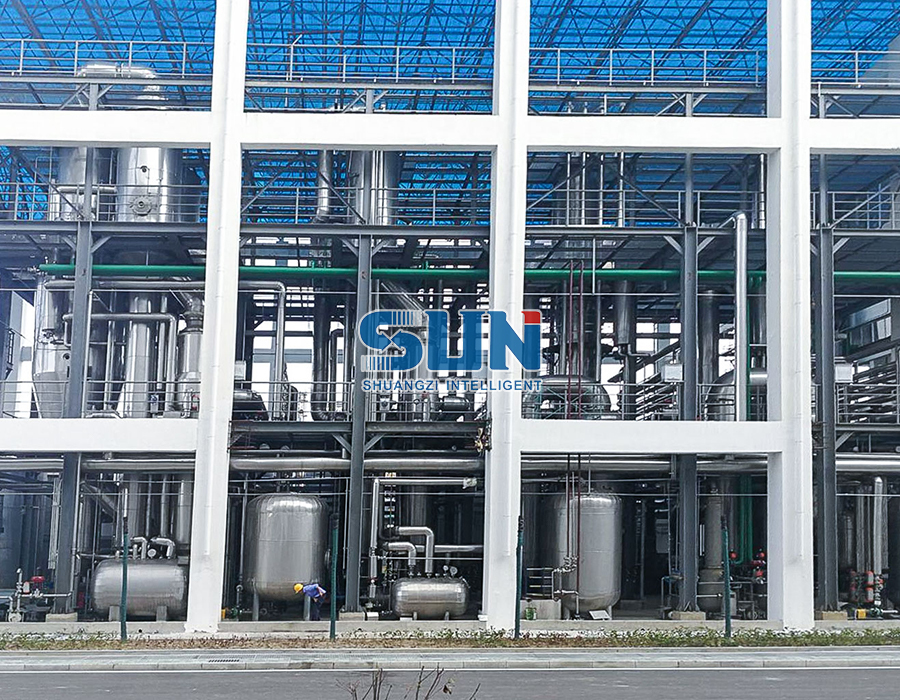
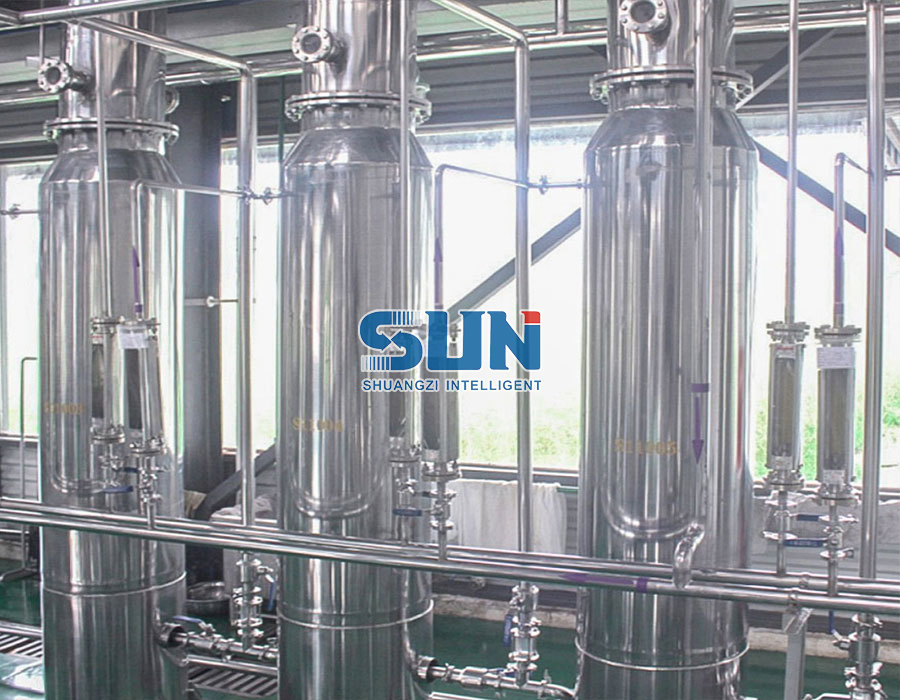
A single-effect evaporator uses one unit of steam to evaporate roughly one unit of water. A three-effect falling film evaporator uses that same steam three times — each stage's vapor becomes the next stage's heat source. The result: steam consumption drops by over 60% compared to single-effect operation.
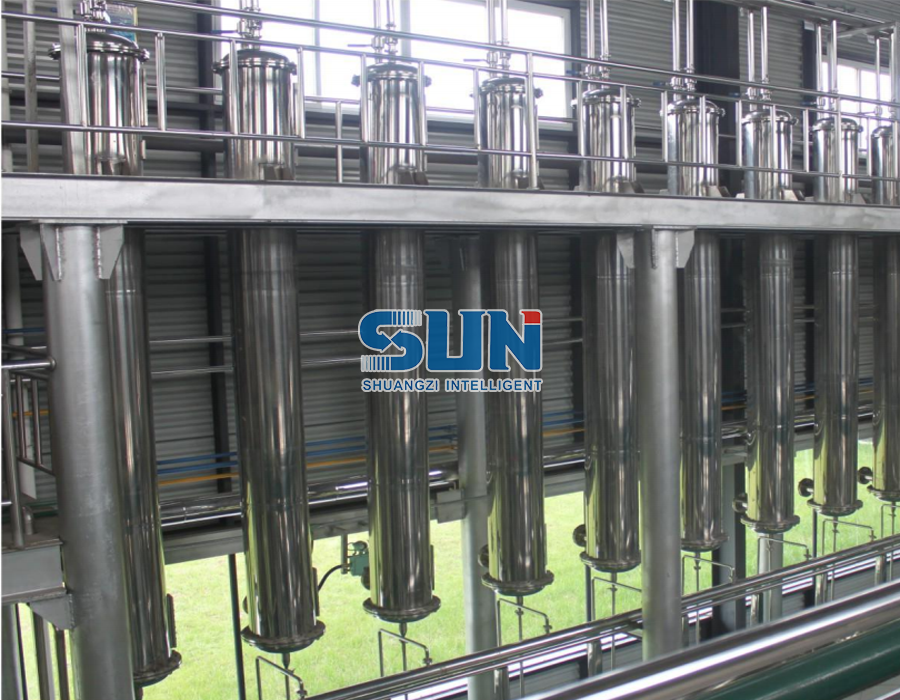
Take the SJM3-series three-effect falling film evaporator as a concrete example. At 4,800 kg/h evaporation capacity, it consumes only 1,600 kg/h of steam, operating across three staged temperatures (70°C / 57°C / 45°C across the three effects). It can take a feed concentration of around 11.5–12% and bring it up to 45–48% output — a concentration ratio exceeding 4:1 — while running on just 32.5 kW of total electrical power.
For high-volume operations in food, dairy, or industrial chemical processing, upgrading from single to triple-effect systems typically pays back the capital difference within 12–24 months purely through energy savings.
How to Choose the Right Concentration Machine
Three questions determine 90% of the selection decision:
- What is the viscosity and fouling tendency of your feed? Low-viscosity, clean liquids suit falling film evaporators. Sticky, high-viscosity, or crystallizing materials need forced circulation or scraper designs.
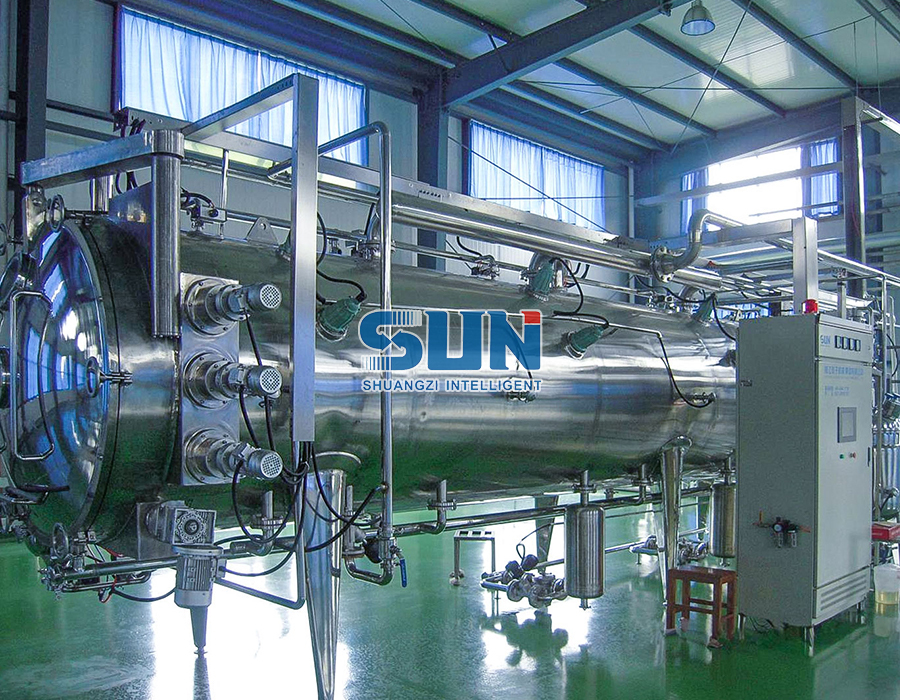
- How heat-sensitive is your product? For heat-sensitive materials (botanical extracts, enzymes, certain pharma intermediates), vacuum falling film or scraper evaporators operating at 45–60°C are safer than conventional designs. The vacuum scraper evaporator designed for plant extract concentration is a strong choice for this category.
- What throughput and concentration ratio do you need? Define your required evaporation rate (kg/h) and target output concentration. This directly determines whether a single, double, or triple-effect system — or an MVR — makes economic sense for your operation.
Material of construction matters too. Pharmaceutical and food-grade applications typically require SUS304 or SUS316L stainless steel contact surfaces, certified to GMP or equivalent standards. Equipment certified under ASME, CE, and ISO 9001 ensures the unit will meet both domestic and export compliance requirements.
Applications Across Industries
Evaporation concentration equipment sees active use in a wide range of sectors. In pharmaceutical and botanical extraction, it concentrates herbal medicine extracts, CBD oil, and active pharmaceutical intermediates without degrading sensitive compounds. In food and beverage manufacturing, it processes fruit juice, dairy, bone broth, and sauces — raising solids content for downstream drying or packaging. Chemical processing relies on concentration equipment for handling industrial liquids like diethanolamine (DEA) and other process chemicals. Wastewater treatment facilities use it to reduce effluent volume before disposal or resource recovery.
The complete turnkey plant extraction production lines integrate concentration equipment alongside extraction, separation, and drying stages — a setup that eliminates integration risk when a full production line is required.
Key Takeaway
A concentration machine is not a commodity purchase — it's a process-critical asset that affects product quality, energy cost, and throughput for the life of your facility. Match the evaporator type to your material's viscosity and heat sensitivity. Size the system to your actual throughput targets, and factor in multi-effect or MVR configurations whenever energy cost is a significant operating variable. The right equipment, sized and specified correctly, will consistently outperform a mismatched system regardless of brand.