
 英语
英语 俄语
俄语Content
Every percentage point of energy waste in a concentration process compounds across thousands of operating hours. That's why process engineers in food, pharma, and chemical manufacturing keep coming back to the same piece of equipment: the falling film evaporator. Not because it's new — it isn't — but because the physics behind it are hard to beat.
How It Actually Works
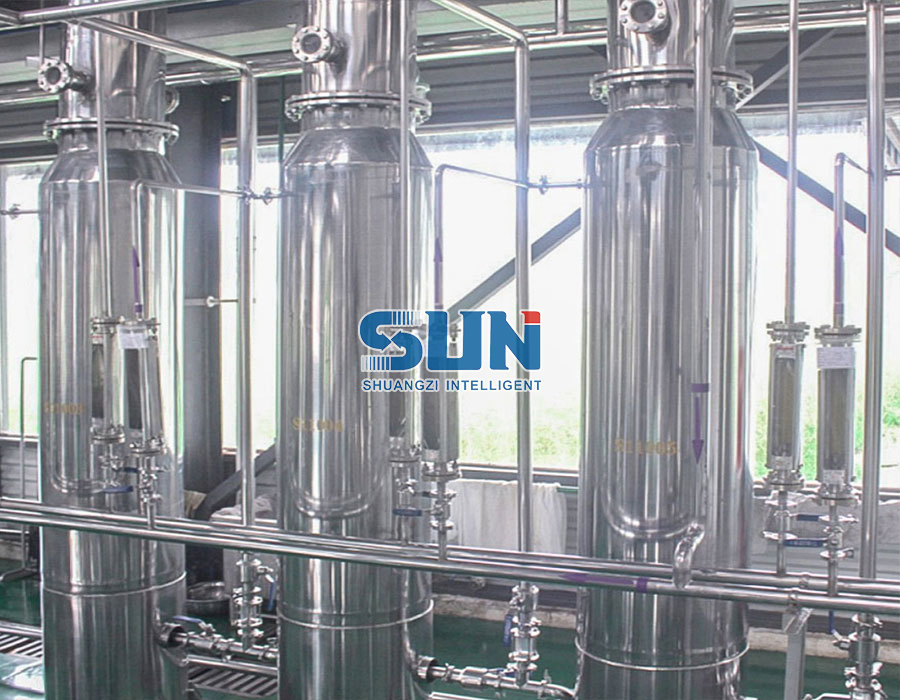
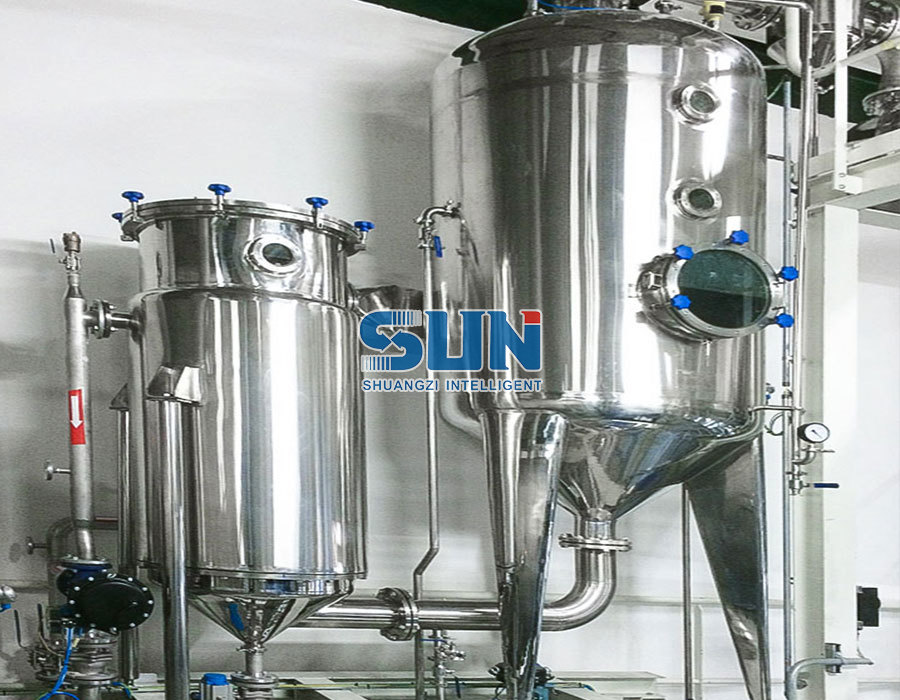
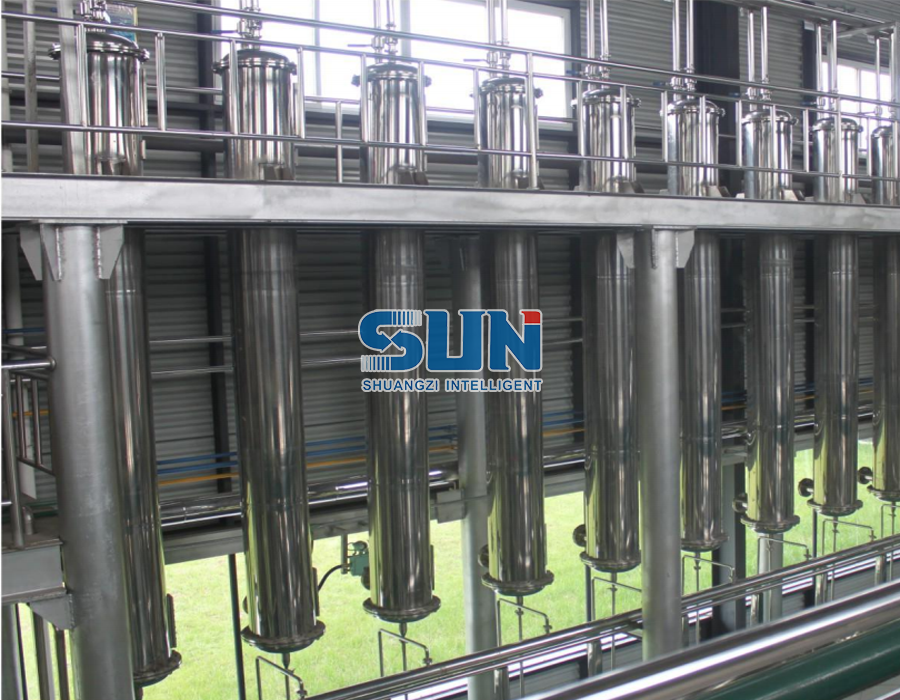
The operating principle is straightforward. Liquid feed enters at the top of a vertical tube bundle and is distributed evenly across all tubes by a precision ferrule system. Gravity pulls the liquid downward, forming a continuous thin film along the inner tube walls. Steam or hot water circulates on the outside. The thin film — only a few millimeters thick — heats rapidly, and the solvent evaporates almost immediately.
Because the film is so thin, heat transfer rates are exceptionally high, meaning less energy input achieves the same evaporation outcome compared to conventional evaporator designs. The vapor and concentrated liquid separate at the bottom and are collected independently for further processing or recycling.
One critical design detail: the liquid distributor at the top must deliver perfectly uniform coverage across every tube. Uneven distribution creates dry spots, which reduce efficiency and can cause localized fouling or thermal degradation of sensitive compounds.
Why Engineers Choose It Over Other Evaporator Types
The most common alternatives — forced circulation evaporators and rising film units — each carry trade-offs. Forced circulation handles high-viscosity and crystallizing fluids well, but it recirculates product repeatedly through intense heat, which matters when you're concentrating flavors, active pharmaceutical ingredients, or botanical extracts. Rising film evaporators have higher residence times and greater temperature exposure.
The falling film design wins on three specific metrics:
- Residence time — liquid passes through the heated zone in seconds, not minutes. Flavors, nutrients, and heat-labile compounds remain intact.
- Energy consumption — multi-effect configurations and vapor recompression can reduce steam demand significantly. Published figures cite 30%+ energy savings versus single-pass alternatives in comparable applications.
- Throughput density — capacities exceeding 150 t/h are achievable with a compact footprint, making it practical for large-scale continuous production without expanding the facility.
It also operates well under vacuum, which lowers the boiling point of the process liquid — an important advantage when concentrating temperature-sensitive materials like herbal extracts, dairy products, or pharmaceutical intermediates.
Where It's Used and Why the Fit Matters
The industries that rely heavily on falling film evaporation tend to share a common pressure: concentrate without damaging the product.
Plant extraction and botanical processing is a prime example. When concentrating extracts from stevia, hemp, or traditional herbs, even a few extra degrees of thermal exposure can degrade the target compounds. A concentration system built for plant extraction must combine gentle evaporation with reliable scale-up — exactly what the falling film configuration offers.
Pharmaceutical and fermentation applications add another layer of complexity. Active ingredients, enzymes, and fermentation broth metabolites are sensitive to both temperature and oxidation. Short contact time under vacuum, combined with inert stainless steel construction (SUS304 or SUS316L), keeps product integrity intact from batch to batch.
Food and beverage processing — juice concentration, dairy, syrups — often requires CIP (clean-in-place) compatibility and fast product changeover. The falling film evaporator's relatively low liquid hold-up makes it responsive to process changes and faster to clean than larger-volume designs.
Matching the Right Configuration to Your Process
Not all falling film evaporators are equivalent in practice. The key specification decisions are:
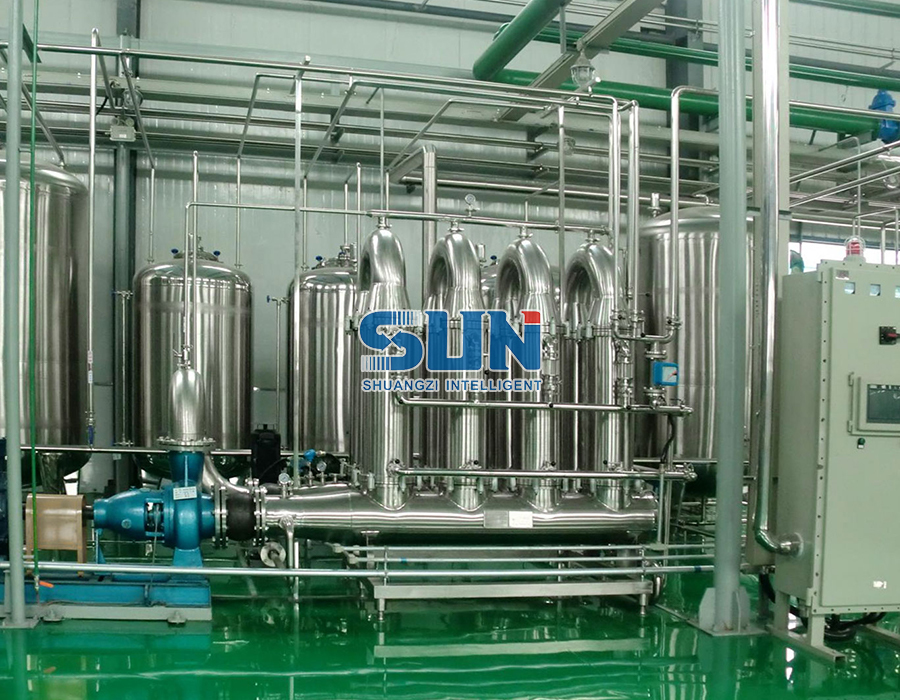
- Single-effect vs. multi-effect — single-effect units are simpler and lower in capital cost; multi-effect systems recycle secondary steam across multiple stages, dramatically reducing operating costs in high-volume or continuous applications.
- Material of construction — SUS316L is the standard for pharmaceutical and food-grade applications due to its superior corrosion resistance. For chemical processing, material selection depends on the specific process fluid's corrosivity.
- Viscosity range — falling film evaporators perform best at viscosities below 100–200 cP. Beyond that range, film formation becomes uneven and heat transfer degrades. Forced circulation becomes the better choice above approximately 500 cP.
- Vapor recompression option — for operations running continuously at high volume, adding a mechanical or thermal vapor recompressor substantially reduces steam consumption, cutting long-term operating costs.
Common Operational Problems and How to Avoid Them
Two failure modes account for most performance issues in the field. The first is fouling — deposits build up on tube walls, increasing thermal resistance and reducing evaporation rate. Research on industrial juice concentration found that fouling can cause a sharp efficiency drop when recirculation is insufficient or cleaning intervals are extended. The practical fix is a regular CIP cycle calibrated to the specific fouling behavior of your process fluid.
The second is maldistribution — liquid flow across the tube bundle becomes uneven, leaving some tubes with inadequate film coverage while others are overfed. This is almost always a distributor design or maintenance issue. Properly specified ferrules and routine inspection of distribution components keep this under control.
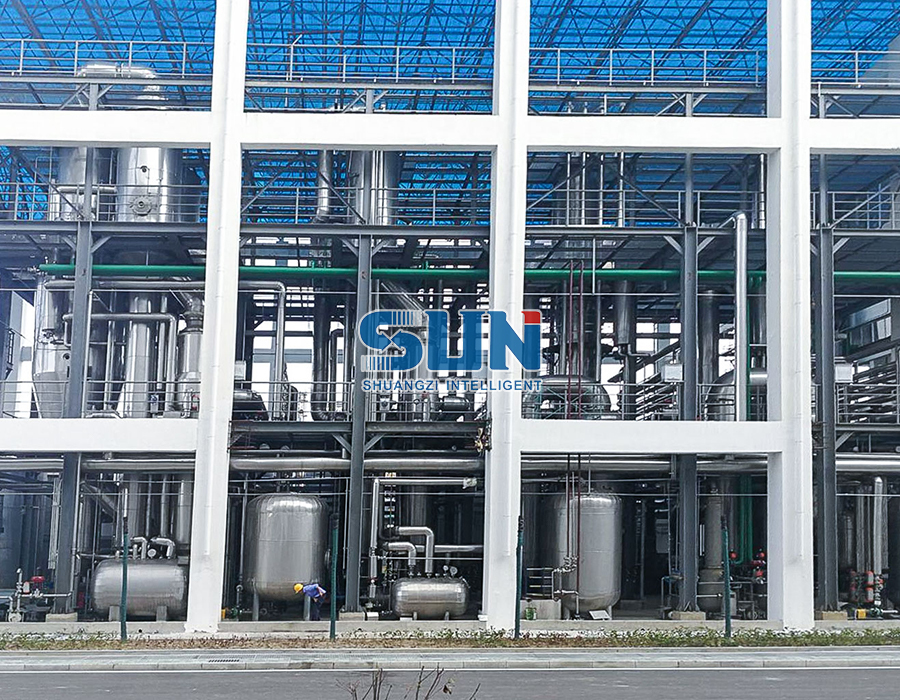
Both problems are manageable with the right equipment design from the outset. Specifying a vacuum double-effect falling film evaporator with precision-engineered distributors and CIP-ready construction eliminates most of these risks before commissioning.
The Bottom Line for Procurement and Engineering Teams
If your process involves concentrating a liquid that is heat-sensitive, high-volume, or both — the falling film evaporator is likely the most cost-effective long-term solution. The capital investment is offset by lower energy consumption, reduced product loss, and higher throughput consistency over the equipment's lifetime.
For teams evaluating options for plant extraction, pharmaceutical concentration, or food processing lines, the right starting point is understanding your specific viscosity range, required capacity, and product sensitivity — then matching those parameters to the appropriate effect configuration and material spec. Getting those details right at the design stage is considerably cheaper than correcting them after installation.