
 英语
 俄语
Content
- 1 What microbial cell line development actually delivers
- 2 Screening is usually the bottleneck, not construction
- 3 Scale-up parameters that decide whether a clone survives the fermenter
- 4 Specifying the pilot bioreactor before the first engineering run
- 5 From pilot to production: containment, cleaning and documentation
- 6 Frequently asked questions
The science is well travelled: transform a host, isolate single colonies, screen for productivity and stability, bank the winner. What separates a 14-week program from a 30-week one is rarely the construct. It is the sequencing of screening, analytics and pilot capacity, and whether the fermenter can reproduce what a 96-well plate promised.
What microbial cell line development actually delivers
Microbial cell line development ends with one banked strain, a reproducible process description, and data that a manufacturing team can audit without calling the scientist who made the clone.
In microbial work the cell line is a strain, and the deliverable is a cell bank chain rather than a single vial: a research bank for early work, a master cell bank for the process, and working banks derived from it. Each bank carries a passage number, a viability record and a sterility result, and those three numbers follow the project through every later scale.
What belongs in the development package
- A clonality record: single-colony isolation or a verified single-cell workflow, not a plated pool.
- Genotype confirmation: construct sequence, copy number and integration site where relevant.
- Growth and productivity data at two scales, typically microplate and shake flask or small bioreactor.
- Stability data across the intended generation window, commonly 60-80 generations for a production strain.
- Marker and host justification, because an antibiotic-resistance marker tolerated in a 2 L flask can be rejected at filing.
That last point reshapes development strategy more often than expected. Food-protein and pharmaceutical programs increasingly ask for marker-free or food-grade hosts, and the decision is cheapest to make before cloning, not after the master cell bank is frozen.
Screening is usually the bottleneck, not construction
Throughput and assay variance, not the number of constructs, decide how fast a microbial cell line development program moves.
Building a strain takes days. Ranking several hundred candidates with data good enough to defend takes weeks, and most of that time sits in sample handling rather than cultivation.
The stages that consume calendar time
- Transformation, recovery and primary selection on solid medium.
- Colony picking into 96-well or 24-well plates, ideally with imaging to confirm single colonies.
- Micro-scale cultivation in deep-well plates or microbioreactor arrays with controlled humidity.
- Analytical triage: titre, gel or HPLC purity, enzyme activity, and any product-specific assay.
- Promotion of 10-20 candidates into shake flasks or 1-2 L bioreactors for a second, independent ranking.
Three habits reduce that risk without new equipment. Run candidate plates in at least two independent repeats and rank on the mean. Randomise plate position, because edge wells evaporate faster and drift upward in concentration. Fix the media lot and the reader for the whole campaign, then record both in the development report. Where the assay itself is noisy, invest in the assay before adding more clones.
Scale-up parameters that decide whether a clone survives the fermenter
Match oxygen transfer and mixing at the small scale first; matching impeller speed is a reliable way to fail at 200 L.
| Parameter | Typical target | What to verify at the larger scale |
| kLa | 200-800 per hour, host dependent | Measured by dynamic gassing-out, not borrowed from a correlation |
| Peak oxygen uptake | 50-150 mmol per litre per hour for high-cell-density E. coli | Compressor, sparger and condenser headroom at maximum demand |
| Tip speed | 2-5 m per second | Shear-sensitive hosts need a larger, slower impeller, not a faster one |
| Dissolved oxygen | 20-30 percent of saturation | Cascade tuning and probe response time, which can mask a real drop |
| pH | 6.8-7.2 for E. coli, 5.5-6.5 for many yeasts | Base strength and maximum addition rate, not just the setpoint |
| Feed rate | Exponential feed matched to growth rate | Balance accuracy at low flow, and the actual achieved feed profile |
Oxygen demand varies by host, and the comparison below is the quickest way to sanity-check whether a pilot skid has the headroom a clone will need.
Feed strategy is the second half of scale-up. Plasmid-bearing strains lose productivity when growth rate is pushed, so the feed profile that maximises biomass in a shake flask often underperforms in fed-batch. Fix a target growth rate, then let the feed follow it, and check plasmid retention at the end of the run rather than at the start.
Specifying the pilot bioreactor before the first engineering run
Vessel geometry, utilities and control philosophy should be locked before the skid is built, because retrofits cost more than the original equipment and delay the first engineering batch.
Stainless steel skid
- Suits multi-product plants and aggressive or high-solids media.
- Steam-in-place sterilisation with validated temperature mapping.
- Higher capital cost, lower consumable cost per batch.
- Easier to match geometry across 20 L, 200 L and 2000 L vessels.
Single-use bioreactor
- Fast changeover and low cross-contamination risk between campaigns.
- Limited by film compatibility, mixer type and scale ceiling.
- Per-batch consumable cost dominates at pilot volumes.
- Extractables data is needed early for regulated products.
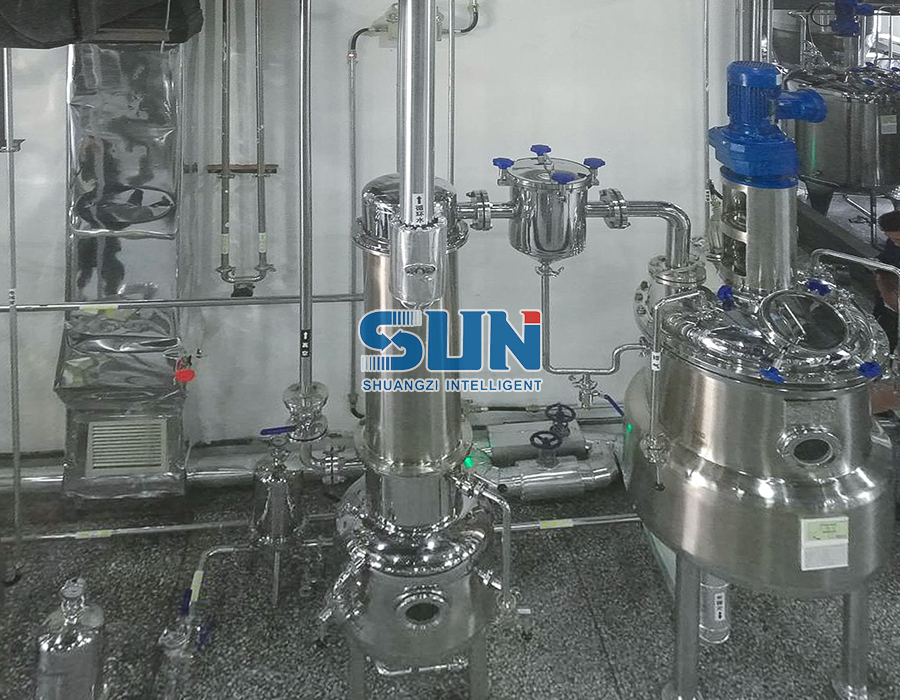
Whichever route is chosen, the specification list that matters is short: 316L wetted parts with a documented surface finish, independent temperature, pH, dissolved oxygen and feed loops, mass flow control on air and oxygen, exhaust condenser and off-gas analysis, and a control system that logs every loop at one-second resolution during the run. Batch records generated from that historian are what a tech transfer package is built from. Equipment selection criteria for biofermentation projects covers the same checklist from a procurement angle.
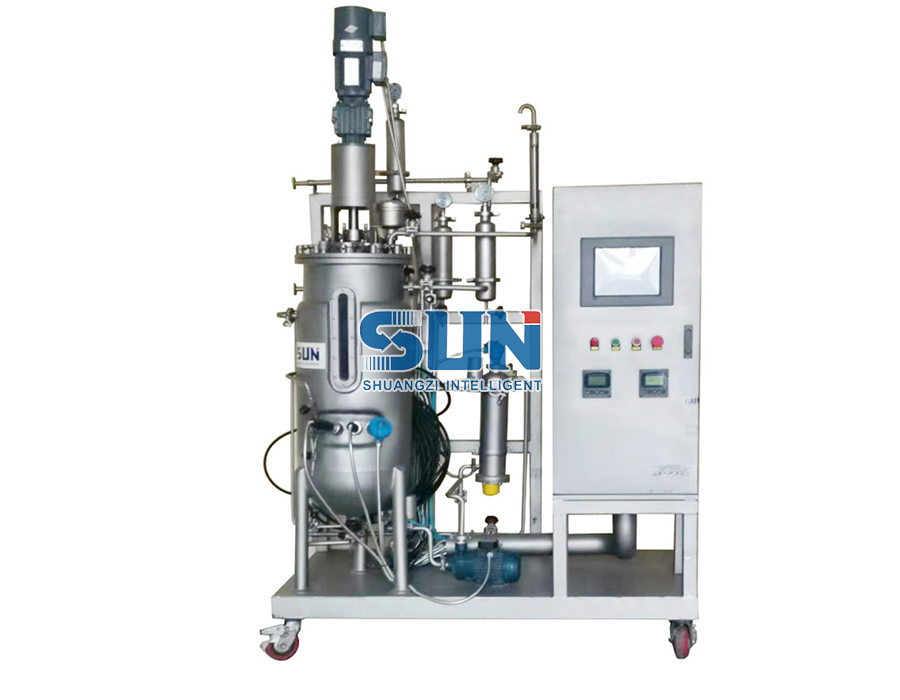 Pilot-Scale Stainless Steel Mechanical Agitated FermenterPilot-scale stainless steel fermenter with mirror-finish tanks, in-situ sterilization and independent control of temperature, pH, dissolved oxygen, stirring and aeration for process development.View Product →
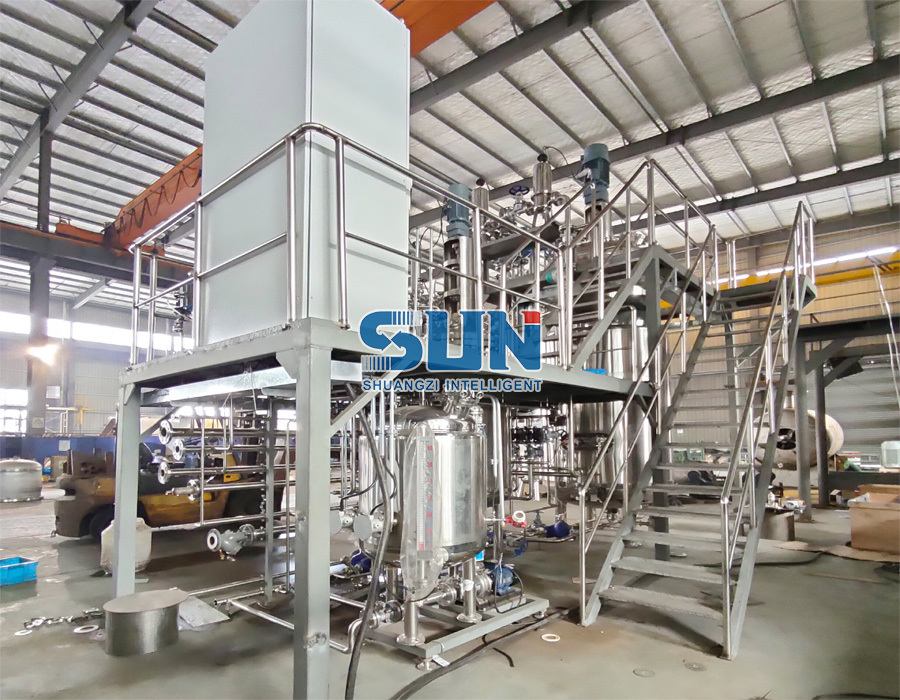 Custom Trichoderma Fungus Fermentation SystemStainless steel fermentation system for Trichoderma fungus using a three-stage process, with 50–5000 L capacity, SUS304/SUS316L construction and turbine agitation for microbial agent production.View Product →
Where the pilot plant doubles as a process development platform, the practical requirement is a vessel that can run at 1 L working volume for expensive media and at 10 L for a representative engineering batch, with the same impeller-to-vessel ratio in both.
From pilot to production: containment, cleaning and documentation
Three items decide whether a validated clone survives tech transfer: containment, cleanability and documentation.
Containment
Exhaust filtration, foam control and closed sampling protect both the culture and the operators. Phage and wild-type contamination events cluster in sampling and in harvest lines.
Cleanability
Drainability, spray-ball coverage and no dead legs matter more than the cleaning agent. Verify with conductivity, TOC and dye coverage rather than a visual check at the end of the shift.
Documentation
Sterilisation records, probe calibration certificates, deviation logs and batch genealogy are the transfer package. If they are reconstructed after the run, they are not evidence.
 Custom Bio Fermentation Tank System for Human Milk OligosaccharidesStainless steel biofermentation system for human milk oligosaccharides, bridging lab, pilot and industrial scales with real-time temperature, pH, dissolved oxygen and stirring control.View Product →
This is where an engineering partner carrying design, fabrication, installation and commissioning in one contract removes a class of error. Interface risk between the fermenter vendor and the clean utility contractor is the usual source of a delayed first batch, and a biofermentation project reference is worth reading for the sequence alone: process design, equipment layout, utility specification, then commissioning with water and media runs before any production strain is introduced.
Frequently asked questions
How long does microbial cell line development take?
For a well-defined host and product, screening to a banked clone commonly runs 8-14 weeks. Programs needing marker-free hosts, novel regulatory data or extensive stability work run longer, and the assay queue rather than cultivation usually sets the pace.
Is microbial cell line development the same as strain engineering?
Strain engineering is one part of it. Cell line development also covers clonality, banking, stability testing and the documentation that lets a manufacturing site reproduce the process without the original team present.
What size should the first pilot fermentation be?
Most groups start at 1-10 L working volume for process definition, then confirm at 50-200 L before committing to production scale. The confirmation step should use geometry and impeller ratios that anticipate the final vessel, not just the smallest skid on the floor.
Do I need a separate seed fermenter?
Yes for anything above a few litres. A two-stage seed train keeps inoculum quality consistent and prevents a single flask from determining the outcome of a 2000 L batch.