
 英语
英语 俄语
俄语Content
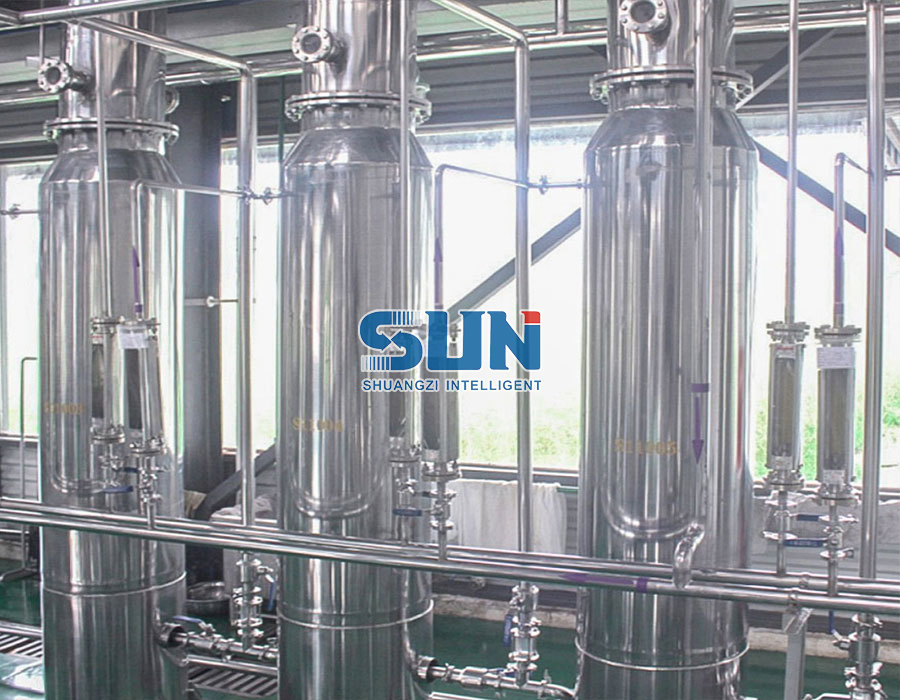
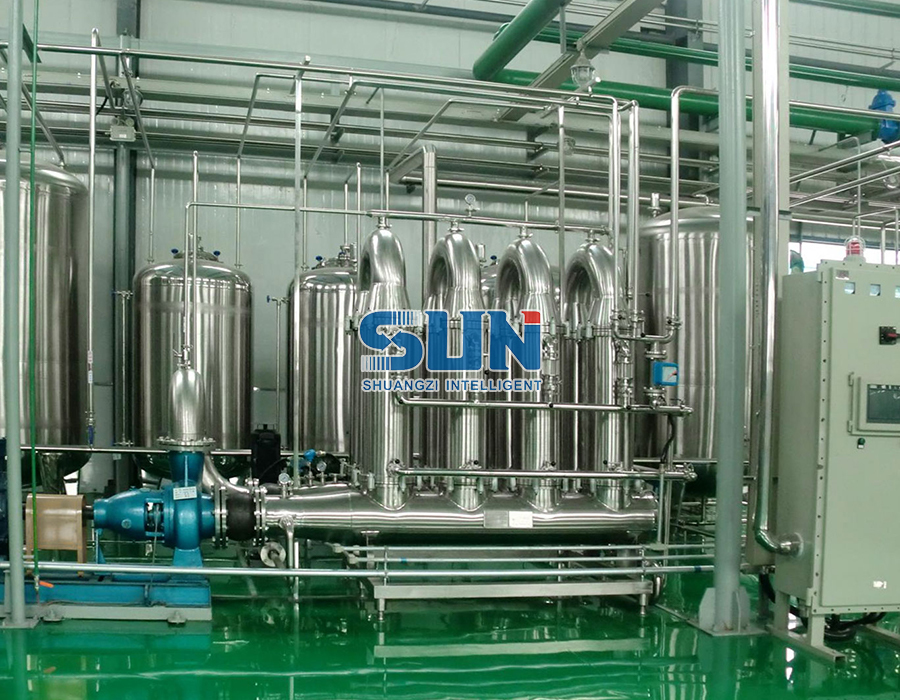
The stainless steel vacuum double effect falling film evaporator consistently achieves steam consumption reductions of 50-55% compared to single effect units, while protecting heat-sensitive materials through vacuum operation. This technology is the preferred choice for concentrating fruit juices, dairy products, pharmaceuticals, and industrial effluents requiring gentle thermal processing. The combination of stainless steel construction (typically 304 or 316L), dual evaporation effects, and vacuum conditions delivers both product quality preservation and operational cost efficiency.
How the Vacuum Double Effect Falling Film Evaporator Works
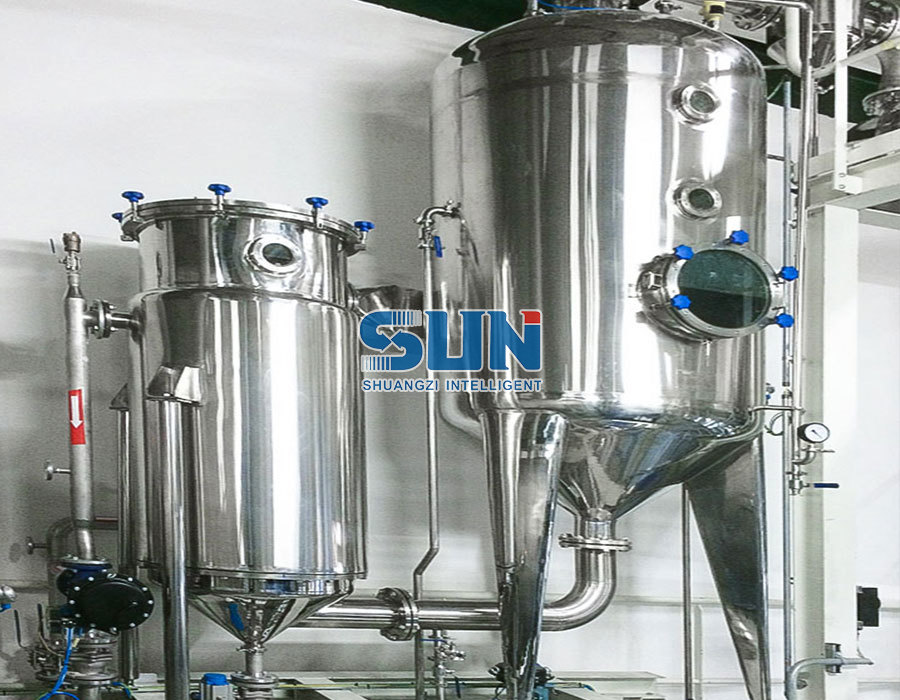
The system operates on the principle of vapor recompression. In the first effect, live steam heats the falling film inside vertical stainless steel tubes. The vapors generated are then routed to the heating jacket of the second effect, where they serve as the energy source. Vacuum conditions in the second effect lower the boiling point of the liquid, allowing the recovered vapors to efficiently drive further evaporation. This cascading design uses the same energy twice before condensing.
A typical three-stage falling film inside each tube lasts less than 30 seconds from inlet to outlet, minimizing thermal degradation. The liquid film thickness, maintained between 0.5 and 2 mm, ensures rapid heat transfer coefficients of 1,500 to 3,500 W/m²·K.
Quantitative Performance Advantages
Data from industrial installations reveals consistent performance metrics for stainless steel vacuum double effect falling film evaporators:
- Steam economy (kg water evaporated per kg steam): 1.8 to 2.1 in double effect, compared to 0.9-1.1 for single effect
- Operating vacuum pressure: 0.2 to 0.5 bar absolute, reducing boiling points to 60-70°C
- Concentration ratios achievable: up to 6:1 for non-fouling liquids, typically 3:1 to 4:1 for sticky products
- Annual energy cost reduction: approximately 45-50% when replacing single effect evaporators in continuous 24/7 operations
| Application | Feed Concentration | Outlet Concentration | Steam Consumption (kg steam/kg water removed) |
|---|---|---|---|
| Skim Milk | 9% solids | 45-50% solids | 0.52 |
| Apple Juice | 11% Brix | 72% Brix | 0.48 |
| Corn Steep Liquor | 6% solids | 35% solids | 0.55 |
Stainless Steel Material Selection Criteria
304 vs 316L for Different Product Streams
The choice of stainless steel grade directly impacts equipment longevity and product safety. For applications with chloride concentrations below 200 ppm, 304 stainless steel provides adequate corrosion resistance at 25-30% lower material cost. However, for dairy processing with acid washes (nitric and phosphoric acids), pharmaceutical solutions, or any stream containing over 500 ppm chlorides, 316L with 2-3% molybdenum content is mandatory. Field data shows that using 304 instead of 316L in high chloride whey concentration leads to pitting corrosion within 18 months, requiring tube replacement costing 40% of the original evaporator price.
Surface Finish Impact on Fouling
Internal surface roughness (Ra value) strongly affects fouling rates. Electropolished tubes with Ra below 0.4 micrometres extend cleaning intervals by a factor of 2.5 compared to mechanically polished surfaces at Ra 0.8 micrometres. For heat-sensitive products like protein solutions, this translates to 120 hours of continuous operation before cleaning, versus 48 hours with rougher finishes.
Design Specifications for Optimal Performance
A properly specified stainless steel vacuum double effect falling film evaporator requires attention to these parameters:
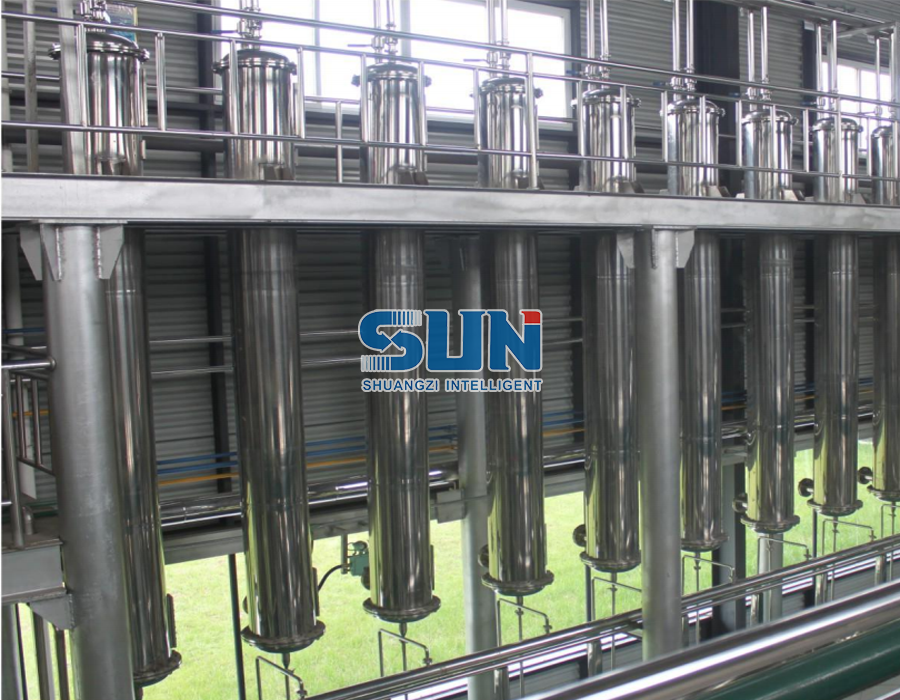
- Tube length: 6 to 12 meters, with 7-9 meters being optimal for most liquids. Shorter tubes reduce residence time but require more passes.
- Tube diameter: 25 to 50 mm. 38 mm outer diameter is standard for non-fouling duties; 50 mm for products prone to scaling.
- Liquid distributor design: Slot-type or orifice plate with a weir. Slot-type distributors achieve more uniform film wetting, reducing dry spots by over 90% compared to simple pipe distributors.
- Vacuum system sizing: Steam jet ejectors are preferred over mechanical vacuum pumps when dealing with volatile organic compounds, as they eliminate lubrication contamination risks.
Common Operational Challenges and Solutions
Fouling and Scaling Management
Even with stainless steel surfaces, calcium oxalate and protein fouling occur. Installing an automated cleaning-in-place system with sequential alkali (2% NaOH at 75°C for 30 minutes) and acid (1% HNO3 at 65°C for 20 minutes) cycles restores heat transfer to 98% of original values. Avoiding stagnant zones near the bottom cone prevents sediment buildup that requires mechanical cleaning; a 15-degree minimum slope on all bottoms solves this issue.
Vapor Duct Pressure Drop
Inter-effect vapor ducts must be sized for vapor velocities below 25 m/s. Exceeding this causes pressure drops that reduce the effective temperature difference between effects. A case study of a tomato paste plant showed that enlarging undersized ducts from 150 mm to 250 mm diameter reduced the temperature loss from 4.2°C to 1.1°C, improving overall evaporation capacity by 18%.
Economic Justification and Payback Periods
For a processing plant evaporating 5,000 kg of water per hour, switching from a single effect to a stainless steel vacuum double effect falling film evaporator yields the following annual savings based on steam at $30 per metric ton:
- Single effect steam use: 5,000 kg steam/hour × 8,000 hours/year = 40,000 metric tons/year → cost: $1,200,000
- Double effect steam use: 2,500 kg steam/hour × 8,000 hours = 20,000 metric tons/year → cost: $600,000
- Annual steam saving: $600,000
With equipment installed cost of approximately $1,200,000 to $1,800,000 for a 5,000 kg/hr capacity unit, the simple payback period ranges from 2 to 3 years. Stainless steel construction ensures a service life exceeding 20 years with proper maintenance, making the double effect falling film configuration the standard for modern thermal concentration.