
 英语
 俄语
Content
Twenty-six hours in, the exhaust condenser goes quiet, the dissolved oxygen trace flattens, and the offline plate count comes back clean. The batch has not been overrun by an invader. It has stopped because one physical condition moved outside the window the strain can tolerate.
A fermentation that stalls while showing no signs of contamination is rarely a mystery about microbiology. It is a measurement and materials problem: heat transfer, oxygen supply, feed composition, or control offset. Work the physical variables in a fixed order and most batches recover without a sterility intervention.
Definition. A stalled fermentation is a batch whose metabolic rate, off-gas carbon dioxide, or biomass accumulation falls below the expected curve while the culture remains pure and viable. In an industrial vessel the cause is usually a rate limitation, not a sterility failure.
What a Stall Without Contamination Tells You
A clean microbiology result moves the diagnosis away from sterility and toward the environment inside the vessel. When plate counts, Gram stain, and pH behaviour show no invaders, the culture has been limited by temperature, oxygen, nutrients, or product inhibition.
Before touching the broth, confirm that the sensors agree with reality. A drifting pH probe or a fouled off-gas analyser produces the same flat curves as a genuine biological stall, and treating a sensor fault with a nutrient shot only adds risk to a healthy batch.
| Parameter | Healthy pattern | Stall indicator | First check |
| Off-gas CO2 | Rises within 4 to 8 hours, then plateaus | Falls while feed continues | Analyser zero and condenser load |
| Dissolved oxygen | Tracks agitation and airflow changes | Rises and stays high | Probe calibration and sparger condition |
| pH | Moves with acid or base demand | Flat despite an active setpoint | Probe drift and dosing line blockage |
| Temperature | Holds within 0.5 deg C of setpoint | Slow upward creep | Jacket flow, fouling, coolant supply |
| Biomass | Steady doubling during log phase | Under 5 percent gain over 6 hours | Feed composition and viability stain |
Working rule. Read the three traces together. Rising dissolved oxygen with falling off-gas carbon dioxide points to a supply-side limitation. Falling oxygen with flat carbon dioxide points to inhibition or a feed error.
Six Causes That Stop a Clean Ferment
Almost every stall that reaches troubleshooting with clean microbiology traces back to one of six conditions, and all six can be screened within a single shift.
- Temperature and heat load. A fouled jacket or a warm coolant return reduces the driving force across the vessel wall. Near the top of a strain range, 1 to 2 deg C is enough to move growth from exponential to marginal.
- Oxygen transfer limitation. Sparger fouling, an impeller running below design speed, or a reduced airflow setpoint all cut the volumetric mass transfer coefficient. Biomass holds, but product formation stops.
- Nutrient limitation. A nitrogen feed that never opened, an exhausted trace element solution, or a vitamin addition drawn from a settled stock limits the pathway you are running rather than the organism itself.
- pH control offset. A probe reading 0.2 to 0.4 units low keeps the controller from dosing, and the culture drifts outside its working range while the reading looks acceptable.
- Product or by-product inhibition. Accumulated ethanol, organic acid, or a metabolic intermediate suppresses further conversion even with substrate still available.
- Feed and antifoam errors. A pump that lost prime or an antifoam overdose that coats the interface can stop a batch with no biological cause at all.
In practice the distribution is uneven. Thermal and oxygen limits dominate because both develop slowly and hide behind control readings that look stable right up to the moment the batch flatlines.
Confirm the Stall Before You Intervene
Confirm a stall with three consecutive readings over 4 to 6 hours: off-gas carbon dioxide falling, dissolved oxygen rising or flat at unchanged airflow, and biomass gain under 5 percent. Two readings are not enough, because a slow phase can look identical over a short window.
A slow phase responds to a small adjustment in temperature or feed, while a true stall does not move at all. Test that difference deliberately instead of escalating the intervention.
- Verify the instruments. Compare pH and dissolved oxygen against a handheld meter and check the off-gas analyser zero against a calibration gas.
- Audit the heat balance. Log jacket inlet and outlet temperatures, coolant supply pressure, and control valve position at the same moment.
- Recalculate the feed. Walk the batch record line by line and confirm that each addition reached the vessel in the volume recorded.
- Sample aseptically. Run a viability stain and a plate count, and keep spare filtrate for a repeat if the first result is ambiguous.
- Overlay a reference run. Compare the current trend with a known good batch of the same strain, medium, and vessel.
Do not open the vessel to look inside. A stalled batch is still a pure culture, and a single manual intervention on a live tank converts a recoverable stall into a real contamination event. Sample through a septum or a sterile sampling valve, and review how biofermentation equipment handles contamination risk before anyone reaches for a clamp.
Restart Procedures That Protect Sterility
Restart by removing the limiting condition first, then re-seeding with an active culture at 5 to 10 percent of working volume. Adding nutrients to a stalled batch without a confirmed limitation usually turns a short stall into a long, unrecoverable fermentation.
Restart in place
- Vessel still closed and pressurised
- One limitation confirmed and corrected
- Viability still above 70 percent
- Batch volume above 60 percent of working capacity
Transfer to a fresh vessel
- Inhibition strongly suspected
- Viability below 50 percent
- Heat transfer cannot be restored mid-batch
- A high-density step needs a clean oxygen profile
Whichever route you take, the sequence is the same and the order matters more than the speed.
- Correct the limitation: restore jacket flow, airflow, or the missing feed.
- Hold for one doubling time and take a fresh set of readings before judging the result.
- Prepare a seed culture in log phase, sized at 5 to 10 percent of working volume.
- Re-pitch aseptically and re-establish all setpoints before reopening the feed line.
- Log the deviation, the restart decision, and the outcome against the batch record.
Judgement call. A restarted batch is not rescued until it reaches target conversion. Run the second attempt at half the normal sampling interval, and treat any repeat stall as an equipment problem rather than a biological one.
Equipment Details Behind Repeat Stalls
When the same vessel stalls repeatedly with clean microbiology, the cause is usually mechanical. Jacket fouling, impeller wear, sparger blockage, and probe drift all develop gradually and leave no obvious fingerprint in the batch record.
- Jacket and coil fouling that reduces heat transfer without tripping an alarm
- Impeller speed below design because of belt slip or a changed drive setting
- Sparger holes partly blocked by dried medium residue after cleaning
- pH and dissolved oxygen probes past their calibration interval
- Sampling and addition valves with worn seats that admit air
One vessel audit per campaign costs far less than a lost batch. Vessel geometry, jacket coverage, and agitation design decide how fast a stall can be reversed, which is why a pilot system and a production tank of the same volume can behave completely differently under identical setpoints.
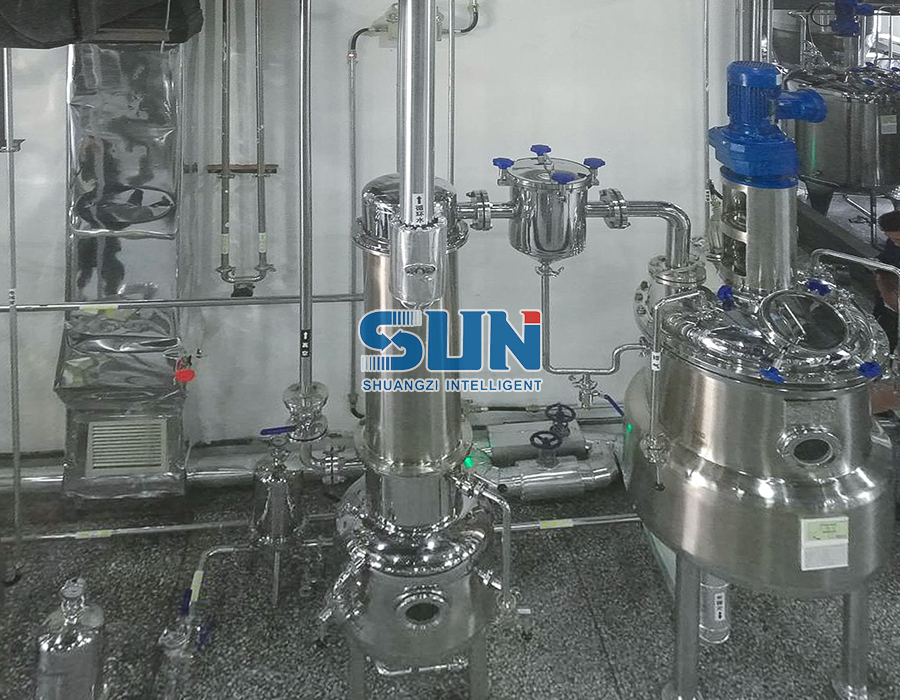
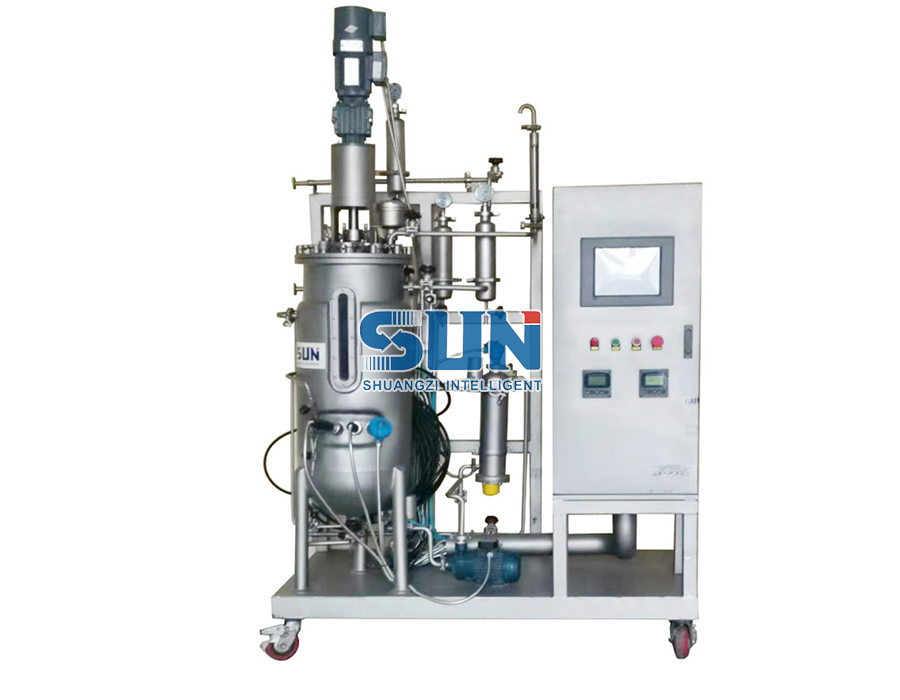 Pilot-Scale Mechanical Agitated Stainless Steel FermenterPilot-scale stainless-steel fermenter with independent temperature, pH, dissolved oxygen, agitation, and aeration control, suited to reproducing stalls and comparing vessel design.View Product →
For scale-up work, a pilot skid with independent temperature, airflow, and feed control lets you reproduce a stall deliberately instead of guessing at it. Comparing that data with the layout of a full biofermentation project usually settles whether the problem belongs to the process or to the vessel.
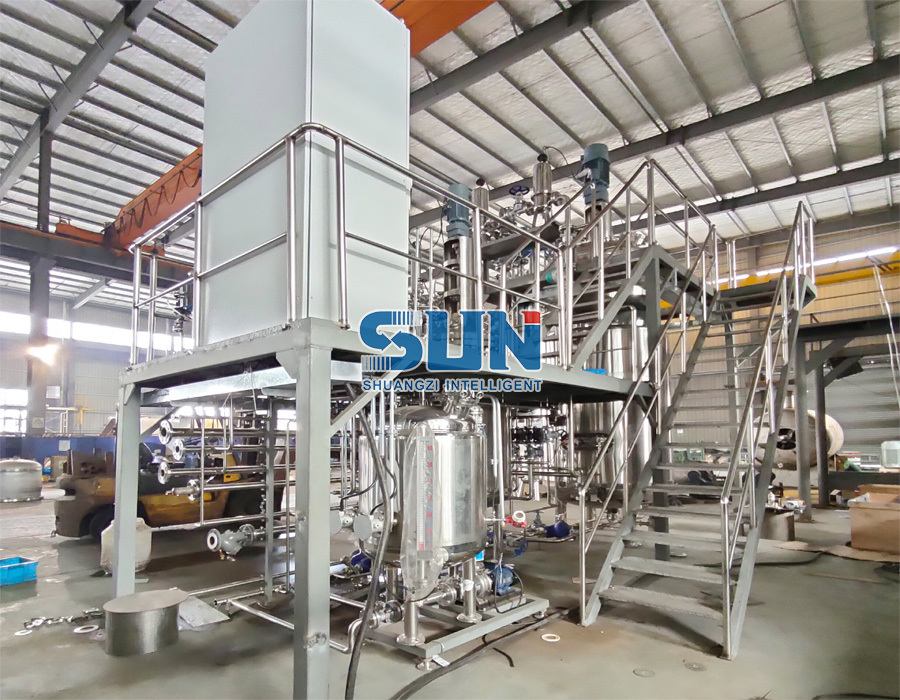 Custom Three-Stage Trichoderma Fungus Fermentation SystemCustom three-stage Trichoderma fermentation system with 50–5000 L capacity, stainless-steel construction, and turbine agitation, suited to scale-up and purity checks.View Product →
Note: a clean plate count only covers organisms that grow on that medium at that incubation temperature. Pair it with a Gram stain and an off-gas profile before declaring the culture pure.
Frequently Asked Questions
Can a stalled fermentation restart on its own?
Rarely. If the limiting condition was temporary, such as a short cooling interruption or a brief airflow dip, the culture can recover within one doubling time. If the cause persists, the batch will stay flat until someone corrects it.
How long can a stalled batch sit before it must be dumped?
Viability sets the limit, not the clock. Hold the vessel at process temperature with gentle agitation, sample every 12 hours, and treat the batch as lost once viability falls below 50 percent or a contaminant appears.
Does a clean plate count prove the batch is not contaminated?
No. It proves that nothing grew on that medium under those conditions within the incubation window. Combine it with a Gram stain, a pH trend, and an off-gas profile before concluding that the culture is pure.
What is the fastest way to separate a stall from a completed fermentation?
Compare residual substrate with the expected endpoint. A completed batch has little substrate left and a stable product titre, while a stalled batch still has feed available and no further conversion taking place.