
 英语
英语 俄语
俄语Content
Fermentation broth rarely leaves the reactor above 15% ethanol. The rest is water, yeast, residual sugars, and suspended solids that no downstream process or customer will accept. The equipment that closes this gap is the ethanol distillation tower: fed a dilute stream, it delivers roughly 95% ethanol continuously, and in most plants it is also the single largest consumer of steam. That combination, product purity and energy bill in one vessel, is why tower selection deserves more scrutiny than almost any other purchase in an ethanol, botanical, or solvent-recovery project.
This guide explains how the tower separates ethanol from water, which design parameters control its performance, where it is used across industries, and what to verify before signing an equipment contract.
What an Ethanol Distillation Tower Actually Does
The tower exploits one physical fact: ethanol boils at 78.4°C and water at 100°C at atmospheric pressure, so vapor rising from a boiling ethanol-water mixture is always richer in ethanol than the liquid it left behind. Repeat that enrichment dozens of times inside a vertical column, and dilute feed becomes near-azeotropic spirit.
Inside the shell, the column is divided into two working zones. Below the feed inlet, the stripping section removes ethanol from the descending liquid so the bottoms leave with minimal alcohol content. Above the feed, the rectifying section concentrates the vapor stage by stage until the overhead stream reaches the target strength. A reboiler at the base generates the rising vapor, an overhead condenser liquefies it, and part of that condensate returns as reflux while the rest is drawn off as product. The reflux ratio, meaning how much condensate returns versus how much is collected, is the main lever an operator uses to trade energy against purity.
One physical limit matters for planning: at atmospheric pressure, ethanol and water form an azeotrope at about 95.6% by weight, roughly 97% by volume. A conventional tower cannot pass this point, so plants needing 99.5% or higher ethanol add a dehydration step such as molecular sieves after the tower. Fuel ethanol plants and pharmaceutical solvent loops both follow this two-stage pattern.
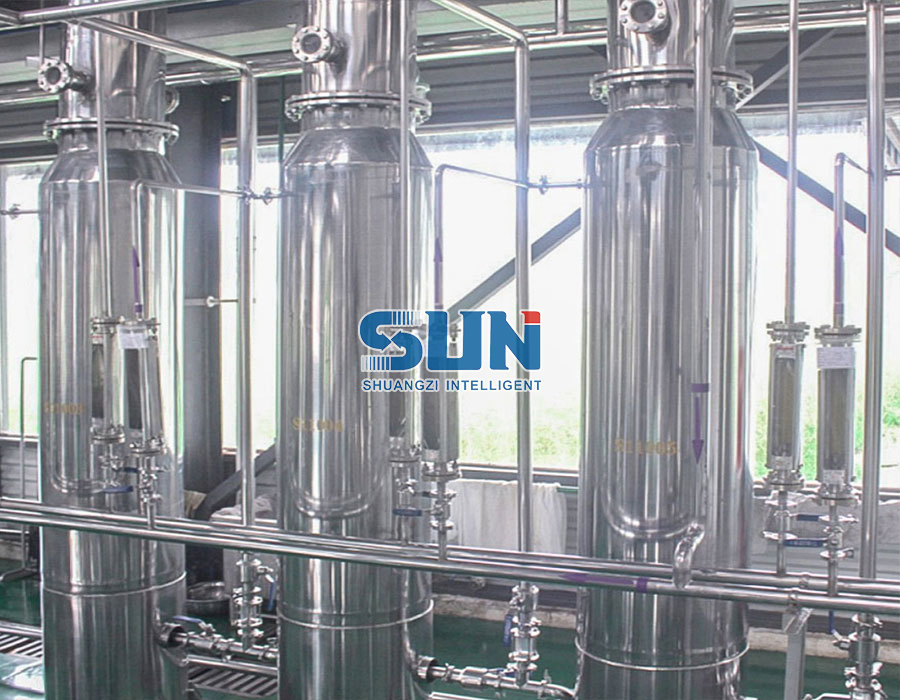
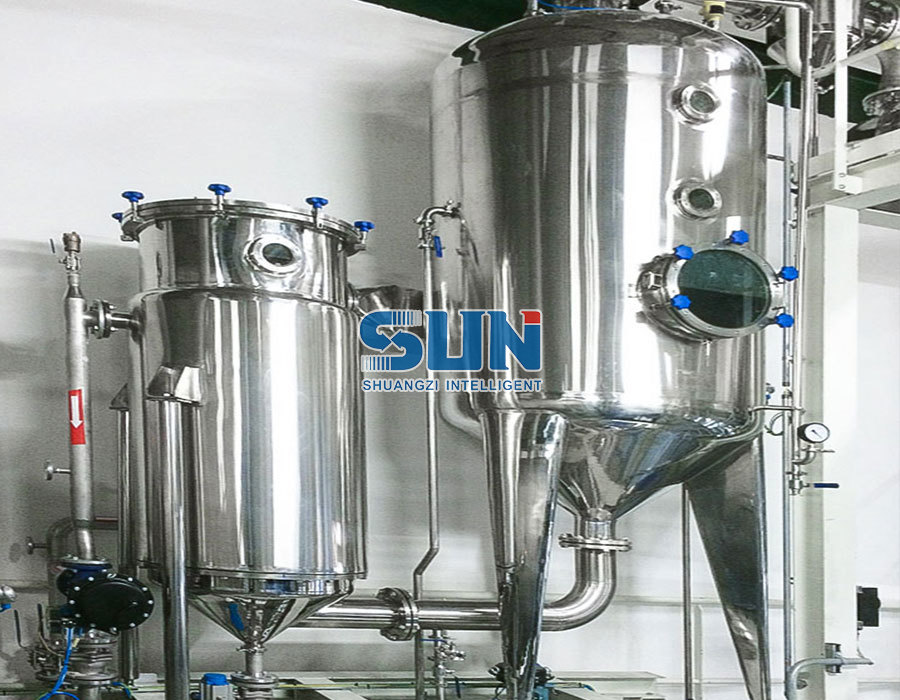
For a proven industrial configuration, review this ethanol distillation tower designed for continuous solvent separation and recovery duty.
 Ethanol Distillation Tower for Continuous Solvent SeparationThis tower separates and purifies ethanol using trays, a condenser, and a reflux device. It suits the continuous solvent recovery duty discussed here, where feed composition and reflux ratio drive cost.View Product →
Key Design Parameters That Decide Performance
The conclusion comes first: feed composition, theoretical stages, reflux ratio, operating pressure, and the choice of internal contactors determine both capital cost and the steam bill for the life of the tower. Getting these wrong shows up as a column that floods, fouls, or simply cannot hold specification.
Feed analysis comes before everything else. A clean ethanol-water mixture from a chemical process is an easy separation duty. A fermentation broth carrying 10-15% ethanol along with yeast and sugar solids is not: particulates demand wider tray spacing, antifouling internals, and dependable cleaning access. A supplier who sizes the column from a lab certificate alone, without the full stream analysis, is creating fouling risk for your operators.
Reflux ratio sets the energy-versus-purity trade-off. Higher reflux raises product strength but increases reboiler steam roughly in proportion, and energy usually dominates the lifetime cost of the equipment. Operating pressure is the other common decision: pulling vacuum on the column lowers boiling temperatures, which protects heat-sensitive botanical extracts and aroma compounds from thermal degradation.
The choice between trays and packing shapes day-to-day operation and maintenance:
| Aspect | Tray column | Packed column |
|---|---|---|
| Mass transfer mode | Discrete stages on each tray | Continuous liquid film over packing surface |
| Pressure drop | Higher per stage | Lower, well suited to vacuum duty |
| Solids and fouling feed | Tolerates particulates with wide spacing and sieve or valve designs | Best reserved for clean, low-solid streams |
| Height for the same duty | Usually taller shell | More theoretical stages per meter of height |
| Cleaning and inspection | Mechanical access points, robust CIP | Sensitive to liquid maldistribution, gentler handling |
Material of construction is the final baseline decision. SUS304 covers most neutral ethanol-water duty, while SUS316L is specified for corrosive, pharmaceutical, or high-purity applications, with sanitary weld finishes where GMP compliance applies.
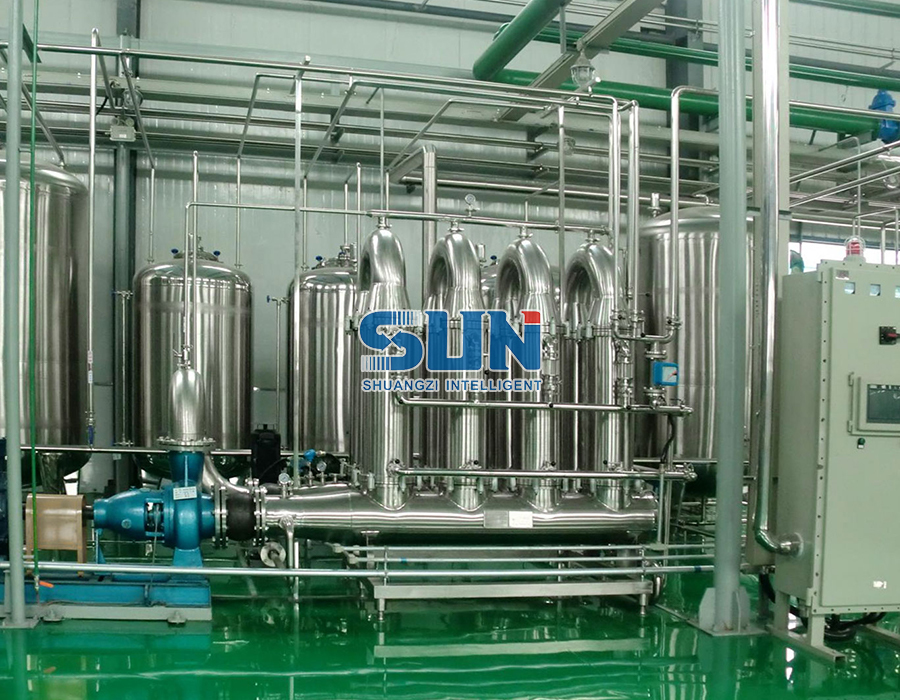
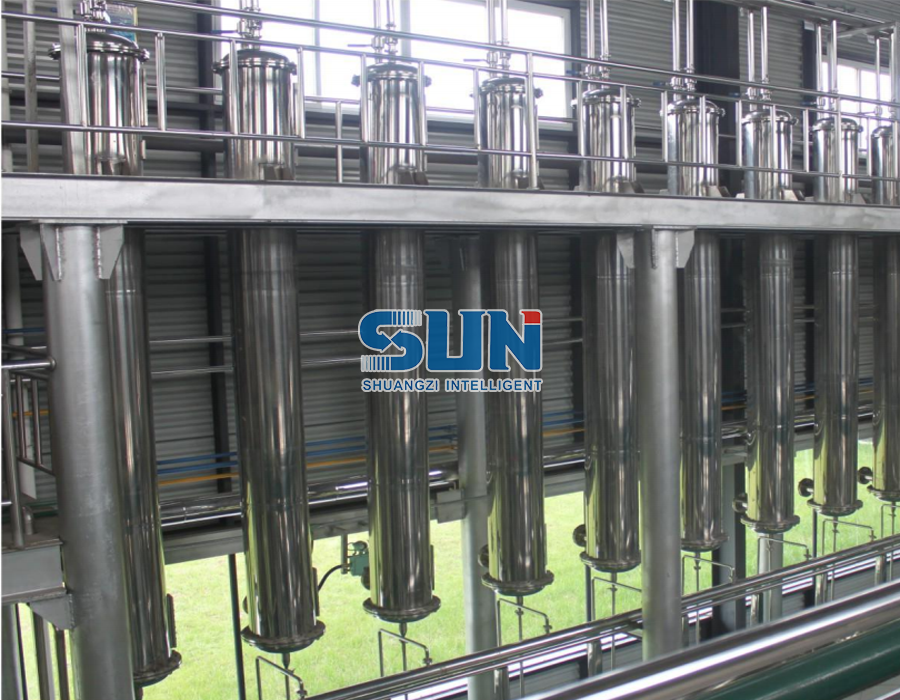
A comparable stainless steel distillation column can be configured with either trayed or packed internals, so ask the vendor which layout was quoted and why it fits your stream.
 Stainless Steel Distillation Column for Solvent RectificationA stainless steel column with trayed or packed internals that can concentrate dilute alcohol to roughly 90–95% continuously or in batches, matching the rectification stage that polishes ethanol overhead.View Product →
Where Ethanol Distillation Towers Are Used
Fuel ethanol plants run the most visible application. The beer column strips ethanol from a solids-laden fermentation broth, downstream rectification polishes the overhead to about 95%, and molecular sieves finish the job for anhydrous fuel grade. Beverage and industrial alcohol producers apply the same rectifying logic at smaller scale, with tighter control over flavor-carrying compounds.
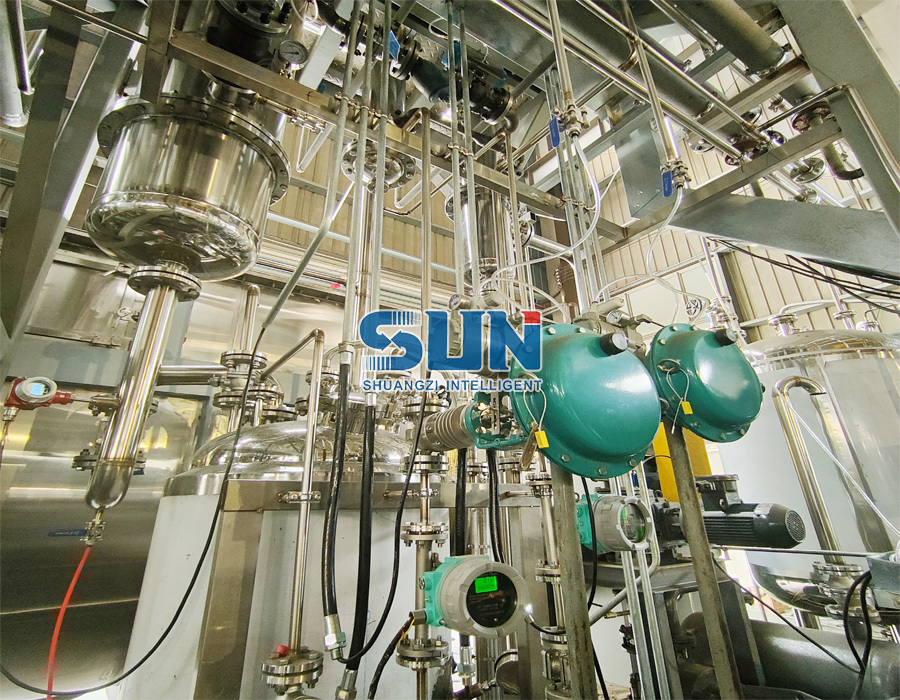
Pharmaceutical and botanical processing is the fastest-growing source of demand. Ethanol is the workhorse solvent for plant extraction, and every liter costs money twice, once when purchased and again when disposed. A tower that recovers the ethanol from spent extract closes the solvent loop and changes project economics; CBD and hemp processors are typical users, since one production line can recycle thousands of liters per day. Our CBD oil extraction production line delivered to a customer in the USA integrates ethanol recovery into a complete extraction, concentration, and purification chain.
Chemical manufacturers use the same towers to purify ethanol intermediates and to dry wet ethanol streams from esterification and similar reactions. In every case the job is identical, separating ethanol from heavier components; only the feed purity, operating pressure, and hygienic requirements change.
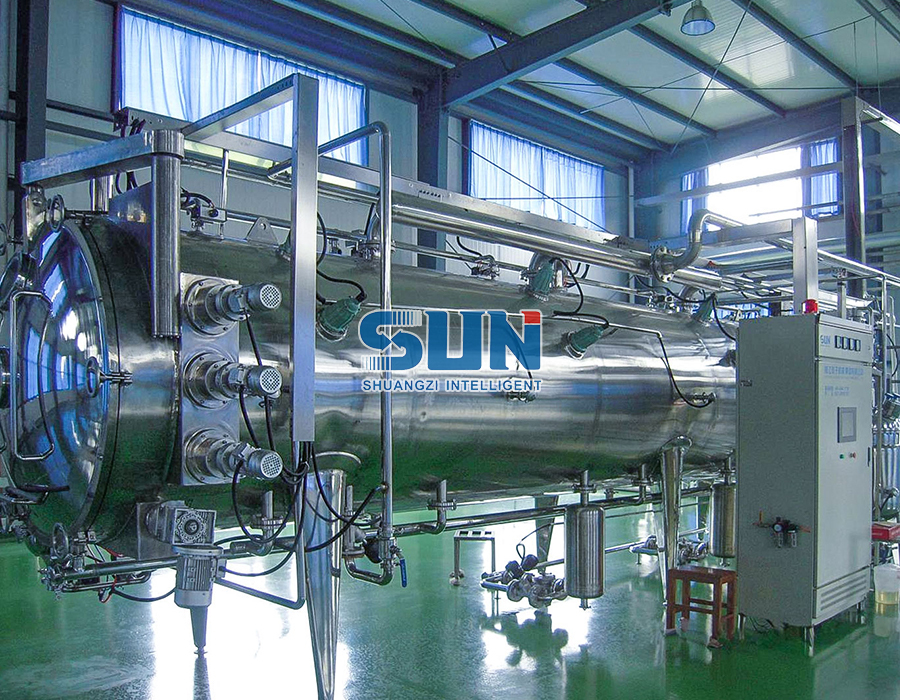
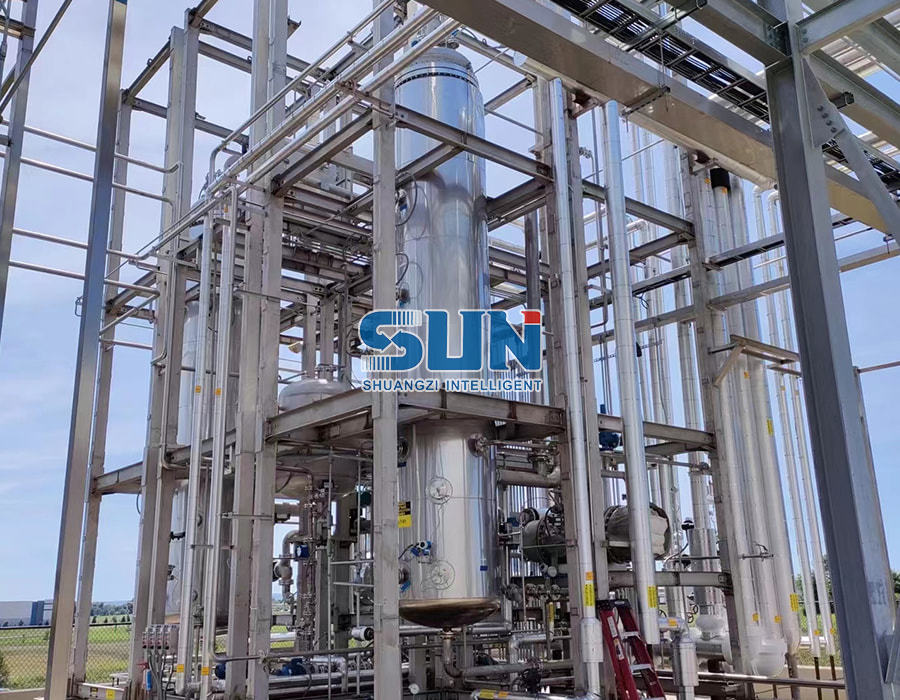
Where the goal is recovering alcohol from dilute waste streams rather than polishing final product, a dedicated alcohol recovery tower is often the more economical match, sized for high throughput at low feed concentration.
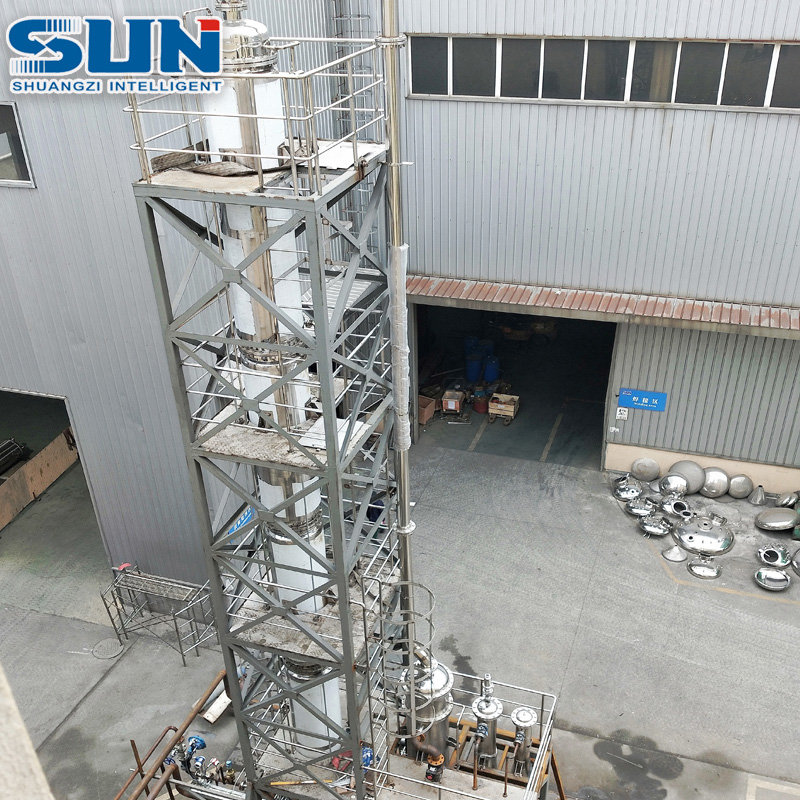 Alcohol Recovery Tower for Waste Ethanol RecyclingA 304 stainless steel recovery tower integrating rectification, condensation, and frequency-controlled conveying to reclaim ethanol from dilute waste streams, reducing hazardous waste and raw material costs.View Product →
What to Check Before You Buy
The deciding question is not shell height or price per ton. It is whether the vendor has engineered the column around your actual stream. Four checks separate reliable quotes from risky ones:
- Demand a process basis. A credible supplier returns a mass and energy balance built from your feed analysis, target purity, and available utilities, then sizes stages, diameter, reboiler, and condenser from that basis.
- Review energy integration. Ask how overhead vapor and bottoms heat are recovered; staged effects and heat recovery can cut steam consumption substantially across a year of continuous operation.
- Verify the control scope. Reflux ratio, column differential pressure, and the temperature profile along the column should be monitored and automated, because manually controlled towers drift off specification between shifts.
- Match vendor scope to your project. A single-vessel purchase leaves integration risk with your team, while an EPC supplier who also delivers extraction, evaporation, and drying equipment can stand behind the performance of the whole line, including installation and commissioning.
Pilot verification is worth requesting whenever the feed is unusual, for example high in solids, prone to foaming, or carrying heat-sensitive solutes. Running your stream through a pilot column before committing to a full-scale design costs far less than re-traying a tall column after start-up.
Operating and Safety Fundamentals
Ethanol vapor is flammable in air at concentrations between roughly 3.3% and 19%, so the tower must be engineered and operated as flammable-risk equipment: explosion-proof motors and instruments, static grounding and bonding, adequate ventilation, and interlocks that cut heating on high pressure or high temperature. Read the complete list of safety measures for operating ethanol distillation towers before finalizing your installation plan.
Stable day-to-day operation comes down to three habits. Start the column at low reflux and step up gradually to avoid flooding. Watch the temperature profile along the column as the earliest sign of composition change. Keep fouling under control with scheduled cleaning, because a thin deposit on trays or packing quietly reduces separation efficiency long before any alarm sounds.
An ethanol distillation tower is a long-life asset whose running cost is fixed on the drawing board, not in the control room. Define the feed precisely, hold the vendor to a transparent process basis, insist on energy recovery and dependable automation, and treat safety engineering as a specification item rather than an afterthought. Followed in that order, the tower pays for itself in recovered solvent and consistent purity for many years.