
 英语
英语 俄语
俄语Content
Choosing an evaporation concentration machine usually comes down to a single question: how much solvent must be removed per hour, and how much heat can your product tolerate before it degrades? Get that balance wrong, and the consequences show up immediately in energy bills, product quality and downtime. The practical answer for most processing plants is to start with a vacuum-based evaporator that matches the feed's viscosity, heat sensitivity and target concentration, then size it around the actual evaporation rate. That approach protects both the product and the operating budget.
What an Evaporation Concentration Machine Does
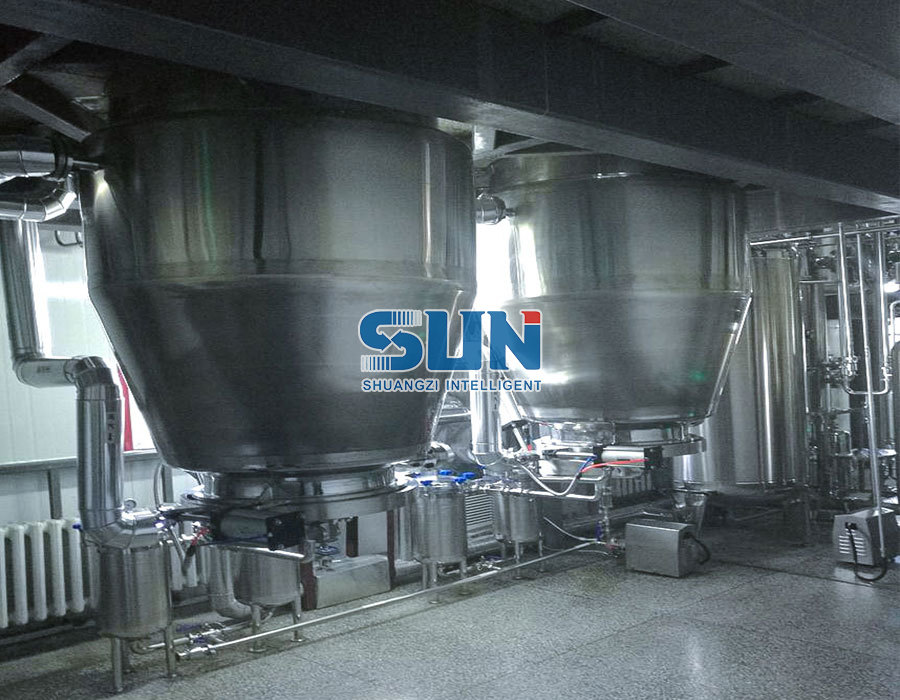
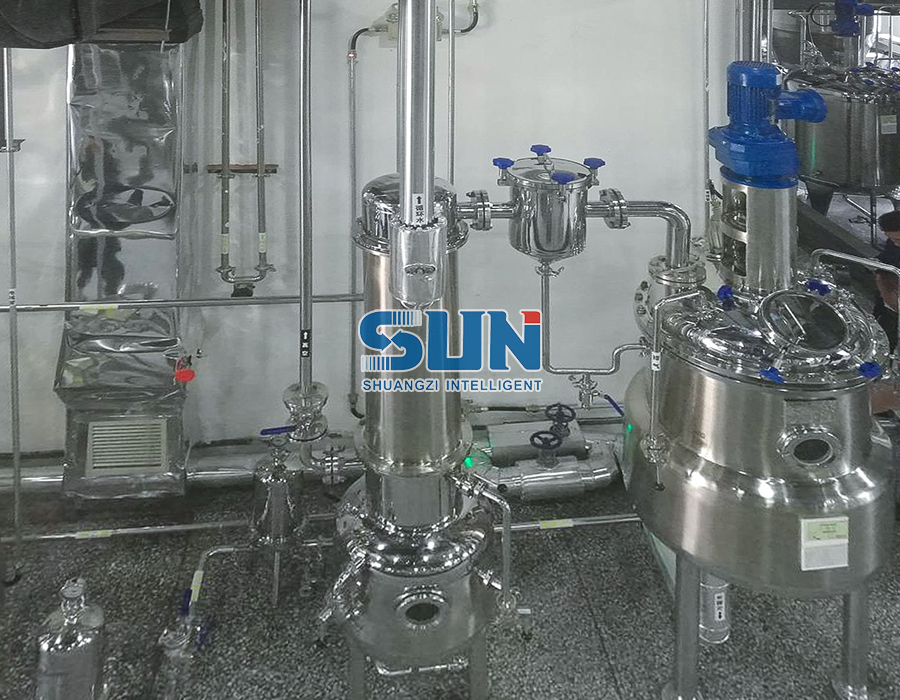
An evaporation concentration machine removes water or organic solvent from a liquid stream by applying heat under vacuum, so the solvent boils at a lower temperature and the remaining solution becomes more concentrated. Vacuum operation matters because it protects heat-sensitive compounds: water can be driven off at 50-60°C instead of 100°C. This is why the technology is standard in plant extraction, fermentation, food processing, pharmaceutical manufacturing and chemical production.
In practice, the system heats the feed through a heat exchanger or heated surface, evaporates part of the solvent, separates the vapor from the concentrated liquid in a separator, and then condenses and recovers that vapor. When the solvent is ethanol or another valuable organic liquid, recovery is usually the whole point of the operation. That is why an evaporation concentration machine is often paired with an alcohol recovery tower or a distillation column in botanical extraction and pharmaceutical lines.
Main Types of Evaporation Concentration Machines
No single evaporator design handles every duty. The right choice depends on the product's viscosity, solids content, heat sensitivity and tendency to foul. The table below compares the designs most often used in industrial evaporation concentration machines.
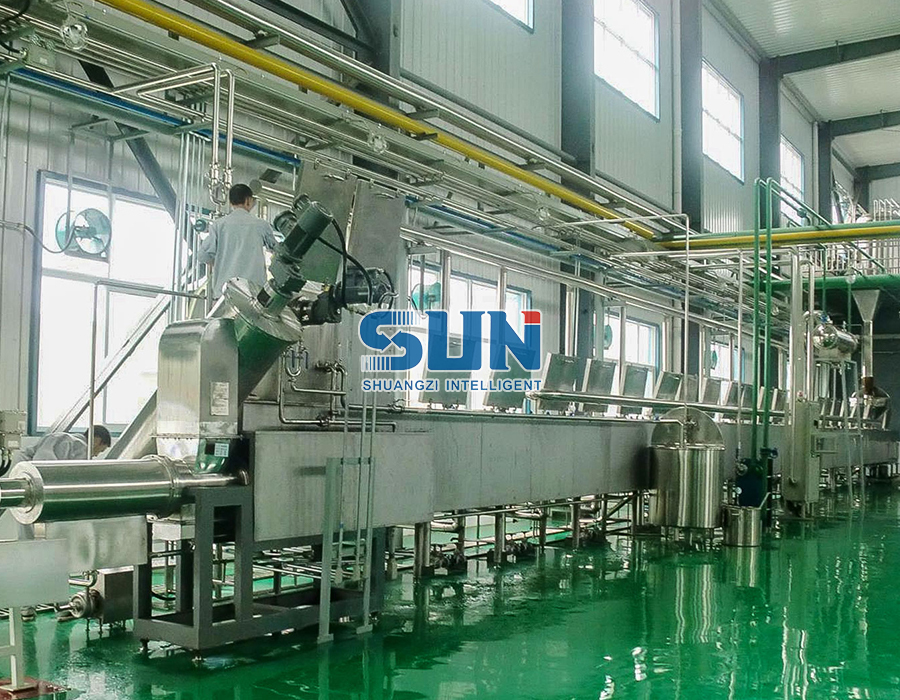
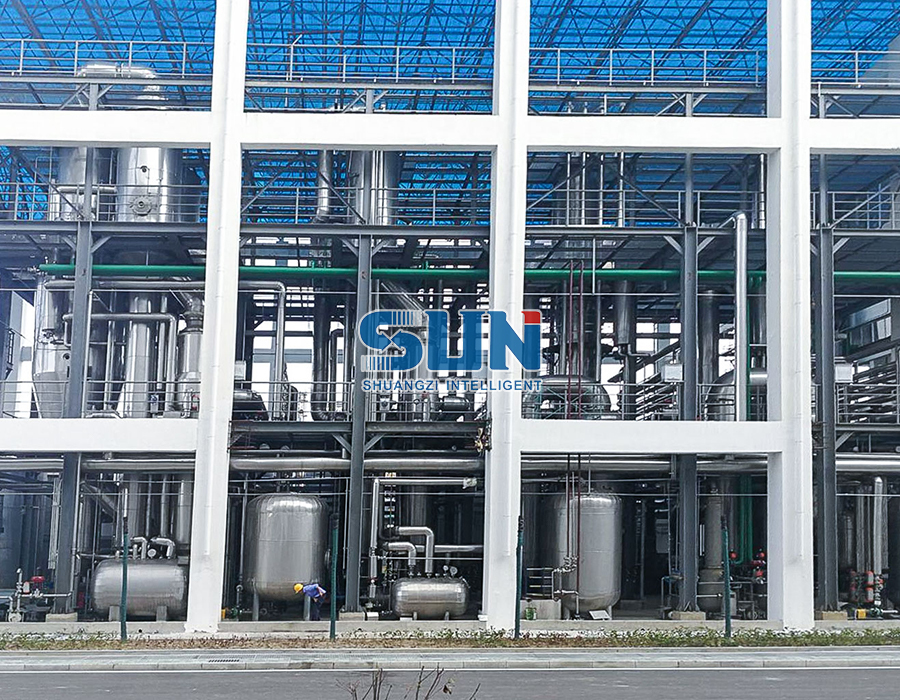
Most manufacturers offer the same core designs in single-effect, double-effect and triple-effect configurations, and the choice between effects is driven by energy cost rather than process chemistry.
| Type | How it works | Best suited for | Typical notes |
|---|---|---|---|
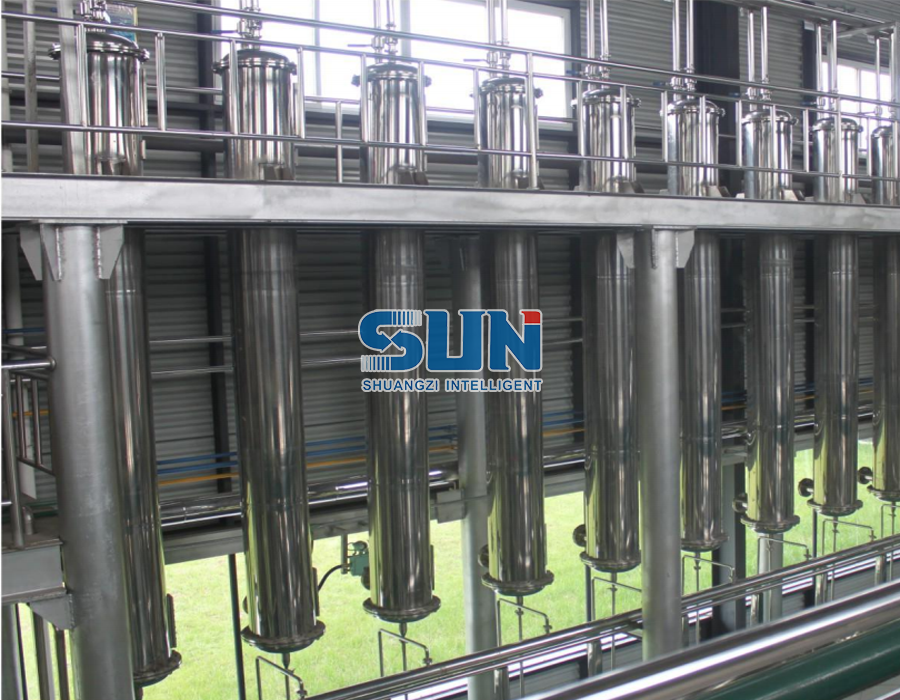
| Falling film evaporator | Liquid flows down the inside of heated tubes as a thin film; vapor separates at the bottom | Heat-sensitive, low-to-moderate viscosity liquids | Short residence time; available in single, double and triple effect |
| External circulation evaporator | Liquid circulates through an external heat exchanger; vapor flashes in a separation chamber | Viscous, fouling or slightly crystallizing streams | High turbulence slows scale build-up |
| MVR evaporator | Vapor is mechanically recompressed and reused as heating steam | High-volume water removal with continuous operation | Lowest operating cost; higher initial investment |
| Scraper film evaporator | Rotating blades wipe the product along a heated wall | Pasty, high-viscosity or sticky products | Handles products other evaporators cannot move |
| Forced circulation evaporator | A pump drives liquid through the heat exchanger at high velocity | Crystallizing or heavily scaling duties | Prevents salt or crystal buildup on heating surfaces |
Matching the Machine to Your Process Conditions
Selecting an evaporation concentration machine is a matter of matching three process filters.
- Start with the physical properties of the feed. Viscosity is the first filter: a falling film evaporator works well on free-flowing liquids, but once viscosity climbs above roughly 200-300 cP at operating temperature, an external circulation evaporator
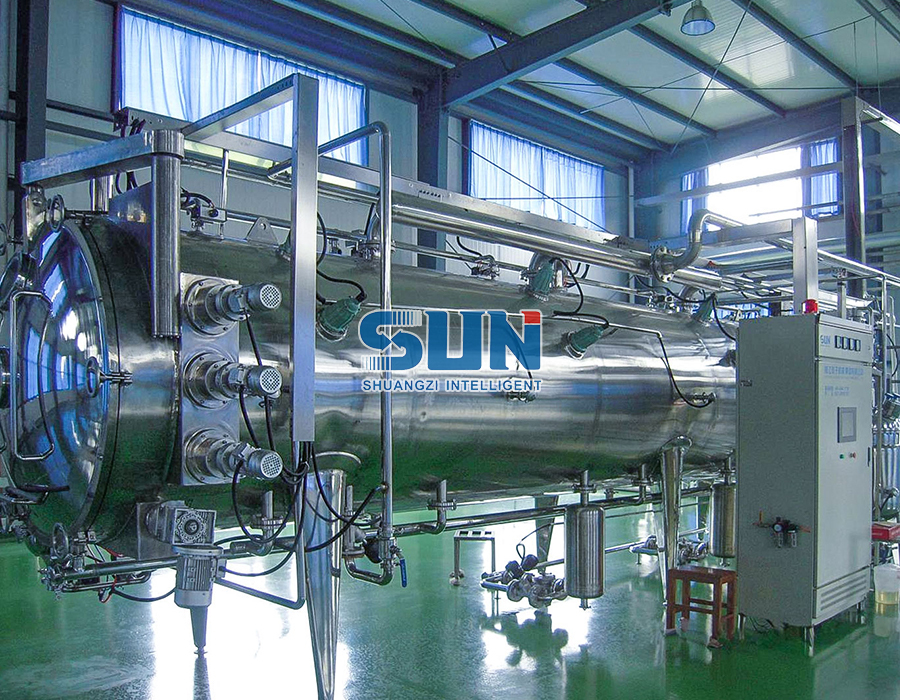
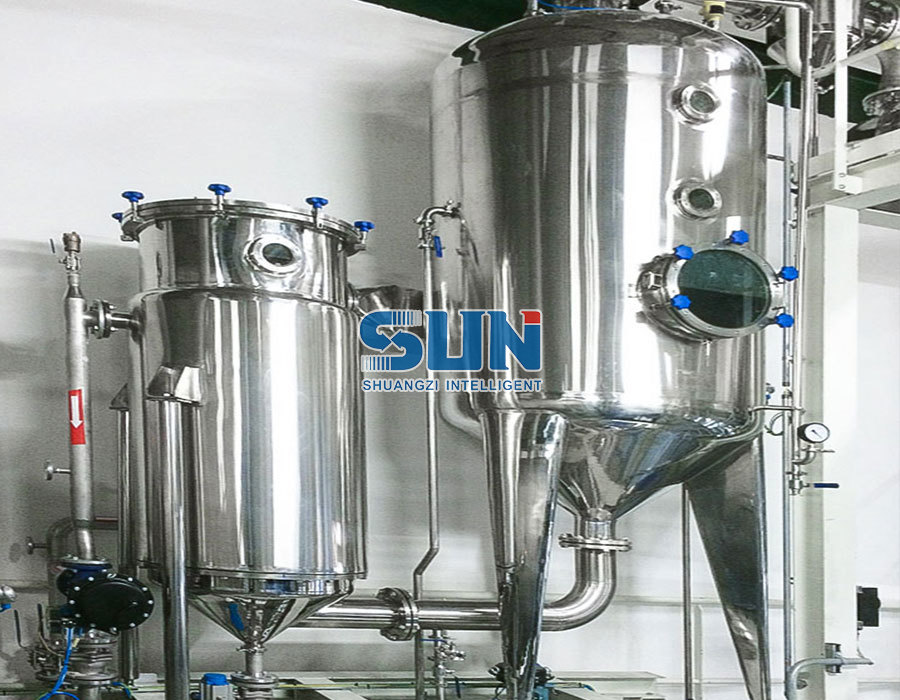 Custom External Circulation Evaporator Manufacturers, Wholesale Suppliers - ZhejShuangzi Intelligent Equipment is China custom External Circulation Evaporator Manufacturers and Wholesale External Circulation Evaporato...View Product → or a scraper film evaporator becomes safer. Solids content points in the same direction. If the product crystallizes or forms scale, a forced circulation design keeps the heating surface clean.
 - Heat sensitivity is the second filter. Products such as plant extracts, milk concentrates, enzymes and pharmaceutical intermediates degrade quickly at high temperature. For these, keep residence time short and operating pressure low. A falling film evaporator
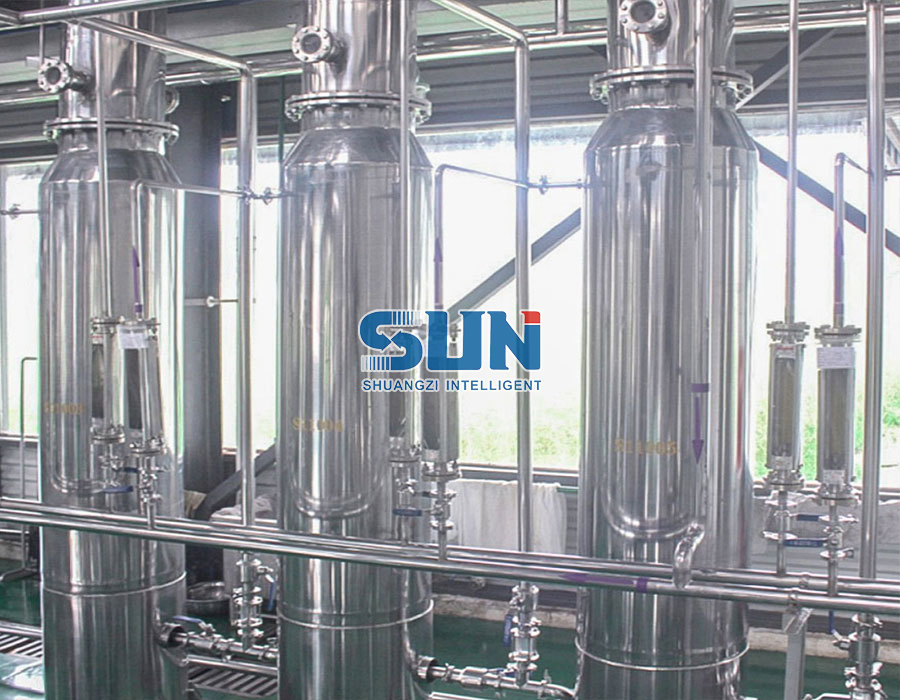
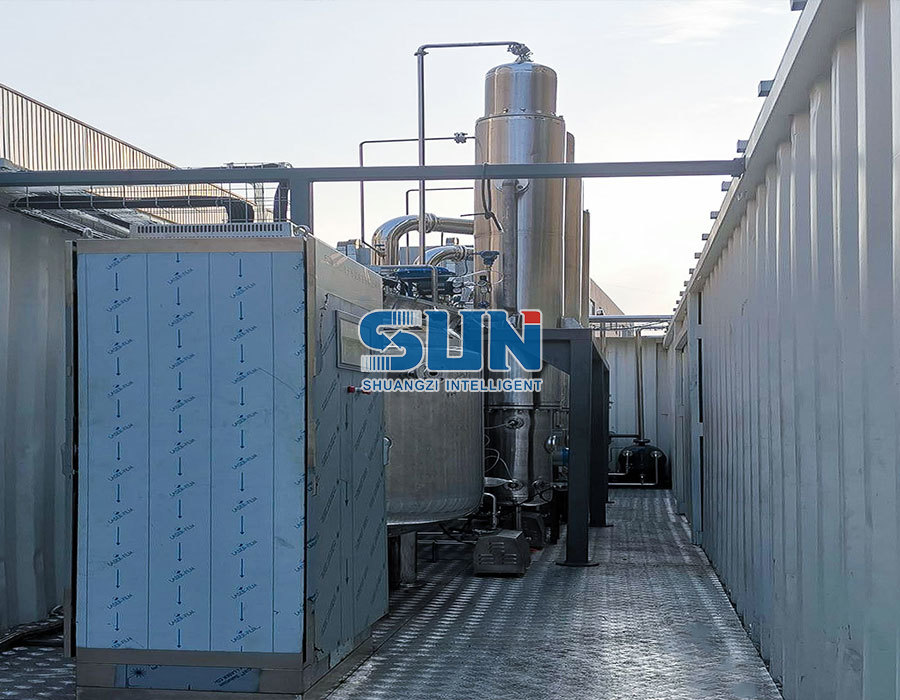 Custom Milk Evaporators, Fall Film Evaporator ManufacturersAs China Milk Evaporators Manufacturers and custom Fall Film Evaporator Suppliers, Zhejiang Shuangzi Intelligent Equipment Co.,Ltd. whole...View Product → with a 50-60°C boiling temperature under vacuum is often the answer.
 - The third filter is output. Define the required evaporation rate in kilograms of solvent per hour and the final concentration or crystallinity. These two numbers determine the heating surface area and the number of effects. For batch plants, cleaning and changeover time matter as much as peak capacity.
Consider a plant extracting tea polyphenols, curcumin or CBD from botanical material. The ethanol miscella typically arrives at 5-10% solids and must be concentrated to 30-40% before drying. A vacuum falling film evaporator running at 55-65°C protects the active compounds and keeps the ethanol ready for condensation and reuse. A dairy or fruit juice plant, by contrast, handles large water-based volumes with a modest boiling point rise, so an MVR or multi-effect system usually delivers the lowest cost per liter removed.
For many botanical and pharmaceutical operations, the practical choice sits between a falling film evaporator for heat-sensitive liquid feeds and an external circulation evaporator for tougher, more viscous materials. Both can be configured with vacuum, multiple effects and solvent recovery to fit a specific production line.
Energy Efficiency and Operating Cost
Evaporation is one of the most energy-intensive steps in any process line, so evaporator selection has a direct effect on monthly operating cost. A single-effect evaporator needs roughly 0.4-0.6 kg of steam to remove 1 kg of water. Adding a second effect cuts that figure to about 0.3 kg, and a triple-effect system drops it further to around 0.2 kg per kg of water removed.
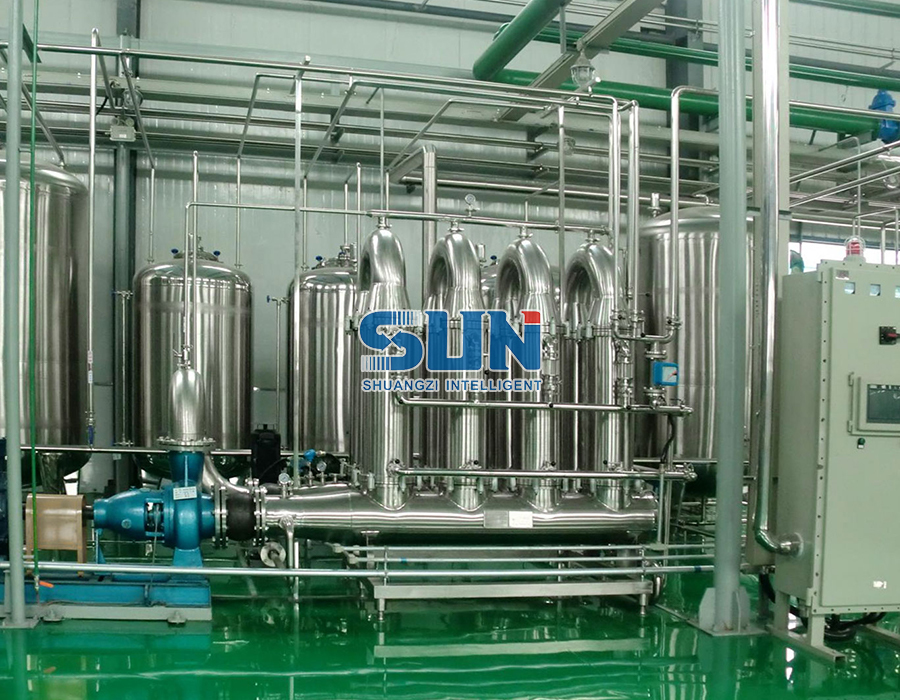
When electricity is cheaper than steam, or when the plant already operates continuously at high volume, an MVR evaporator offers the lowest running cost. MVR systems reuse the latent heat of the vapor instead of discarding it to the condenser, which can reduce energy consumption by 70-80% compared with a single-effect unit. The compressor investment is repaid through energy savings, so the payback is most attractive at large evaporation rates.
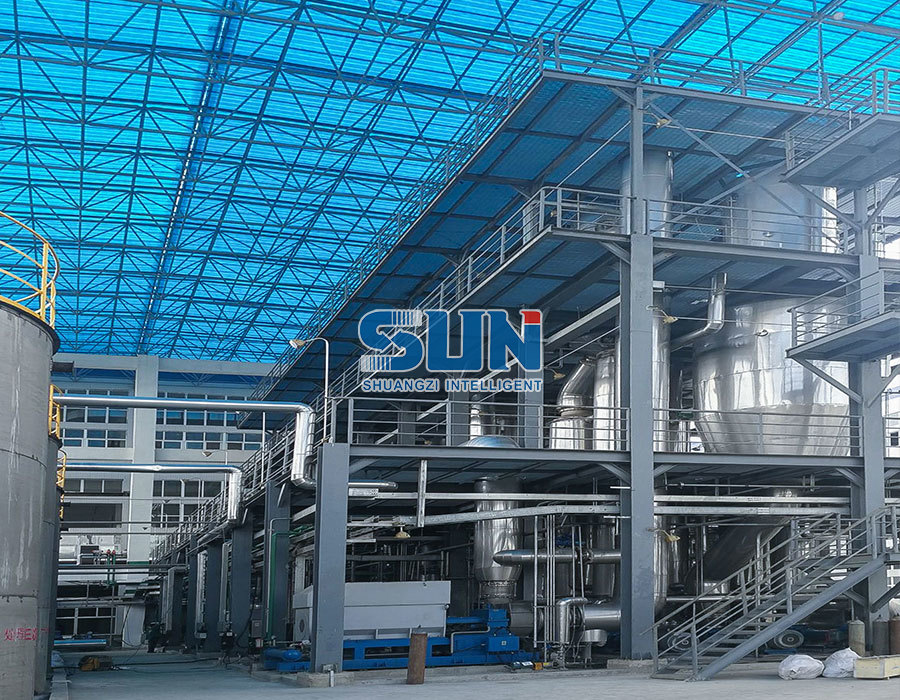 MVR Evaporator Manufacturers, Custom MVR Evaporator SuppliersZhejiang Shuangzi Intelligent Equipment Co.,Ltd. is China MVR Evaporator manufacturers and custom MVR Evaporator suppliers, offer wholesa...View Product →
Whatever design you choose, scaling and fouling are the main enemies of efficiency. Even a few millimeters of scale on a heating surface can cut heat transfer dramatically. Plants processing hard water, syrups or extract solutions should plan regular cleaning cycles and, where needed, select a forced circulation design that keeps fouling under control.
What to Check Before You Buy an Evaporation Concentration Machine
Beyond the evaporator design itself, three practical factors decide whether the equipment performs well in your plant.
The first is material and finish. For food, pharmaceutical and plant extract duties, the machine should be built in SUS304 or SUS316L stainless steel with weld quality and surface finish that meet GMP expectations. That affects cleaning, product safety and long-term corrosion resistance.
The second is automation and control. A modern evaporation concentration machine should maintain stable vacuum, temperature and feed rate with minimal operator attention. Reliable level control and vapor-liquid separation are what prevent product loss and foaming.
The third is scale-up confidence. No process brochure replaces a pilot run with your own product. A supplier with industrial evaporation project experience and a test platform can measure evaporation rate, fouling tendency and product quality before you commit to a full-size unit. That is especially important for new formulations or when feed composition varies between seasons.
Finally, think about how the machine fits into the complete line. Concentration never operates in isolation: it receives feed from extraction or fermentation and sends product to drying or crystallization. Many buyers prefer to work with one supplier for the whole liquid-processing train, which is why the evaporation concentration equipment selection guide covers machine and system considerations together, and why turnkey engineering is a common option for plant-level projects.
An evaporation concentration machine is not a commodity purchase. It has to fit the viscosity of the feed, tolerate the heat sensitivity of the product, reach the target concentration efficiently and keep energy and cleaning costs under control across years of operation. Defining the evaporation rate and quality constraints first, comparing the main designs against those numbers, and validating the selection with a pilot trial are the steps that separate a dependable installation from a costly mistake.