
 英语
英语 俄语
俄语Content
- 1 What Is an Evaporation Concentration Machine and How Does It Work
- 2 Main Types of Evaporation Concentration Equipment
- 3 Falling Film vs. Forced Circulation: Which One Do You Need
- 4 Scraper Evaporators: The Right Tool for High-Viscosity and Thermally Sensitive Materials
- 5 MVR Evaporators: When Energy Cost Drives Equipment Selection
- 6 How to Select the Right Evaporation Concentration Equipment
Most production losses in pharmaceutical and food processing don't happen during extraction — they happen during concentration. A poorly matched evaporation concentration machine can degrade heat-sensitive actives, waste energy, and throttle your entire output. Choosing the right equipment upfront changes that equation entirely.
What Is an Evaporation Concentration Machine and How Does It Work
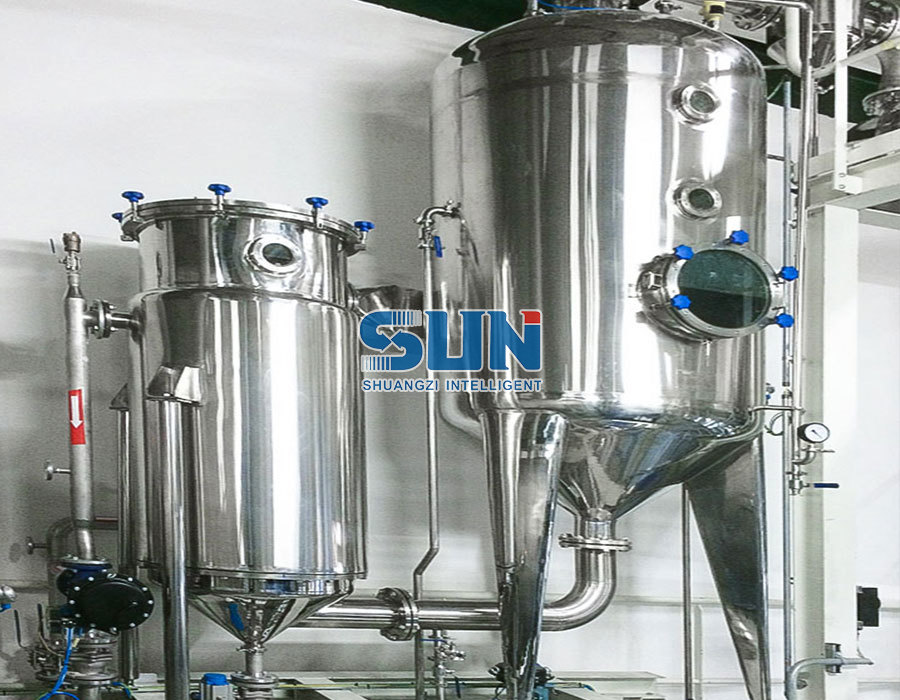
An evaporation concentration machine removes solvent — typically water or ethanol — from a liquid solution by applying controlled heat under reduced pressure. The vacuum lowers the boiling point, allowing concentration to happen at temperatures well below 100°C. This matters enormously for heat-sensitive materials like plant extracts, pharmaceutical intermediates, and food-grade liquids where high temperatures destroy active compounds.
The basic process: feed solution enters the evaporator, solvent vaporizes under vacuum, vapor is condensed and recovered, and a concentrated product exits the system. The recovered solvent can be recycled — a significant advantage for operations using ethanol or other expensive solvents.
Main Types of Evaporation Concentration Equipment
The type you need depends on your material's viscosity, thermal sensitivity, fouling tendency, and throughput requirements. Here's a practical breakdown:
| Type | Best For | Key Advantage |
|---|---|---|
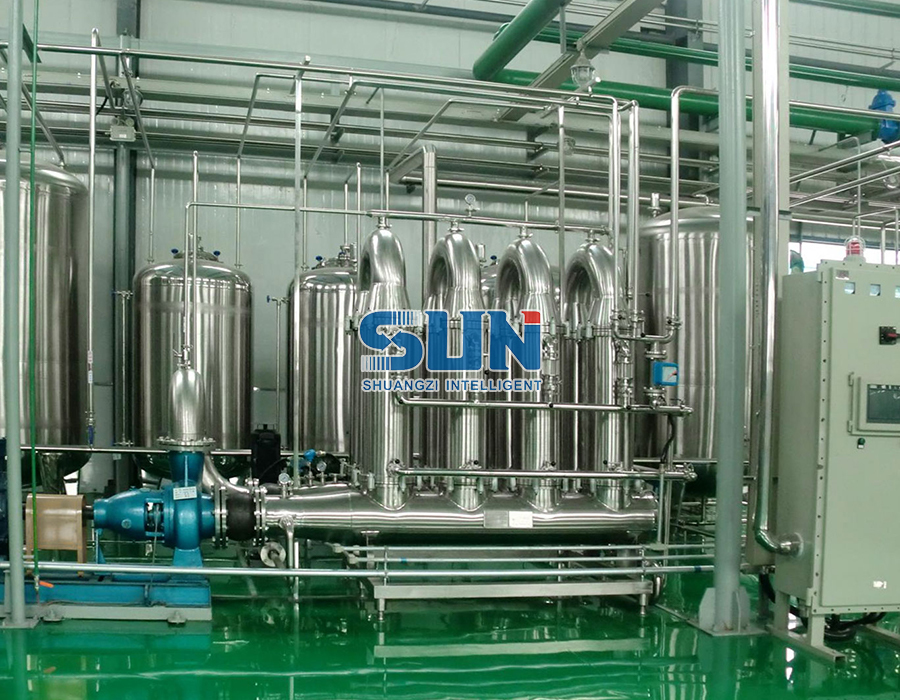
| Falling Film Evaporator (Single/Double/Triple Effect) | Thin, low-viscosity liquids — juice, herbal extracts, dairy | Short residence time, high efficiency, energy saving with multi-effect design |
| Forced Circulation Evaporator | Viscous, scaling, or crystallizing solutions | Handles fouling-prone materials; suitable for crystallization |
| Scraper / Thin Film Evaporator | High-viscosity or heat-sensitive materials (e.g., DEA, plant extracts) | Extremely short contact time; protects thermally sensitive compounds |
| MVR Evaporator | Large-scale, continuous industrial operations | Mechanical vapor recompression cuts steam consumption by up to 90% |
| Flash Evaporator | Rapid pre-concentration before downstream processing | High instantaneous evaporation rate; minimal thermal degradation |
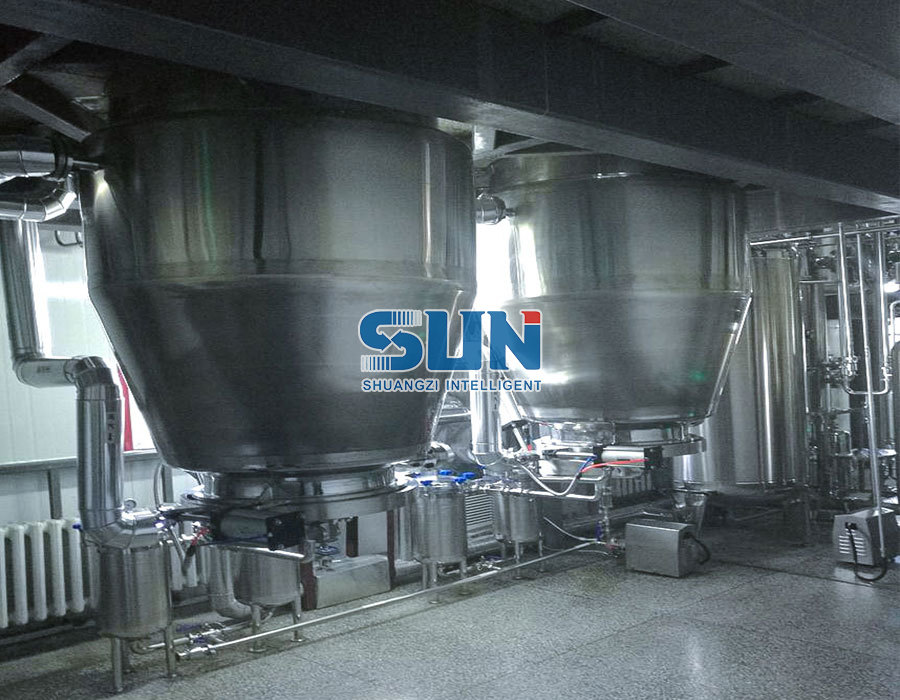
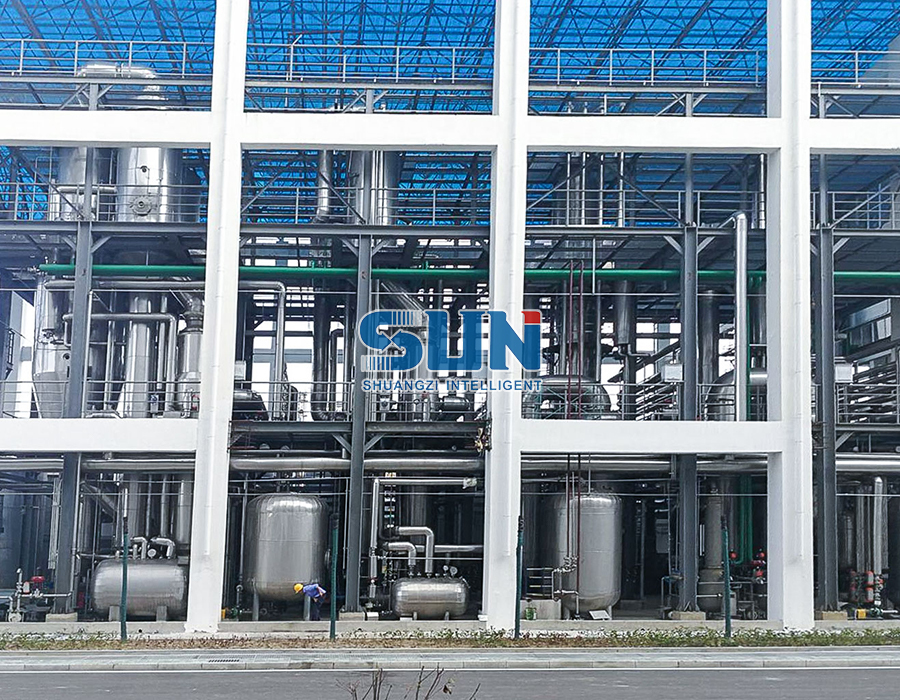
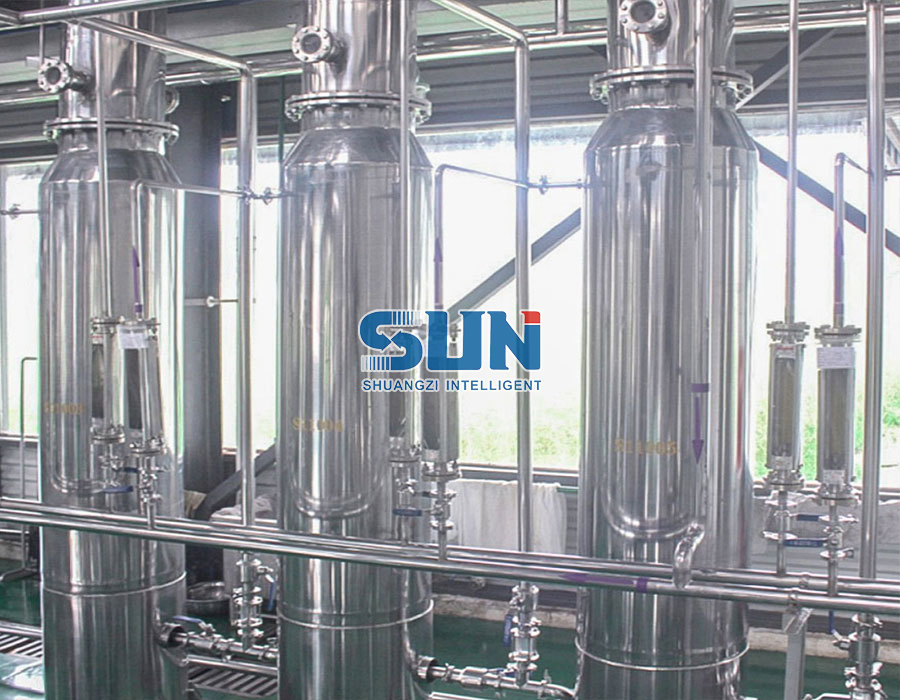
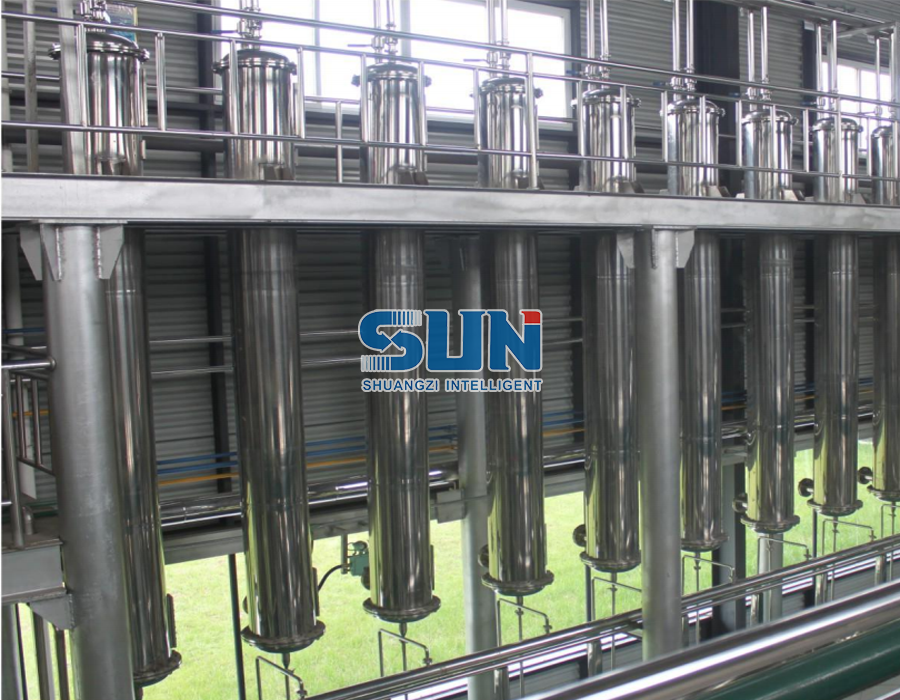
For plant extraction workflows, three-effect falling film evaporators designed for energy-efficient concentration are a strong default choice — they reuse secondary steam across three stages, cutting energy input by roughly 60–70% compared to a single-effect unit at the same throughput.
Falling Film vs. Forced Circulation: Which One Do You Need
This is where most buyers get tripped up. Falling film evaporators are faster and more energy-efficient, but they require the feed liquid to distribute evenly as a thin film inside the tubes. If your material is viscous, sticky, or prone to scaling, it won't form a proper film — and efficiency collapses.
Forced circulation evaporators use a pump to push fluid through the heat exchanger at high velocity. This turbulence prevents deposit buildup on tube walls, making them the right call for concentrated salt solutions, sugar syrups, or any material that approaches saturation. They're also the standard choice when your process requires crystallization at the end of concentration.
A practical test: if your feed liquid has a viscosity above roughly 100 mPa·s at process temperature, start with forced circulation. Below that, falling film is almost always the more economical option.
Scraper Evaporators: The Right Tool for High-Viscosity and Thermally Sensitive Materials
When you're concentrating plant extracts, oleoresins, or chemical intermediates like diethanolamine (DEA), neither falling film nor forced circulation may be appropriate. These materials become viscous as concentration rises, and many contain bioactive compounds that degrade within seconds at elevated temperatures.
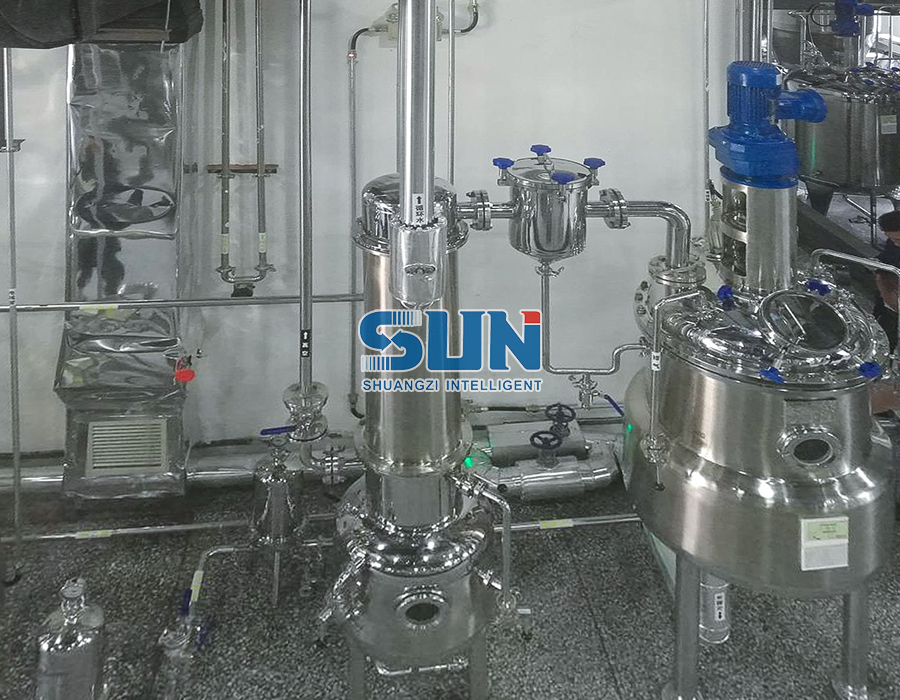
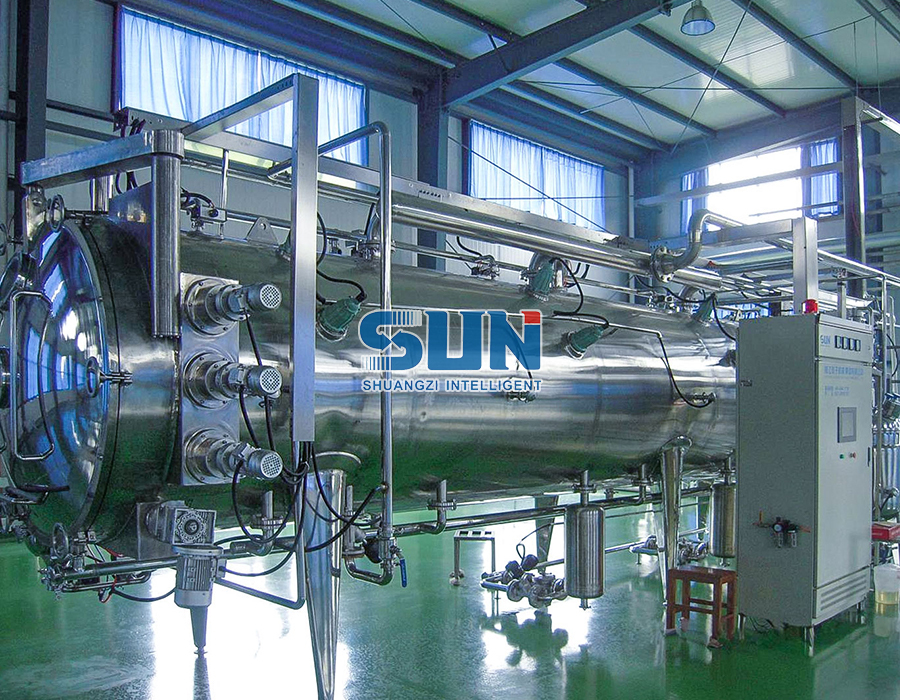
A vacuum scraper evaporator for plant extracts solves both problems. Rotating blades continuously wipe a thin film across the heated wall, keeping residence time under a few seconds. The vacuum simultaneously drops the boiling point. The result: complete concentration of materials that would be destroyed in any other evaporator design.
Scraper evaporators are also the go-to for materials that would otherwise foul tube bundles — the mechanical wiping action prevents buildup entirely.
MVR Evaporators: When Energy Cost Drives Equipment Selection
Mechanical Vapor Recompression (MVR) technology addresses the single biggest operating cost in industrial evaporation: steam. A conventional multi-effect evaporator still requires external steam for each run. An MVR system compresses the secondary vapor generated during evaporation and feeds it back as the primary heat source — eliminating most external steam consumption entirely.
For high-volume continuous operations, MVR units can reduce energy consumption by 80–90% compared to single-effect systems. The capital cost is higher, but payback periods of 18–36 months are common in plants running at scale. If your facility runs evaporation around the clock, MVR is worth modeling seriously.
How to Select the Right Evaporation Concentration Equipment
Four parameters drive selection more than anything else:
- Feed viscosity and fouling tendency — determines whether falling film or forced circulation is viable
- Thermal sensitivity of the product — low-temperature vacuum operation becomes mandatory above a certain sensitivity threshold
- Required evaporation capacity — measured in kg of water removed per hour; this determines the number of effects or whether MVR is justified
- Material of construction — pharmaceutical and food applications typically require SUS316L stainless steel; chemical applications may use SUS304 or specialty alloys
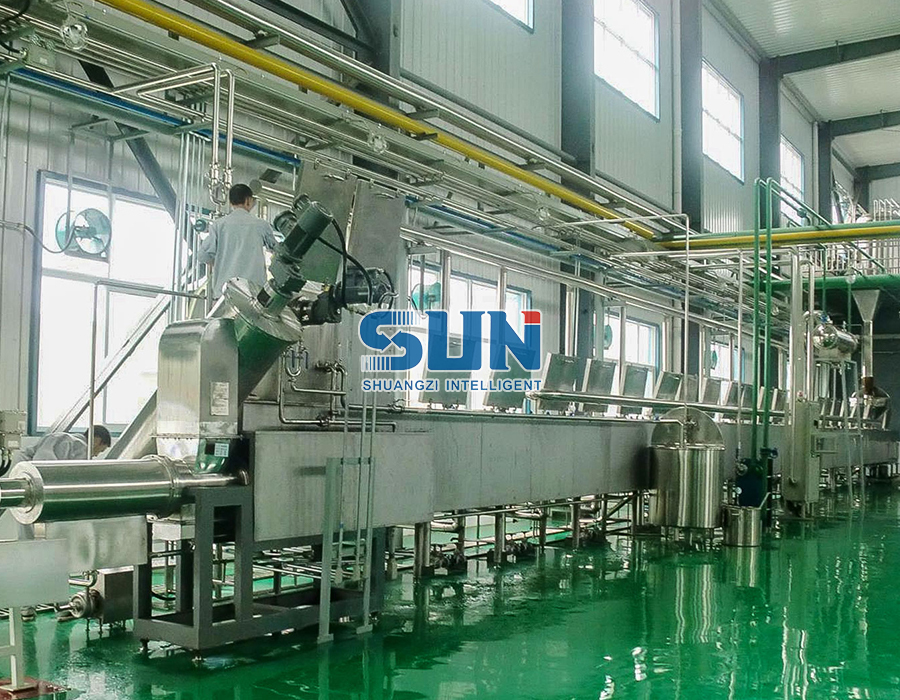
For operations processing plant extracts, CBD, herbal medicines, or pharmaceutical intermediates, the full range of industrial evaporation and concentration machines for plant extraction covers everything from lab-scale vacuum units through large-capacity multi-effect systems — with GMP-compliant designs available for regulated industries.
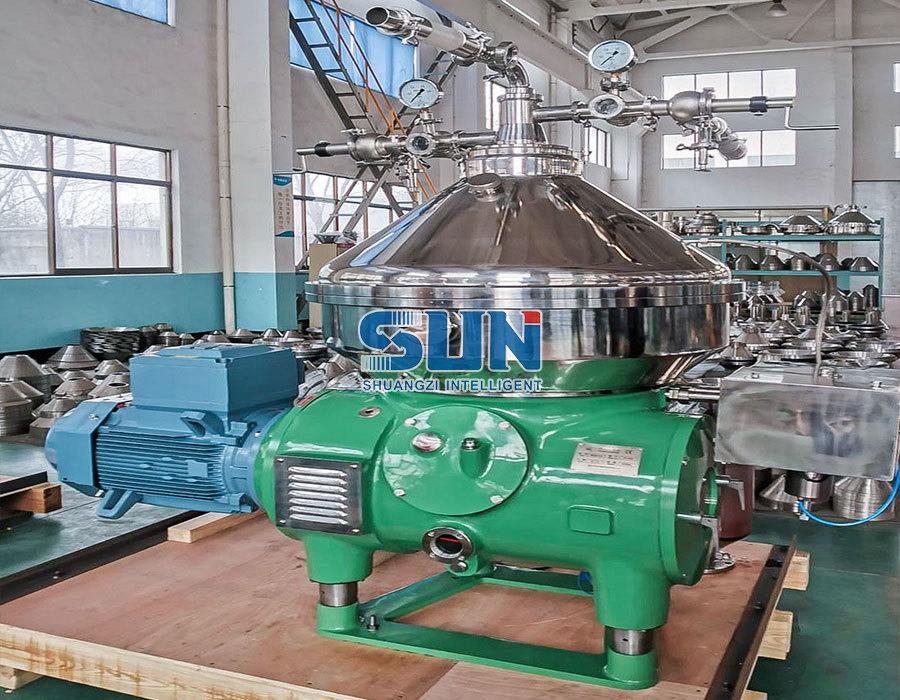
One final point on integration: concentration rarely stands alone. In a complete extraction line, it sits between extraction and separation or drying. Equipment that is designed and sized together — extraction tank, evaporator, separator, dryer — avoids the bottlenecks that appear when units from different sources are forced to match throughput. A turnkey plant extraction production line ensures every stage is matched from the start, which matters more than any individual machine specification.