
 英语
 俄语
Content
- 1 What the ICH Q7 Guidelines Actually Cover
- 2 Equipment and Product-Contact Surfaces Under Section 5
- 3 Facilities, Utilities and the Layout Choices Auditors Revisit
- 4 Documentation, Validation and Change Control as One System
- 5 Drying and Solvent Recovery: Where Compliance Is Won or Lost
- 6 Building an Audit-Ready Checklist from the Guideline
- 7 Frequently Asked Questions
Most ICH Q7 findings at API plants are not paperwork failures. They are equipment and process failures: a vessel with an unverified cleaning limit, a drying step with no in-process data, a drum of recovered solvent released back into production without a specification. If you design, build or buy the equipment behind an API process, Q7 is as much your standard as it is the quality unit's.
What the ICH Q7 Guidelines Actually Cover
ICH Q7 is the ICH Good Manufacturing Practice guide for active pharmaceutical ingredients, adopted at Step 4 in November 2000 and applied through national and regional GMP frameworks rather than as standalone legislation. The entire guideline hangs off one boundary: the point at which an API starting material enters the process.
The guide applies to APIs made by chemical synthesis, by extraction from plant or animal sources, by fermentation, or by a combination of those routes. It also reaches intermediates, and the API starting material itself once that material is defined. Finished dosage forms sit outside Q7 and fall under drug product GMP, which is why an API site can be fully compliant with Q7 and still face separate expectations from a customer's product quality team.
| Production activity | Position under ICH Q7 |
| Chemical synthesis of an API | Applies from the introduction of the API starting material onward |
| Extraction from plant or animal material | Applies, including controls on the source material and its pre-processing |
| Fermentation and cell culture | Applies, with additional specific guidance in Section 18 |
| Finished dosage form manufacture | Outside Q7, covered by regional drug product GMP |
| Packaging, storage and distribution of API | Covered in Sections 9 and 10 |
Reference: ICH Harmonised Tripartite Guideline Q7, Good Manufacturing Practice Guide for Active Pharmaceutical Ingredients.
Extraction routes make that definition more demanding than it looks. A line that isolates paclitaxel from Taxus chinensis, such as the Taxus chinensis extraction project delivered for a European client, has to define its starting material at the biomass stage, because the quality of the biomass drives the impurity profile of everything downstream.
Equipment and Product-Contact Surfaces Under Section 5
Section 5 requires product-contact surfaces to be non-reactive, non-additive and non-absorptive, equipment to be cleaned and maintained on defined schedules, and critical instruments to be calibrated. Those requirements drive most of the engineering decisions on an API line, long before anyone writes a validation protocol.
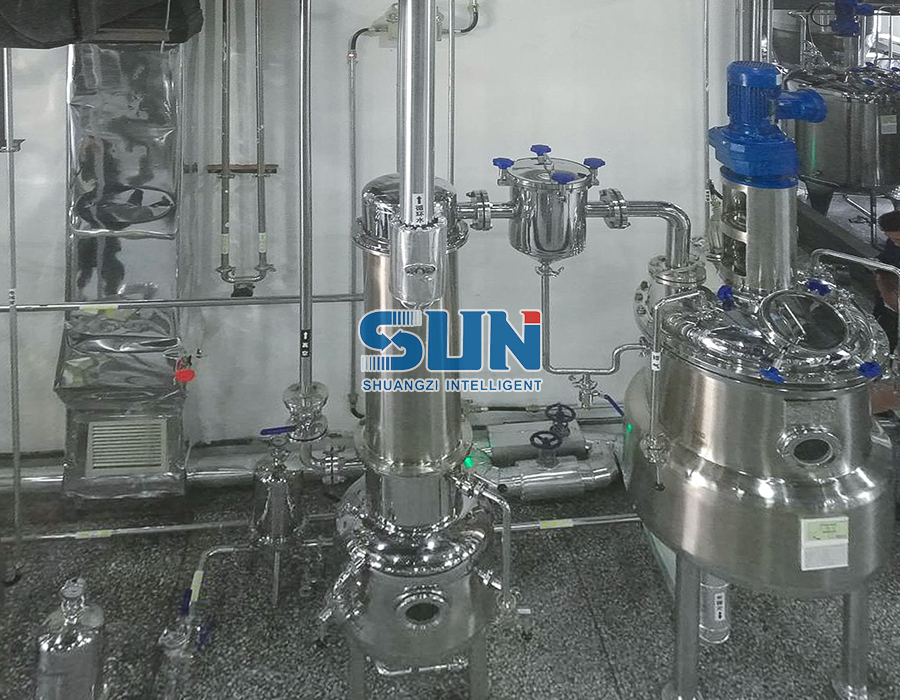
A stirred reactor for chemical synthesis is where the requirement becomes concrete. Wetted parts are usually 316L stainless steel, with 304 acceptable where the process chemistry and cleaning agents allow it. The qualification question is not which grade was purchased; it is whether the material can be traced, the welds can be inspected, and the vessel can be drained and cleaned without a low point holding mother liquor.
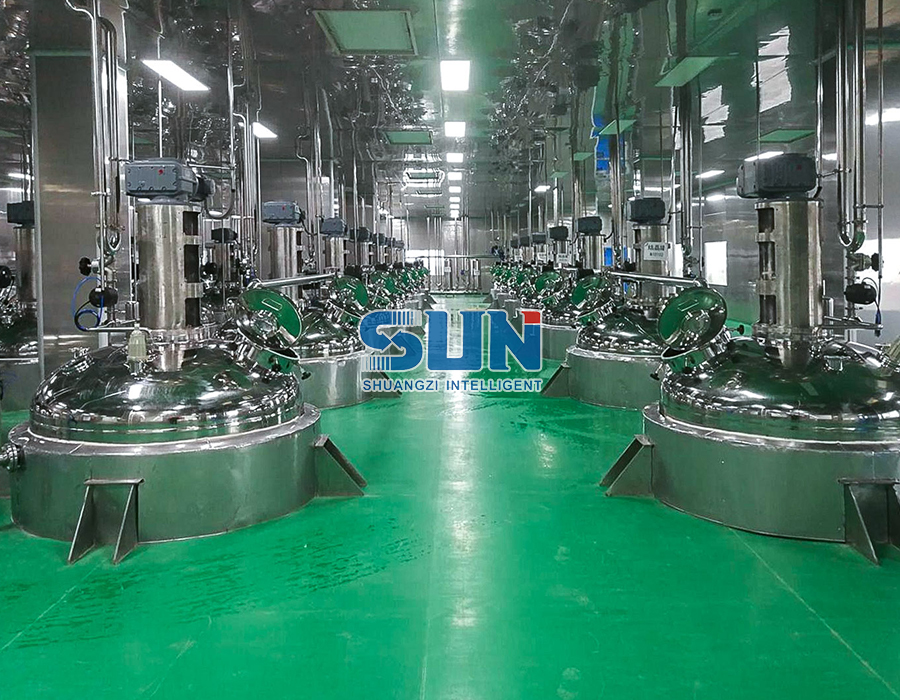 Chemical Stainless Steel Stirred Tank ReactorStainless steel stirred tank reactor for chemical synthesis, with jacket heating or cooling and multiple agitator options; consider material traceability and drainable cleaning.View Product →
- Material certificates mapping every wetted part to a heat number and a surface finish specification
- Weld maps, procedure qualification and inspection records for orbital and manual welds
- Drainability drawings showing slope, low-point valves and no dead legs beyond a defined length
- Gasket and seal compatibility data against every solvent in the process
- Calibration certificates and traceability for temperature, pressure and load instruments
Surface finish is a means, not an end. A mirror-polished nozzle on a vessel with a poorly welded baffle is worse than a documented standard finish on a clean one. Inspectors ask what your cleaning validation demonstrated, not which abrasive was used.
Facilities, Utilities and the Layout Choices Auditors Revisit
Section 4 makes the building part of the quality system: defined areas or other documented control systems for sensitive operations, controlled air handling, specified utilities, and a waste and solvent strategy that does not rely on informal habit.
API sites are rarely caught by the architectural drawing. They are caught by the operating reality the drawing permitted.
Design intent that holds
- Dedicated air handling for sensitising or highly potent compounds
- Unidirectional personnel and material flows with defined pressure cascades
- Closed solvent transfer and explosion-protected handling zones
- Sealable drains and cleanable floor details
- Written specifications for steam, compressed air, nitrogen and water
Findings that repeat
- Shared air handling between incompatible production areas
- Drains that cannot be sealed during a campaign
- Cleaning tools stored in production corridors
- Compressed air used on product-contact surfaces with no quality specification
- Waste solvent accumulated in open containers
Utilities sit inside the GMP boundary. Steam, chilled water, compressed air, nitrogen and purified water all touch the product or a product-contact surface, so each needs a written specification, a sampling point and a named owner.
Documentation, Validation and Change Control as One System
Sections 6, 12 and 13 connect every batch to three things: a validated process, a defined record set and a controlled history of what changed. Remove any one link and the batch record stops being evidence.
- Specification and design. User requirements, P&IDs, material selection and the cleaning strategy are agreed before fabrication, so later qualification has something to test against.
- Installation and operational qualification. Drawings, certificates, calibration and functional tests are verified against the design, and deviations are closed rather than deferred to the next project phase.
- Process and cleaning validation. Critical parameters are challenged, cleaning limits are justified numerically, and the sampling rationale is written down in a form a reviewer can follow.
- Batch documentation. Records capture the actual values recorded at the time, not ranges, and any in-process adjustment is explained in the same document.
- Change control. A new gasket material, a re-routed transfer line or a revised drying profile is evaluated, approved and reflected in the validation package before the next batch runs.
Retention: Q7 expects batch, cleaning and validation records to be kept for at least one year after the batch expiry date, and longer where regional rules require it. The practical test is retrieval — if a record cannot be produced within an inspection window, it does not exist.
Drying and Solvent Recovery: Where Compliance Is Won or Lost
Two unit operations generate a disproportionate share of Q7 observations: the final drying step and the recovery of solvents for re-use. Both are places where a process parameter quietly turns into a quality attribute.
Drying a thermally sensitive API
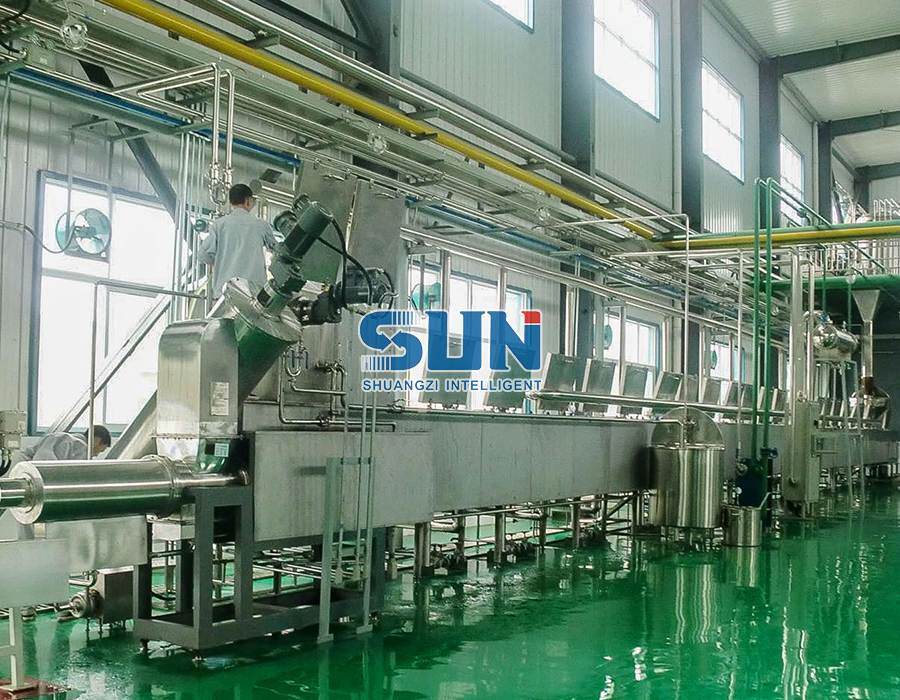
A vacuum low-temperature belt dryer is often selected because it keeps product below its degradation threshold while removing residual solvent to a defined limit. Under Q7 the hardware is only half the argument. Belt speed, vacuum level, temperature profile and residence time all need to be treated as critical parameters, recorded per batch and challenged during validation.
Cleaning between campaigns deserves equal attention. A continuous dryer presents far more internal surface than a tray oven and correspondingly more places for powder to accumulate, so the cleaning procedure has to name the surfaces, the sequence and the acceptance criteria rather than describing a general practice.
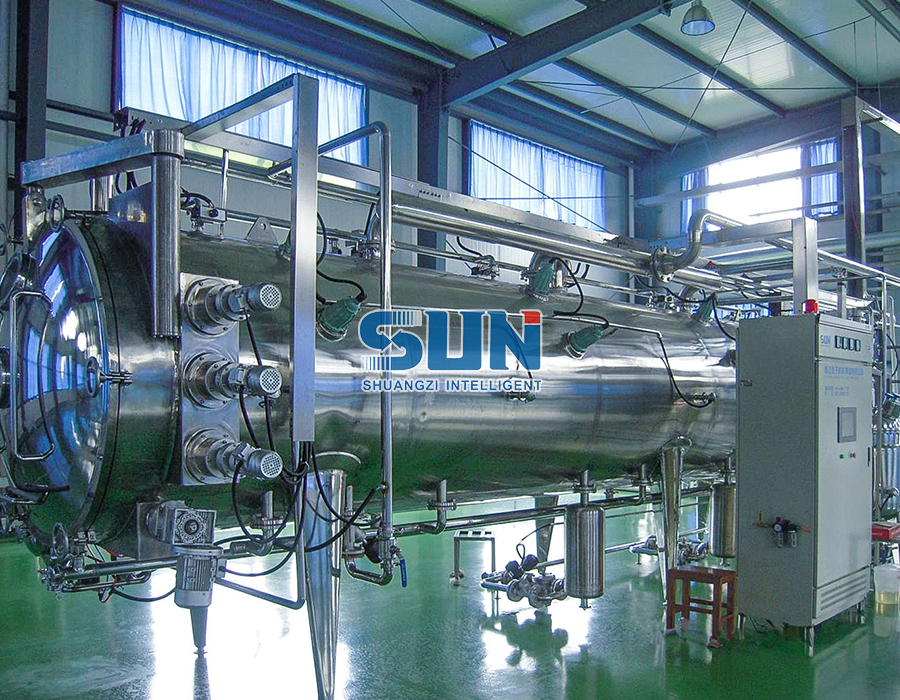 Full Automatic Vacuum Low-temperature Crawler Belt DryerContinuous vacuum belt dryer for heat-sensitive materials, offering automated operation, 25–150 °C drying and online cleaning to support GMP campaigns.View Product →
Recovering solvents under Section 14.4
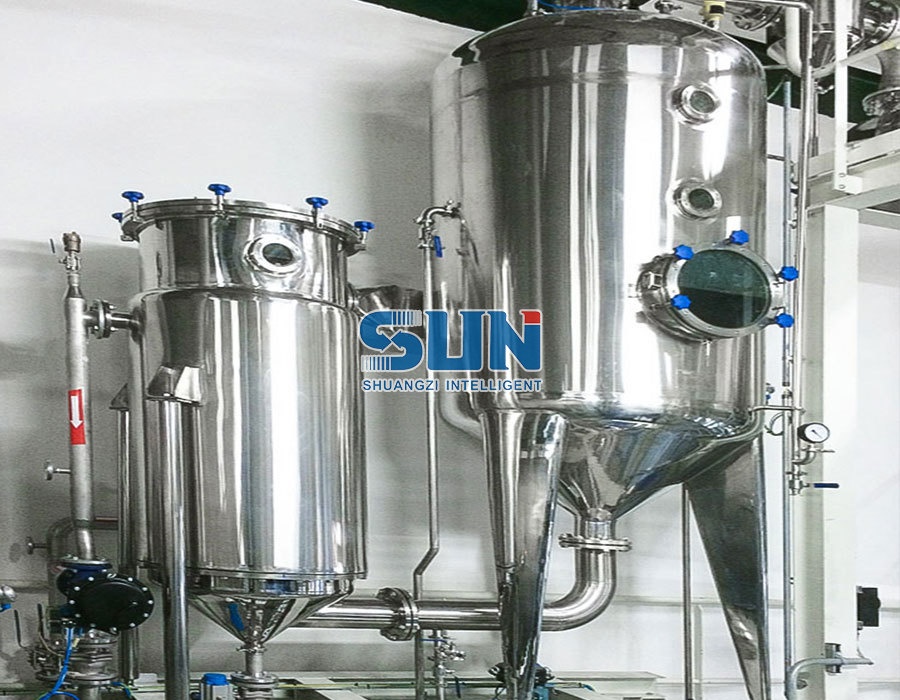
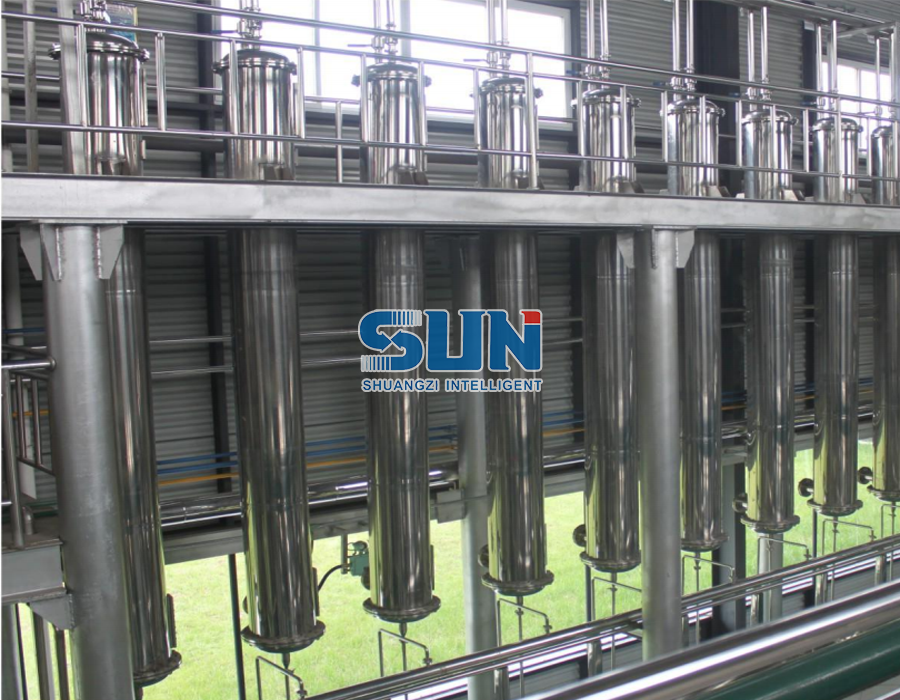
Q7 permits recovered solvents and mother liquors to be reused, provided the recovery process is controlled and the recovered material is tested before it returns to production. A distillation and recovery column with documented temperature, reflux and cut-point control makes that argument straightforward; an unlabelled drum of recovered ethanol makes it impossible.
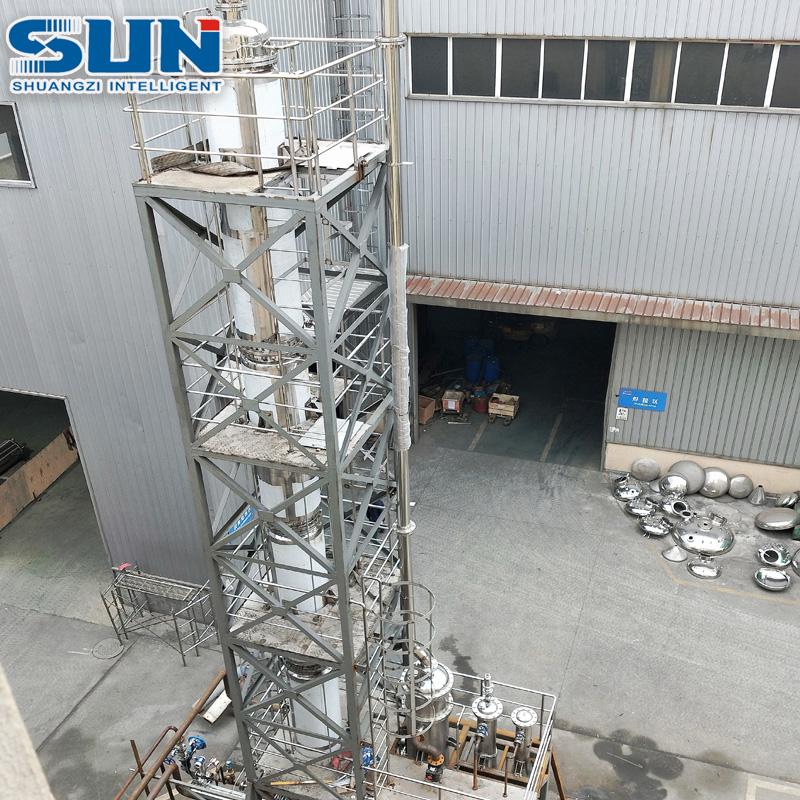 Alcohol Recovery Tower Waste Ethanol Distillation Recycling MachineStainless steel rectification tower for recovering waste ethanol solvent in pharmaceutical and fine chemical production, with custom configurations and stated >90% recovery concentration.View Product →
A recovered solvent is a material, not a waste stream. Give it a specification, a batch number and an impurity profile, or give it to the waste contractor.
Building an Audit-Ready Checklist from the Guideline
A Q7 checklist is only useful if every line maps to something an inspector can physically verify: a document, a piece of equipment or a record. Grouping questions by section keeps the checklist stable between audits and exposes gaps before someone else finds them.
- Quality system: deviation handling, out-of-specification investigation, product quality review, complaints
- Personnel and training: who is qualified to sample, clean and release, and how that is recorded
- Facilities and utilities: zoning, air handling, water and steam specifications, waste routes
- Equipment: material traceability, calibration status, maintenance and cleaning records
- Production and in-process controls: batch records, yield reconciliation, reprocessing rules
- Materials and suppliers: approved supplier list, incoming testing, quarantine and release
- Laboratory controls: method validation, reference standards, stability and retention samples
Where an entire line is delivered as a turnkey package, the checklist belongs in the project scope rather than in a folder reconstructed at handover. The article on what industrial buyers need to know about turnkey equipment projects covers how that scope is normally divided between owner and supplier.
Documentation lag is the most common self-inflicted finding. If a validation report is still in draft when the first commercial batch ships, that batch is effectively unvalidated.
Frequently Asked Questions
Who does ICH Q7 apply to?
ICH Q7 applies to manufacturers of active pharmaceutical ingredients and intermediates, including sites that only perform final purification, drying or packaging of an API. It also reaches contract manufacturers, repackagers and distributors, and it applies from the introduction of the API starting material onward.
Does ICH Q7 require cleaning validation?
Yes. Section 12 places cleaning validation inside the validation package, and Section 5 requires defined cleaning procedures and schedules for equipment. In practice you need a justified residue limit, a validated analytical method and evidence that the worst-case surface falls below that limit.
How is ICH Q7 different from drug product GMP?
Q7 governs the API chain up to release: synthesis, extraction, fermentation, purification, drying, packaging and distribution. Drug product GMP governs formulation, fill and finish, and adds expectations such as sterility assurance and finished-product stability that Q7 does not address.
How long must ICH Q7 records be retained?
Q7 expects records to be kept for at least one year after the batch expiry date, with longer periods where regional regulations apply. Retention should be defined in a written procedure and verified in practice, because an inspection requests a specific batch record rather than a retention policy.
The simplest test of a Q7 programme: pick any batch, then pick any piece of equipment that batch touched. Can you show, from documents alone, that both were under control?