
 英语
英语 俄语
俄语Content
- 1 What mRNA purification actually has to remove
- 2 Precipitation, affinity, ion exchange and filtration compared
- 3 A downstream train, step by step
- 4 Where yield and purity leak away
- 5 The buffer and facility layer nobody scopes properly
- 6 Plan the scale-up before the first GMP batch
- 7 Frequently asked questions
An in vitro transcription reaction is not a purification step, and it never produces a clean product. What leaves the reactor is a mixture of capped and uncapped transcripts, double-stranded RNA by-products, residual plasmid template, T7 polymerase, unincorporated nucleotides and magnesium salts. mRNA purification is the downstream sequence that turns that mixture into a bulk drug substance a regulator will accept and an innate immune system will tolerate.
What mRNA purification actually has to remove
mRNA purification removes four families of impurities from an in vitro transcription reaction: process enzymes and unincorporated nucleotides, the DNA template, double-stranded RNA by-products, and truncated or aggregated transcripts.
Each family behaves differently downstream. Residual DNA is a regulatory question, dsRNA is an immunological one, and leftover NTPs are largely a formulation and analytics problem, because they compete with the transcript during encapsulation and distort concentration readings.
Precipitation, affinity, ion exchange and filtration compared
Four methods carry almost all preparative mRNA purification work: precipitation, oligo(dT) affinity chromatography, anion exchange chromatography and tangential flow filtration, and nearly every clinical process combines at least two of them.
| Method | Separation basis | Typical position | Main risk |
| LiCl precipitation | RNA solubility against salt and alcohol | Small volume, early development | Resuspension losses, weak scalability |
| Oligo(dT) affinity | Hybridisation to the poly(A) tail | Capture step | Ligand leaching, elution strength |
| Anion exchange | Charge density, size-dependent elution | Polishing step | Shallow gradients, peak broadening |
| Tangential flow filtration | 100 kDa molecular weight cut-off | Concentration, buffer exchange | Fouling, shear at high flux |
| Size exclusion | Hydrodynamic radius | Analytics, small batches | Dilute pools, low capacity |
The choice usually follows the impurity the process has to defend. When dsRNA is critical, anion exchange with a shallow salt gradient does more work than a second affinity step. When reagent protein carryover is the concern, affinity capture removes most of it in a single pass.
A downstream train, step by step
A conventional mRNA downstream train runs from DNase digestion through two chromatography steps and a diafiltration, and it stays cold and fast between them.
- DNase digestion and dilution. Template is digested and the reaction is adjusted to the conductivity and pH the capture step expects.
- Clarification. Precipitate, debris or particles are removed before anything touches a resin or a membrane.
- Capture chromatography. Oligo(dT) binds the poly(A) tail while proteins, NTPs and short transcripts flow through.
- Polishing chromatography. Anion exchange resolves dsRNA and residual template; gradient design sets the final dsRNA specification.
- Concentration and diafiltration. A 100 kDa membrane retains the transcript while exchanging gradient salt into formulation buffer.
- Sterile filtration, bulk fill and freezing. Material is filtered at 0.2 microns, filled into single-use bags and frozen on a controlled profile.
Steps three and four are where hardware earns its keep. mRNA elutes in broad, shallow peaks, so the skid has to hold low flow rates steady without pulsation, and the column has to be packed reproducibly enough that a shallow gradient behaves the same way on a Tuesday as it did in development.
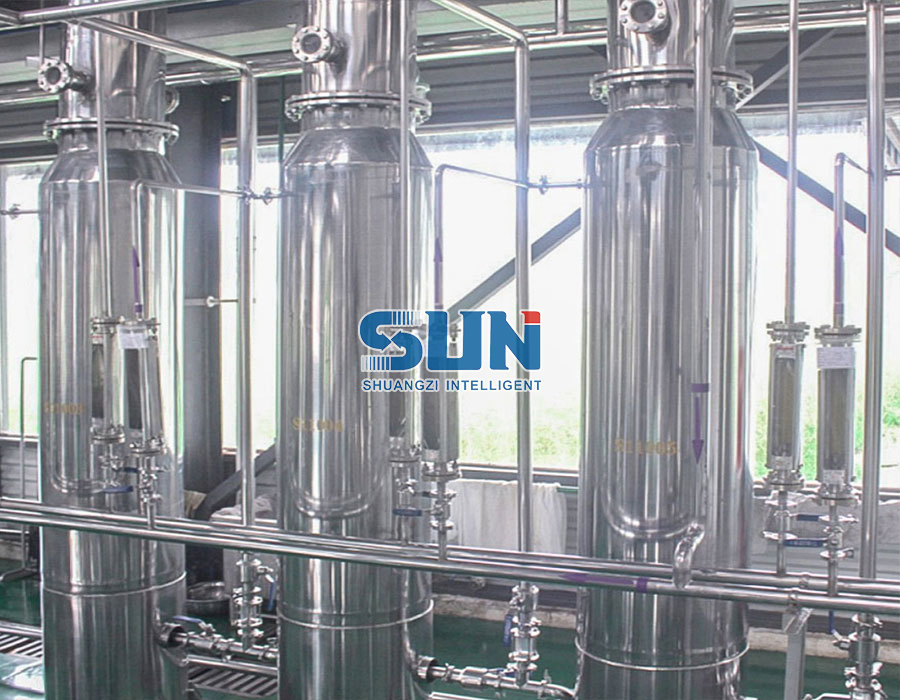
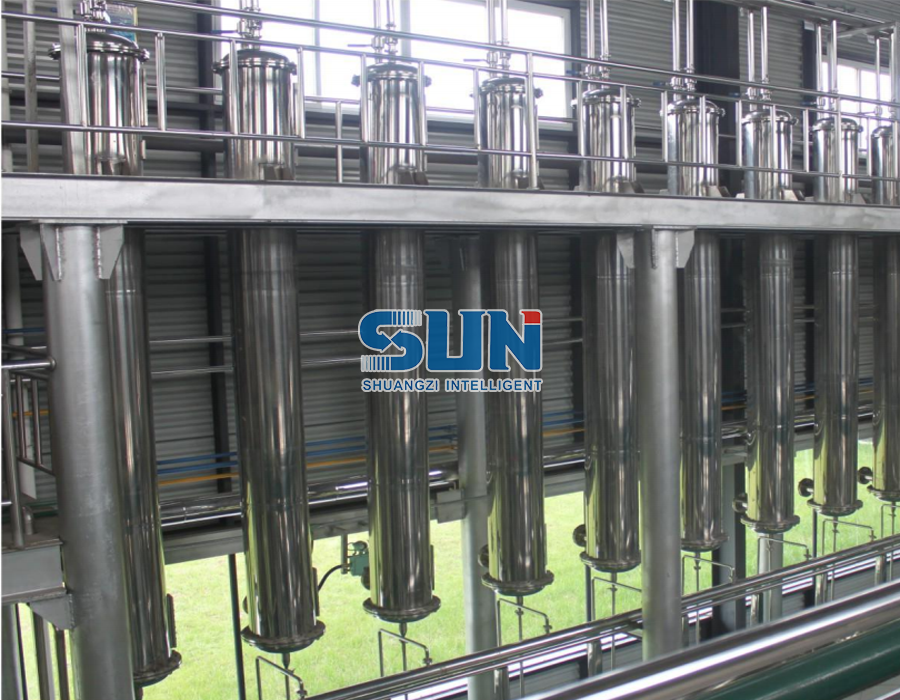
 Stainless Steel Chromatography Column Resin Column Separation EquipmentC hromatography column usage : C hromatography column, also known as resin column, is suitable for liquid material purification and impurity removal in industries such...View Product →
Where yield and purity leak away
Most mRNA losses and most specification failures trace back to four places: hold steps, membrane fouling, chromatography pooling decisions and shear from oversized equipment.
- Hold time. Hydrolysis continues in every buffer, so a two-hour ambient hold costs full-length content that no later step recovers.
- Membrane fouling. Falling flux forces longer recirculation, and longer recirculation accelerates degradation in a loop that compounds.
- Pooling decisions. Cutting an elution tail protects purity at the cost of yield; widening the pool recovers yield and carries dsRNA forward.
- Shear and foaming. Oversized pumps, aggressive valve sequencing and air entrainment fragment long transcripts at points nobody monitors.
- RNase ingress. Cleaning and water quality failures rarely look like contamination; they appear as unexplained size heterogeneity.
Filter selection is the easiest of these to get wrong early. Membrane chemistry, pore size and skid design have to be fixed together, because a membrane that fouls in twenty minutes drives a recirculation time the molecule cannot afford.
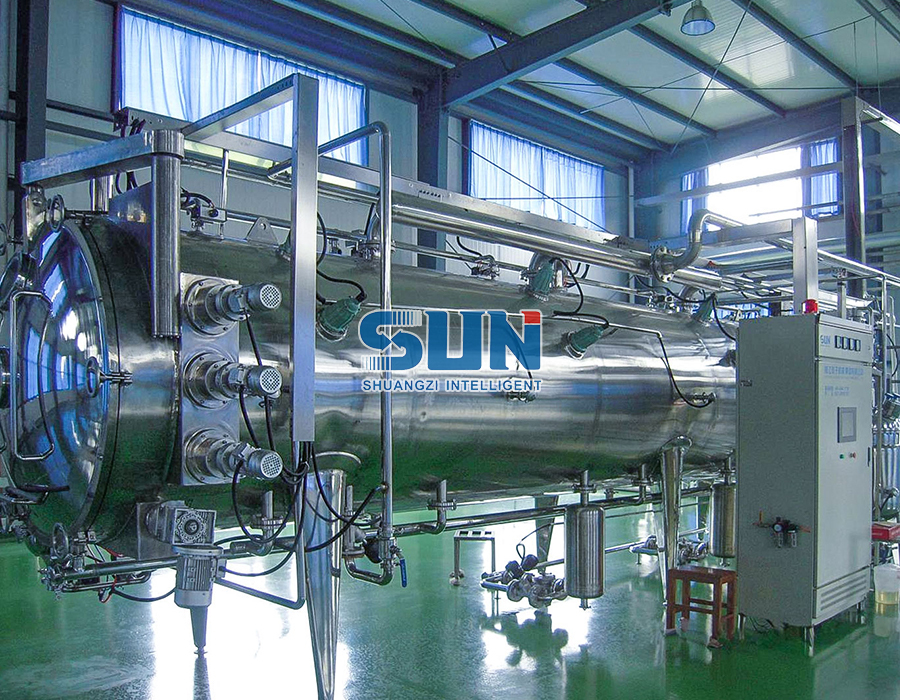
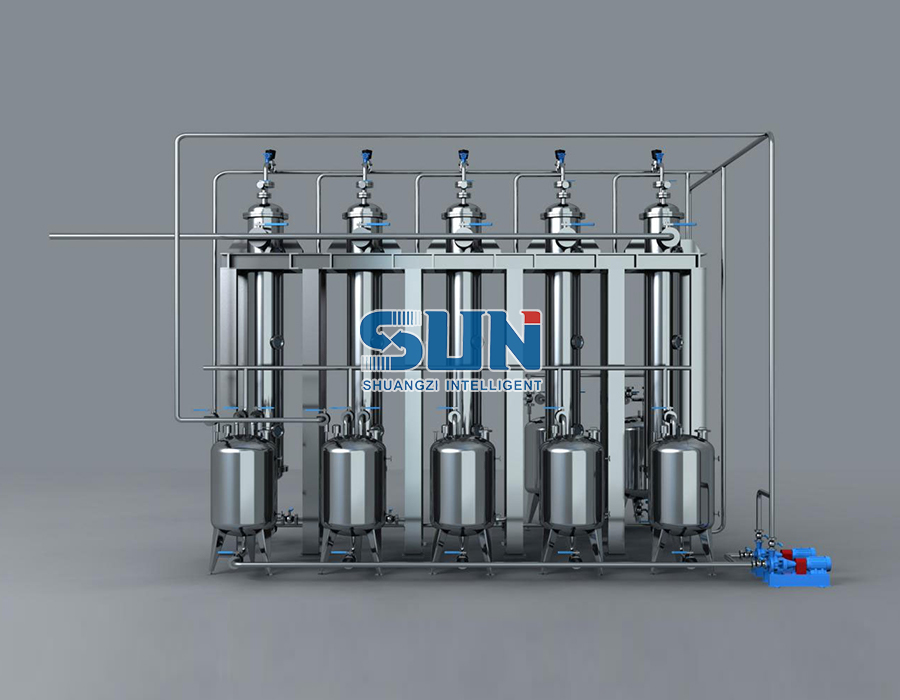
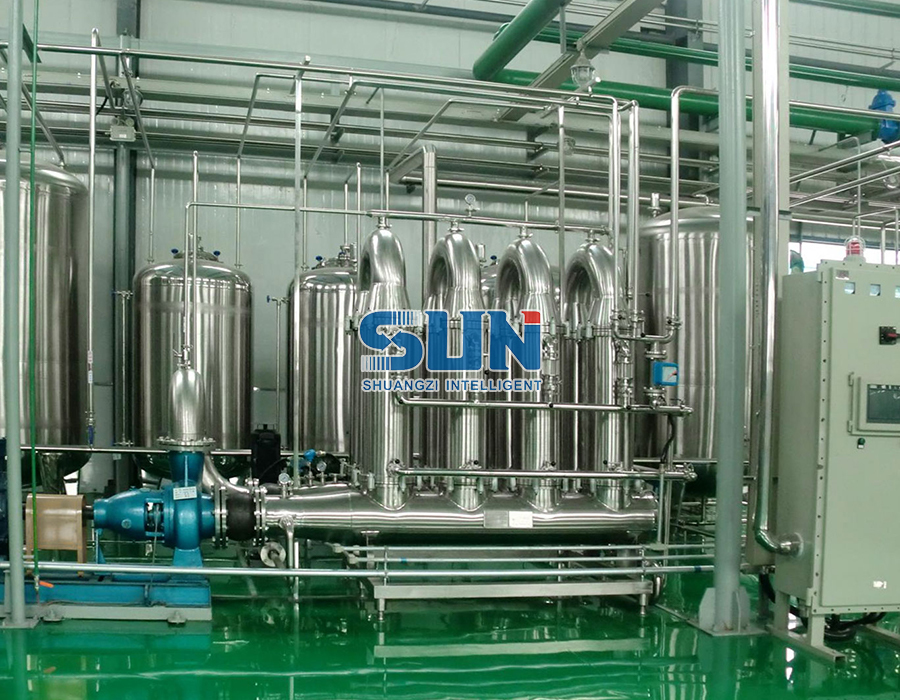 Plant Extraction Supporting Membrane Separation EquipmentFiltration process line: Circulation tank → Feed pump → Ceramic membrane → Filtrate ↑ ↓ ——————————————————ConcentrateView Product →
The buffer and facility layer nobody scopes properly
Purification performance is capped by the layer around it: water quality, buffer preparation, tank design, cleaning validation and hold-time control.
Where single-use earns its place
- Small and mid-volume buffers, hold bags and transfer lines
- Faster changeover between campaigns and product families
- Lower cross-contamination risk on shared equipment
Watch leachables data, bag supply security and cost per batch.
Where stainless still wins
- Large buffer volumes where mixing homogeneity matters
- CIP and SIP routines validation teams already understand
- Long service life on agitated preparation tanks
Watch cleaning validation for RNase removal, not only for chemical residues.
Buffer preparation is where an mRNA process depends on ordinary equipment. A 2,000 L buffer has to be homogeneous within minutes at a defined temperature and delivered RNase-free, which puts the emphasis on agitator design, SUS316L contact surfaces, drainability and cleanability rather than anything exotic.
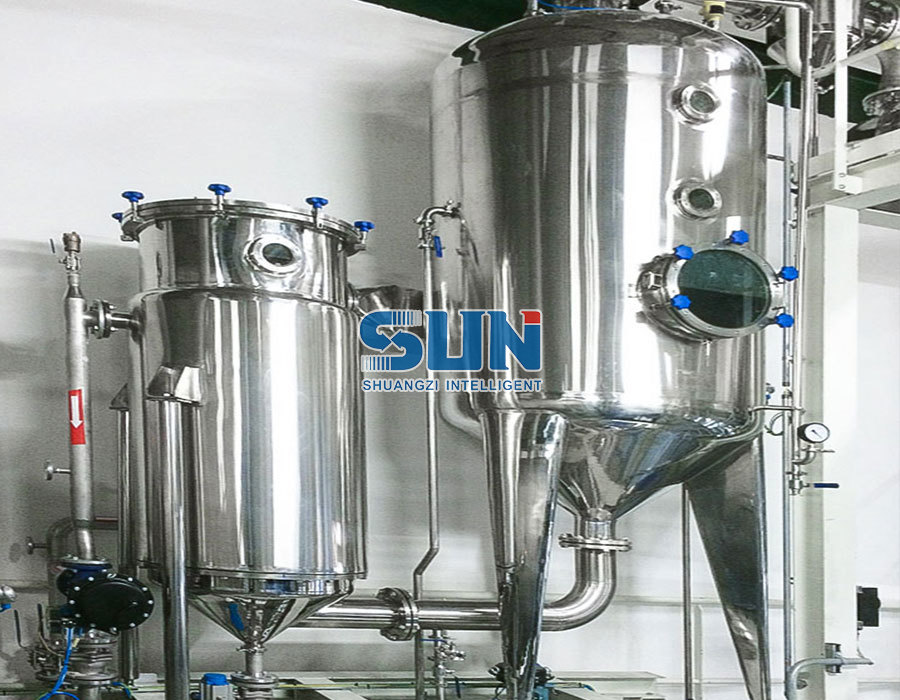
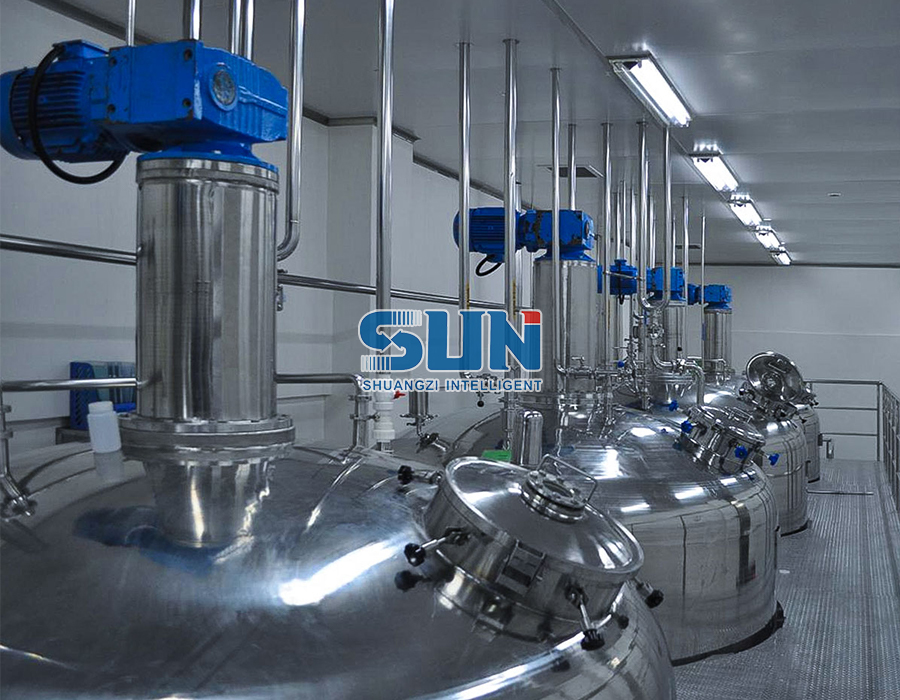 Sanitary Stainless Steel Liquid Preparation Tank With AgitatorProduct description:View Product →
When the downstream skid, the buffer suite and the clean utilities are bought as separate packages, the interfaces become the schedule risk. The commercial questions behind that risk are set out in this guide to turnkey equipment projects for industrial buyers.
Plan the scale-up before the first GMP batch
Scale-up decisions made at bench scale decide whether a 500 L batch is reproducible, so hold-time studies, worst-case pooling and equipment sizing belong in process development rather than in validation.
Three questions settle most of it. What is the longest hold each intermediate tolerates at the temperature it will actually see? What is the worst-case pool composition at the lowest expected titre? And which unit operations have no operating window to spare at large scale? A pilot platform that runs the real buffers, the real resins and the real hold times answers all three before capital is committed.
This is also where an integrated delivery model pays for itself: process design, fabrication, installation and commissioning under one contract remove the interface between the chromatography skid and the buffer loop that would otherwise be negotiated between two vendors. Turnkey process lines shorten that path.
Frequently asked questions
What is the most common method for mRNA purification?
Oligo(dT) affinity capture followed by anion exchange polishing is the most widely used combination at clinical and commercial scale, with tangential flow filtration for concentration and buffer exchange. Precipitation and size exclusion remain useful at small scale and in analytics.
How is double-stranded RNA removed from an mRNA product?
Anion exchange with a shallow salt gradient resolves dsRNA from full-length mRNA, and cellulose-based binding has been used as a dedicated removal step. Most processes also reduce dsRNA at the source through reaction conditions, capping strategy and template design, then verify with a dsRNA-specific assay.
Does mRNA purification have to run cold?
Not necessarily. Monolith formats and some resins tolerate room temperature when residence times are short and pH stays mildly acidic to neutral. What matters is the data: hold-time and temperature studies should define the operating window instead of an assumption that colder is always better.
How many chromatography steps does a commercial mRNA process need?
Two is the norm, one capture and one polishing step. A single step can be enough for research-grade material, but each additional step costs yield, so adding one should be justified by a specific impurity specification.