
 英语
英语 俄语
俄语Content
A 500-liter batch of clarified fermentation broth has to be concentrated five-fold and switched into a new buffer before tomorrow's chromatography run. Dead-end filter cartridges blind within minutes under that kind of solids load, and heating the broth risks damaging the very protein you are trying to recover. This is the point where most process engineers reach for a tangential flow filtration system (TFF), and it is usually the right call.
For repeated concentration and buffer exchange of heat-sensitive, high-value liquids, TFF holds flux steady for hours, keeps product quality consistent batch after batch, and beats dead-end filtration on cost per liter at any meaningful scale. But the membrane rarely decides project success on its own. Pump selection, pressure control, materials of construction, and how the skid connects to the centrifuges, evaporators and dryers around it matter just as much. Here is how the technology works, what a complete system contains, and what to nail down before you commit to a purchase.
How Tangential Flow Filtration Works
In a TFF system, the feed stream flows parallel to the membrane surface instead of straight into it. A pump drives liquid across the membrane; pressure pushes a fraction of it through the pores as permeate, while the remainder, called the retentate, recirculates back to the feed tank. Because the flow sweeps tangentially across the surface, retained particles and solutes are continuously carried away rather than packing into a dense cake. That one hydraulic difference explains why tangential flow filtration runs for hours at stable output where a dead-end filter would clog in minutes.
Three operating variables govern performance:
- Transmembrane pressure (TMP): the average pressure difference between the feed side and the permeate side. More pressure drives more flux, up to a point; push past the optimum and you compress the fouling layer until output plateaus or falls.
- Crossflow velocity: how fast the feed sweeps the surface. Faster sweeping slows fouling but adds pump shear and energy cost.
- Flux: permeate flow per unit of membrane area, quoted in LMH (liters per square meter per hour). This is the number your production schedule is built on.
Membranes come in two working classes. Microfiltration membranes, with pore sizes from roughly 0.1 to 10 microns, hold back cells, cell debris and particulates while letting dissolved proteins pass. Ultrafiltration membranes are rated by molecular weight cut-off (MWCO), typically 1 to 1,000 kDa, and retain proteins, viruses, polysaccharides and similar macromolecules. A common starting rule for selection: choose an MWCO at least three to five times smaller than the molecular weight of your target molecule to keep product recovery above about 95 percent.
What Sits Inside a Complete TFF System
Membrane module formats
The membrane itself ships in three main formats, and the choice shapes everything downstream. Hollow fiber modules bundle hundreds of thin fibers inside a cartridge; their open channels and gentle hydraulics make them the default for shear-sensitive feeds and liquids carrying some particulates. Flat-sheet cassettes stack membrane layers into a compact holder, delivering high membrane area per liter of hold-up volume and linear scale-up simply by adding cassettes. Ceramic and tubular modules cost more upfront but shrug off harsh chemicals, high temperature and aggressive cleaning, which pays back over a long service life.
| Format | Best suited for | Strengths | Watch-outs |
|---|---|---|---|
| Hollow fiber | Shear-sensitive feeds; clarifying liquids with particulates | Gentle handling, low hold-up volume, easy flushing | Lower packing density; fibers can fail if TMP spikes |
| Flat-sheet cassette | Protein concentration and diafiltration at scalable area | High area per module, linear scale-up, wide MWCO choice | Narrow spacer channels demand careful pre-filtration |
| Ceramic or tubular | Harsh chemicals, high temperature, long campaign life | Extreme solvent and thermal tolerance, long lifespan | Higher capital cost; fewer MWCO options |
Pumps, tanks and controls
Around the membrane, a working system needs a feed pump matched to the product. Peristaltic pumps dominate at bench scale because they are gentle and their tubing is disposable; rotary lobe and centrifugal pumps take over at production volumes. You also need a feed reservoir with level or weight sensing, pressure transducers on the feed, retentate and permeate lines, a retentate valve for setting TMP, and temperature control for feeds that must stay cold. For GMP work, expect contact parts in SUS316L with an electropolished finish and full material documentation, the same hygiene standard applied across modern fermentation and extraction equipment.
The Two Jobs a TFF System Runs Every Day
Strip away the hardware and a TFF system does two jobs. Concentration is the simpler one: permeate leaves the loop while the retentate recirculates, so volume falls and the retained product thickens without any heat input. Buffer exchange, known as diafiltration, is nearly as simple: fresh buffer enters the tank at the same rate permeate leaves, keeping volume constant while salts, residual solvents and small impurities wash out.
The math is worth knowing before you schedule production. Each diavolume washes out roughly 63 percent of a fully permeable contaminant; three diavolumes push that above 95 percent, and five above 99 percent. A buffer exchange that sounds modest on paper therefore translates into a specific number of tank turnovers, each paid for in buffer volume and process hours.
One procurement note for botanical and natural-product work: not every ultrafiltration membrane tolerates high ethanol concentrations. If your extract stream carries solvent, check chemical compatibility limits at the very start of selection. It costs one phone call at this stage and a whole membrane format at the next.
Where TFF Fits Alongside Centrifuges and Evaporators
A filtration skid never works alone. In a typical bioprocessing sequence, a disk-stack centrifuge or depth filter handles primary clarification, TFF then concentrates the clarified liquid and exchanges its buffer, and chromatography or crystallization polishes the product. Botanical extraction follows a similar order: extraction first, then solids removal, fine clarification and gentle concentration, solvent recovery, and finally drying.
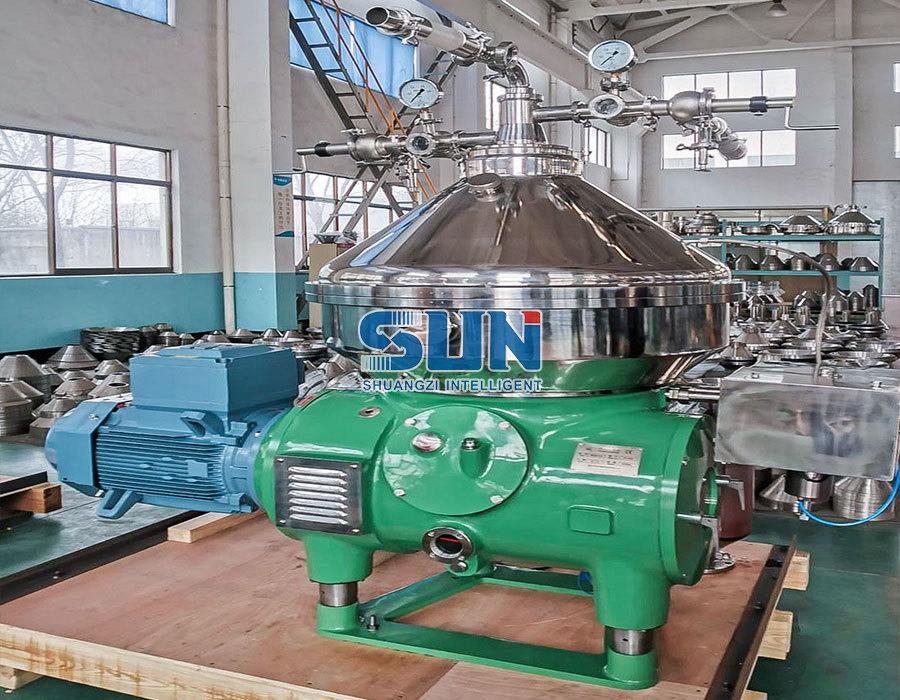 Vertical Disc Stack Centrifuge for Herbal Extract Solid-Liquid SeparationA high-speed vertical disc separator that clarifies herbal extracts and fermentation broth by settling solids across stacked discs. It suits the primary clarification step that precedes membrane concentration in bioprocessing and botanical extraction lines.View Product →
Membrane concentration and thermal evaporation are complementary tools, not competing ones. Evaporation removes water or solvent in bulk at a low cost per kilogram, which is why falling-film and external-circulation evaporators dominate whenever tonnes of liquid must be reduced. But evaporation applies heat, and fragile proteins, enzymes and some polysaccharides lose activity long before the solvent is gone. TFF concentrates at ambient or chilled temperature with no phase change, trading lower flux and membrane consumables for gentleness. Many plants run both, each where it earns its keep.
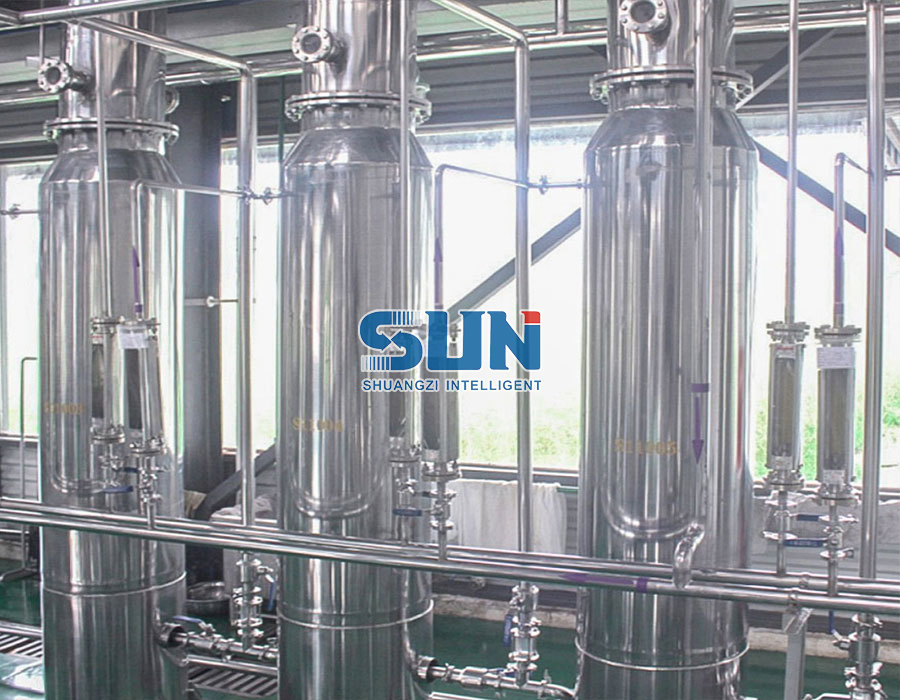
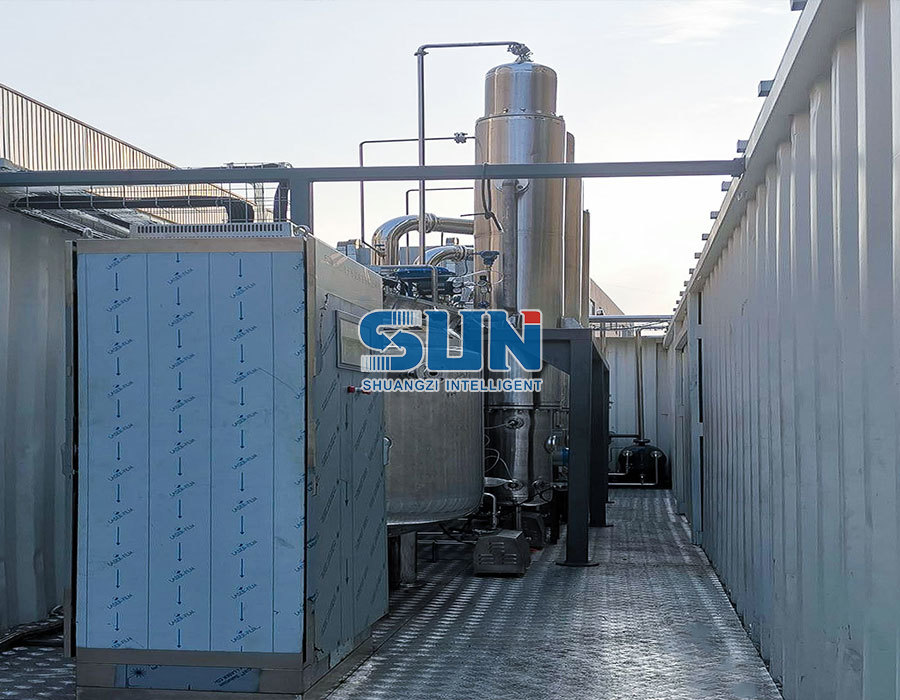 Three-Effect Falling Film Evaporator for Vacuum ConcentrationA three-effect falling film evaporator that reuses secondary steam for low-temperature, energy-saving bulk solvent removal. It complements gentle membrane concentration, handling high-volume reduction of herbal and botanical extracts.View Product →
For the clarification step that almost always sits upstream of fine filtration, our guide to disc stack centrifuge principles, applications and selection breaks down the sizing criteria in detail.
How to Specify a TFF System Before You Buy
Size the membrane area from your own process targets rather than a brochure. Required area is the permeate volume you must remove, divided by flux and the hours available. Concretely: concentrating 500 liters down to 100 liters at a conservative 30 LMH within four hours calls for roughly 3.3 square meters of membrane, and you should add margin, because flux always decays as the batch progresses.
Beyond sizing, five questions decide whether the system performs in your plant:
- Does the membrane chemistry match your actual feed? Confirm pH range, solvent tolerance and temperature limits against real material, not assumptions.
- Is the format scalable? The same membrane chemistry should run from a lab-scale cassette to a production skid, so flux and rejection data measured in development survive the scale-up.
- Single-use or reusable? Disposable flow paths cut cleaning validation and turnaround time; stainless systems cost more upfront but beat consumable pricing at volume.
- What documentation comes with it? Material certificates, surface finish data and factory acceptance testing with IQ/OQ support are prerequisites if the line must pass a GMP inspection.
- What does a pilot trial say? Measure flux decay, product recovery and cleaning-cycle lifespan on your own feed before committing to full-scale fabrication.
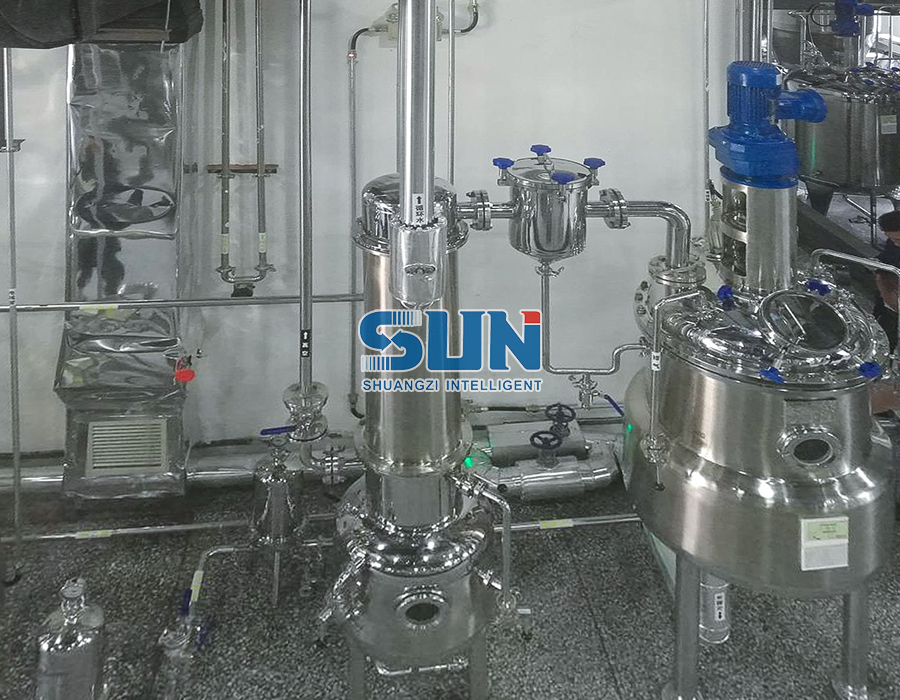
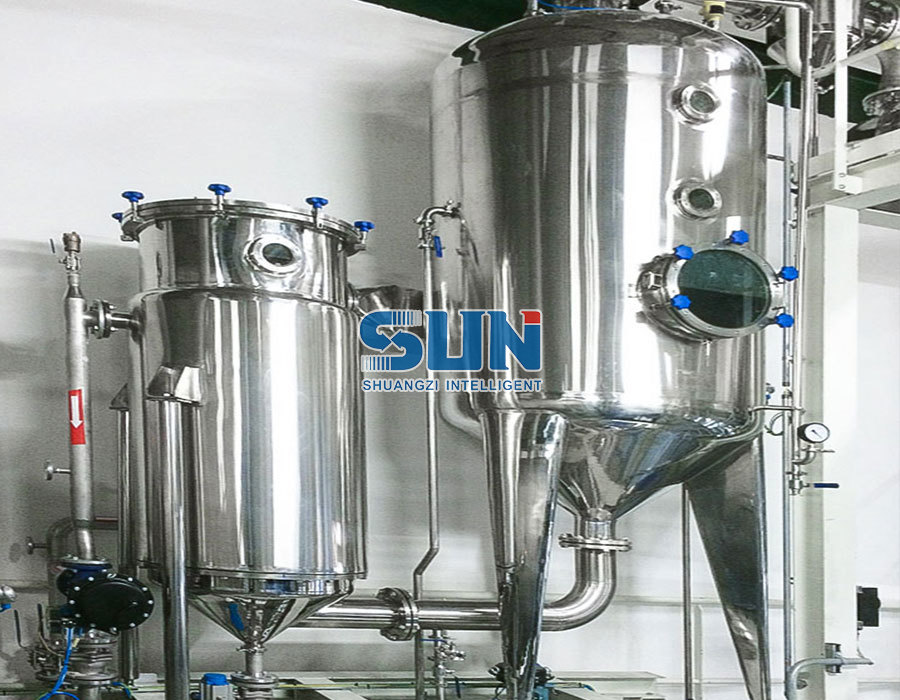
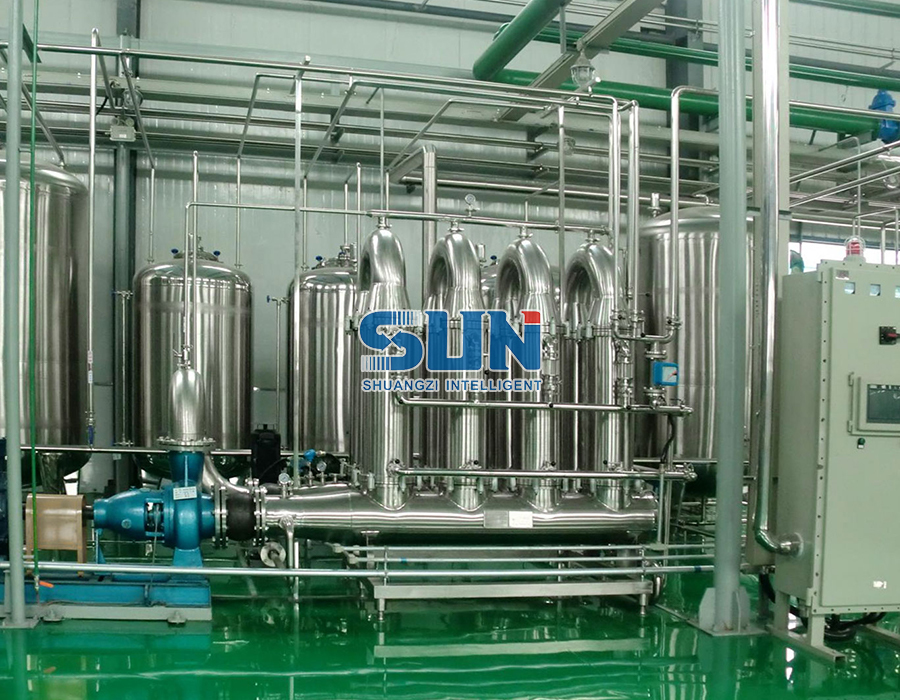 Plant Extraction Membrane Separation Equipment with Ceramic FiltrationA membrane filtration skid using a circulation tank, feed pump and ceramic membrane to clarify and concentrate plant extracts at low temperature. Pilot testing at a GMP workshop lets clients verify flux and cleaning before full-scale build.View Product →
That last point is where suppliers separate themselves quickly. Our facility in Zhejiang runs a GMP-compliant pilot workshop and R&D platform, so a client can verify flux, recovery and cleaning protocols on their own material before we cut stainless steel, the same de-risking step we apply to extraction, evaporation and fermentation lines.
Treat a tangential flow filtration system as a process decision rather than a membrane purchase. Map the full sequence of harvest or extraction, clarification, concentration, solvent removal and drying, then specify the filtration step to serve that sequence. Integration is exactly how we approach projects such as our CBD oil and CBD isolate extraction production line in northeast China, where clarification, solvent recovery, concentration and crystallization were engineered as one continuous flow instead of a row of standalone skids. Get the sequence right, and the TFF step becomes what it should be: the quiet, dependable stage that protects your product on its way to final formulation.