
 英语
英语 俄语
俄语Content
What Is a Falling Film Evaporator and How Does It Work?
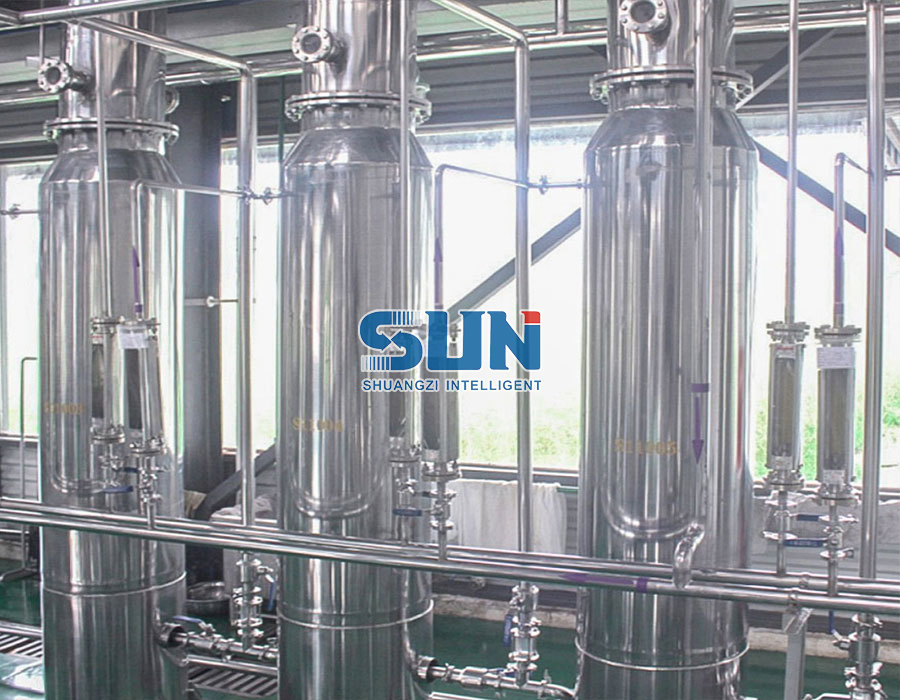
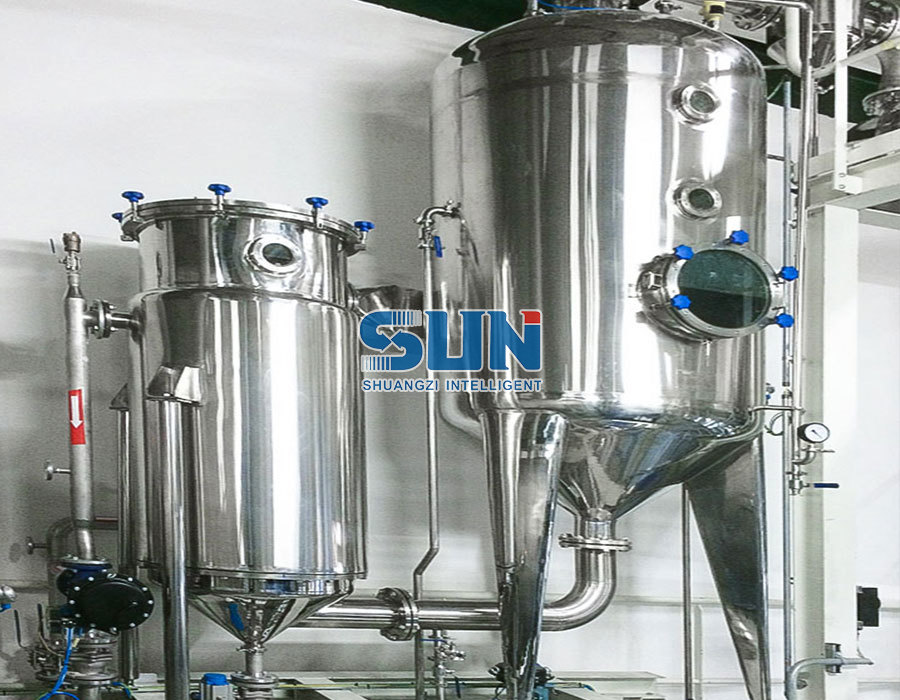
A falling film evaporator achieves concentration by distributing a liquid feed evenly over the inner walls of vertical tubes, where it flows downward as a thin film. Heat is transferred from a condensing medium (usually steam) on the shell side through the tube walls into the liquid film, causing rapid evaporation. Because the film is only a few millimeters thick, residence time is extremely short—typically 10 to 30 seconds—making it ideal for heat-sensitive products like fruit juices, dairy, and pharmaceutical extracts. Vapor generated in the tubes travels downward along with the concentrate, then enters a separator where vapor and liquid are disengaged.
Four distinct steps take place simultaneously: liquid distribution at the top of the heating tubes forms a uniform film; gravity pulls the film down while heat conduction evaporates the solvent; vapor-liquid mixture exits the tubes at the bottom; and a centrifugal or gravity separator recovers the concentrated product. The thin film drastically reduces the boiling point elevation effect and allows gentle processing at lower temperatures. For a deeper understanding of the different configurations and how they compare, refer to our falling film evaporator types and selection guide.
Core Components and Critical Design Parameters
Liquid Distribution System
The distribution system is the heart of a falling film evaporator. Uniform initial wetting of all tube surfaces determines heat transfer efficiency and prevents dry spots that lead to fouling or product burning. Common designs include perforated plates, trough distributors with V-notches, and rotating spray arms. Perforated plates are simple and suitable for clean, non-scaling fluids; trough distributors handle wider turndown ratios. A design that fails to maintain full tube wetting even at 50% turndown will produce inconsistent concentration and risk product degradation.
Heating Tube Geometry and Materials
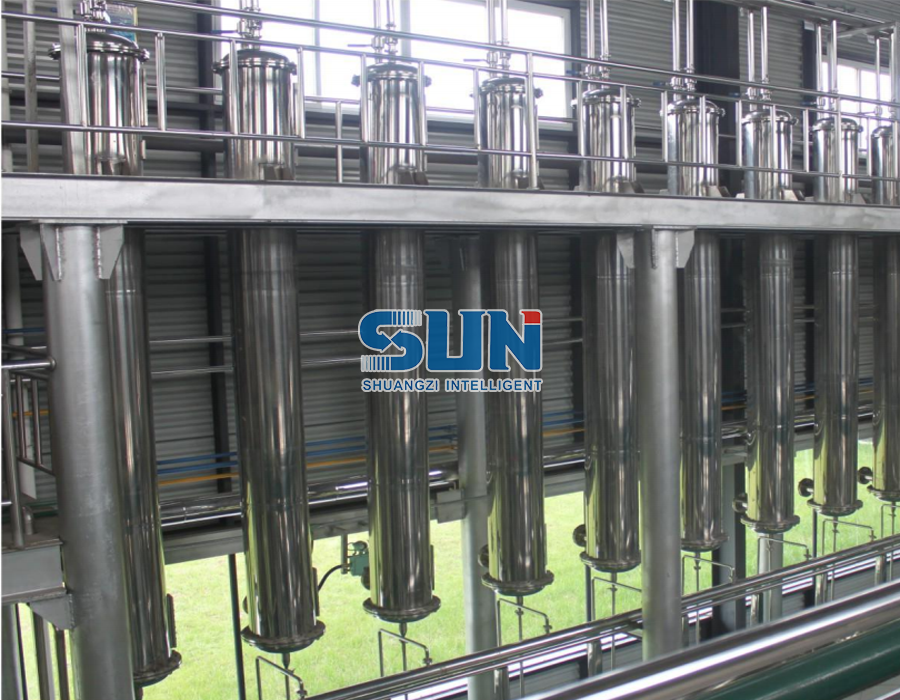
Tubes typically range from 25 to 50 mm in diameter, with length‑to‑diameter ratios between 100 and 200. Longer tubes increase evaporation per pass but require precise distribution and higher pumping heads. Tube material choice—304L or 316L stainless steel—depends on chloride levels and corrosiveness of the feed. 316L is the default selection for acidic media or products with chloride ions.
Vapor‑Liquid Separator
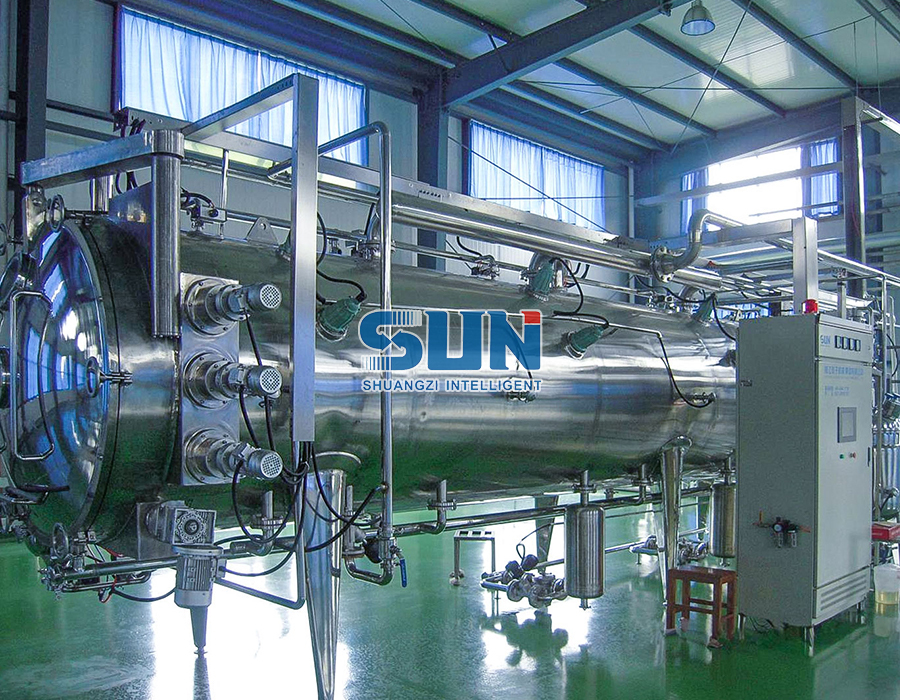
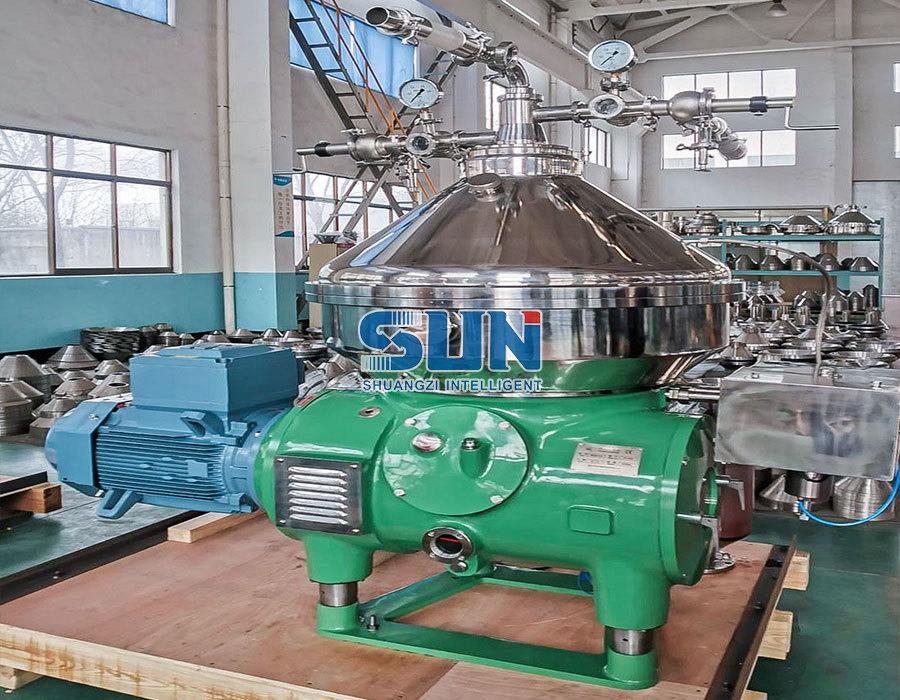
The separator removes entrained liquid droplets from the vapor stream to prevent product loss and protect downstream condensers. Centrifugal separators are common for larger capacities; wire‑mesh demisters or vane‑type separators are often used for fine mists.
Four Key Industries That Rely on Falling Film Evaporators
Food and Beverage
Concentration of fruit juices, milk, whey, and plant‑based protein solutions. The short residence time preserves natural color, flavor, and vitamins, even at evaporation temperatures of 45–60°C under vacuum.
Pharmaceutical and Herbal Extracts
Processing heat‑sensitive APIs, traditional Chinese medicine extracts, and antibiotic broths. The gentle evaporation minimizes thermal degradation of active compounds while achieving final solids content up to 50–60%.
Chemical Processing
Recovery of organic solvents, concentration of dilute caustic soda, and production of sorbitol or maltitol syrups. Falling film designs handle foaming liquids well because the film breaks most foam structures during downward flow.
Industrial Wastewater Treatment
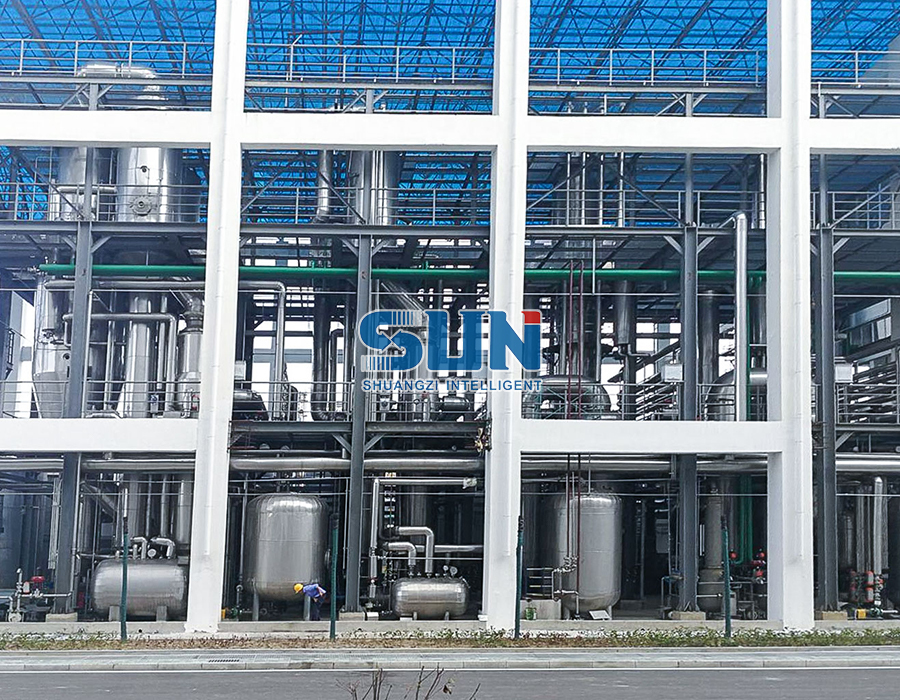
Volume reduction of saline wastewater or high‑COD streams before crystallization or incineration. Multi‑effect configurations recover substantial heat, turning a cost center into a partially self‑sustaining operation.
How to Select the Right Falling Film Evaporator for Your Process
Begin with the feed characteristics: maximum allowable product temperature, viscosity at concentration, foaming tendency, and solids content. For low‑viscosity (<50 cP), non‑scaling, temperature‑sensitive feeds, a falling film unit is almost always the optimal choice. Once the technology is confirmed, the next decision is the number of effects.
| Parameter | Single‑Effect | Double‑Effect | Triple‑Effect | MVR |
|---|---|---|---|---|
| Steam consumption (kg‑steam/ton‑water evaporated) | ~1,100 | ~570 | ~380 | 10–30 (electric power) |
| Typical placement | Small batches, pilot plants | Medium capacity, moderate steam cost | Large capacity, high steam cost | Electrical base, continuous operation |
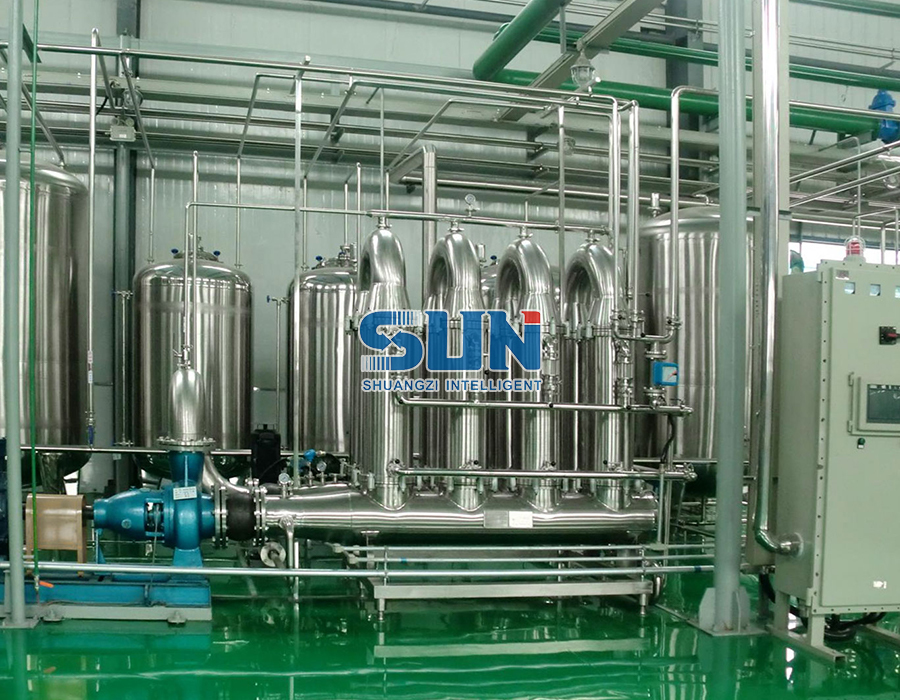
Steam cost and available utility infrastructure drive the economic choice. When steam is cheap and electricity is expensive, a three‑effect system often yields the best payback; if electricity is abundant and steam cost is high, MVR becomes the superior investment. For general‑purpose concentration, a single-effect falling film evaporator offering suits small‑scale or multi‑product facilities. Where moderate energy efficiency is needed, a stainless steel vacuum double-effect falling film evaporator balances capex and steam savings. For large‑volume, energy‑intensive processes, an energy-efficient three-effect falling film evaporator delivers the lowest steam consumption per ton of water evaporated. Explore energy-saving benefits of falling film evaporator in more depth.
 Custom Energy-Efficient Three Effect Falling Film Evaporator Concentration EquipShuangzi Intelligent Equipment is China custom Energy-Efficient Three Effect Falling Film Evaporator Concentration Equipment Manufacturer...View Product →
 Custom Stainless Steel Vacuum Double Effect Falling Film Evaporator for DiethyleShuangzi Intelligent Equipment is China custom Stainless Steel Vacuum Double Effect Falling Film Evaporator for Diethylene Glycol Solutio...View Product →
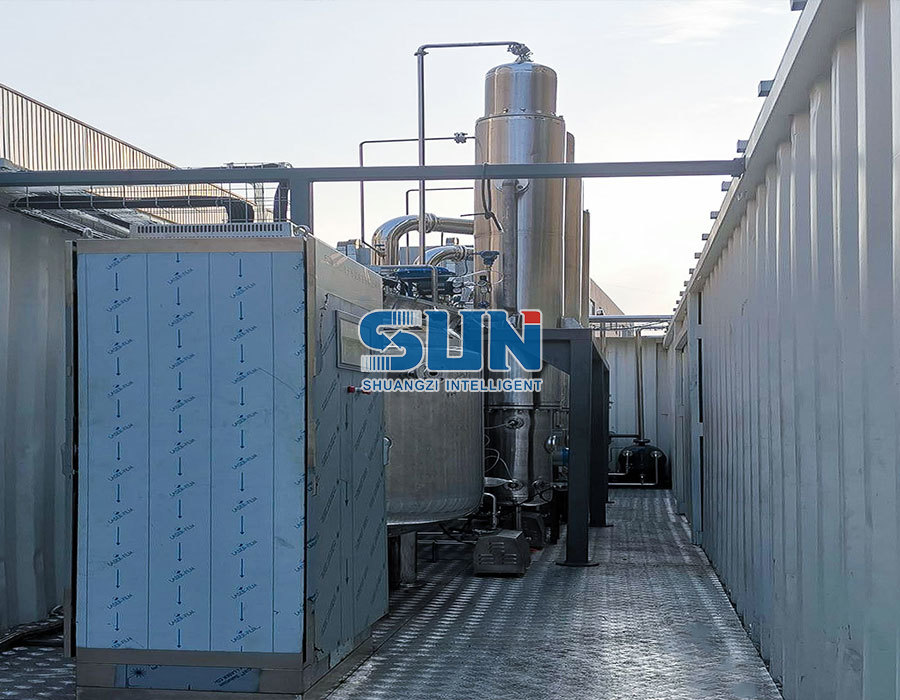 Custom Milk Evaporators, Fall Film Evaporator ManufacturersAs China Milk Evaporators Manufacturers and custom Fall Film Evaporator Suppliers, Zhejiang Shuangzi Intelligent Equipment Co.,Ltd. whole...View Product →
Beyond effect count, finalize material grade (304L for mild dairy/food; 316L for acidic or high‑chloride streams), condenser type, vacuum pump sizing, and CIP integration. Always request a detailed heat‑and‑mass‑balance from the manufacturer to confirm that the guaranteed evaporation rate aligns with your feed flow and concentration targets.
Common Problems and Maintenance Best Practices
Preventing Uneven Film Formation
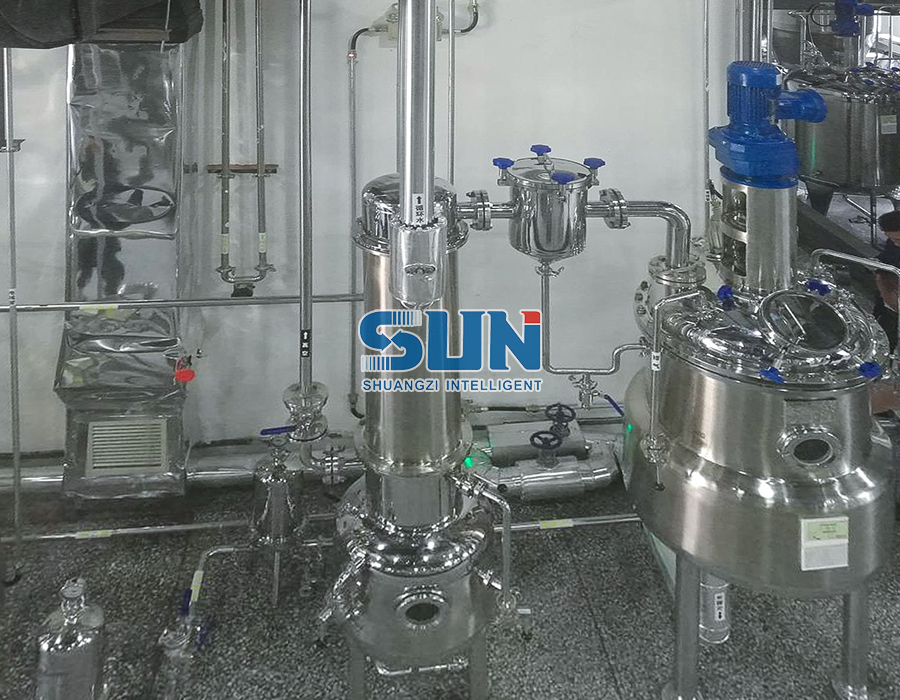
Dry patches on the tube wall lead to localized overheating, fouling, and off‑spec product. Inspect distribution plates or spray nozzles every 500 operating hours. A sight glass at the top of the calandria allows operators to visually confirm uniform wetting during operation. If film breakup appears, check for partial blockage in the distributor or insufficient recirculation flow.
Managing Scaling and Fouling
Calcium‑phosphate, calcium‑oxalate, and protein‑mineral deposits are common in dairy and herbal extract duties. The most effective strategy is strict temperature control: avoid exceeding 65°C on the product side for milk‑based streams, even momentarily. Schedule chemical CIP cycles with caustic and acid washes every 4 to 12 weeks, depending on the product. Monitoring the pressure drop across the evaporator body provides an early warning; a steady rise indicates progressive fouling.
Condenser and Vacuum System Checks
Loss of vacuum compromises boiling point suppression and damages heat‑sensitive products. Inspect condenser tube integrity, cooling water supply, and mechanical seals of the vacuum pump monthly. Even a small air leak can increase product temperature by several degrees. For detailed step‑by‑step guidance, consult our recommended maintenance procedures for falling film evaporator.